A limestone wall can look sound while quietly absorbing water, collecting airborne grime and developing uneven dark patches after rain. A sandstone patio may have a different problem: the stone is intact, but its open surface makes cleaning difficult and encourages staining. The right sealer can help protect both, but only when it suits the masonry, the location and the existing condition of the surface.
This masonry sealer selection guide explains how to make that choice without treating every porous surface as the same. Start with the material, then look at moisture exposure, previous coatings, desired appearance and preparation. Those decisions matter far more than simply choosing the strongest-sounding product.
Start with the masonry, not the finish
Masonry is a broad term. Limestone, sandstone, face brick, concrete and cement-based render can all be described as masonry, yet their porosity, strength and surface character vary considerably. A sealer that is appropriate for one may not be the best option for another.
Limestone is generally porous and can be sensitive to harsh cleaning and inappropriate coatings. Sandstone also varies from dense to highly absorbent, often across the same project. Brickwork may include hard-fired bricks, softer older bricks, absorbent mortar joints and areas affected by efflorescence. Concrete is usually more uniform, but can still have laitance, curing compounds, existing coatings or moisture issues that affect adhesion.
Before selecting a product, identify exactly what is being sealed. If the surface is a natural stone veneer, a reconstructed stone, a retaining wall block or a rendered finish, confirm its composition with the supplier or builder where possible. This is particularly worthwhile when working on an older property or a surface with an unknown coating history.
The masonry sealer selection guide: choose by exposure
The location often determines the level and type of protection required. An internal feature wall does not face the same demands as a pool surround, external façade or driveway edge.
For exterior stone and brickwork, look for a sealer designed to reduce water uptake while allowing the surface to manage moisture vapour appropriately. Perth and Western Australian conditions can place masonry under strong UV exposure, wind-driven rain, dust and significant temperature changes. A suitable exterior system needs to work with the surface rather than trapping moisture beneath an unsuitable film.
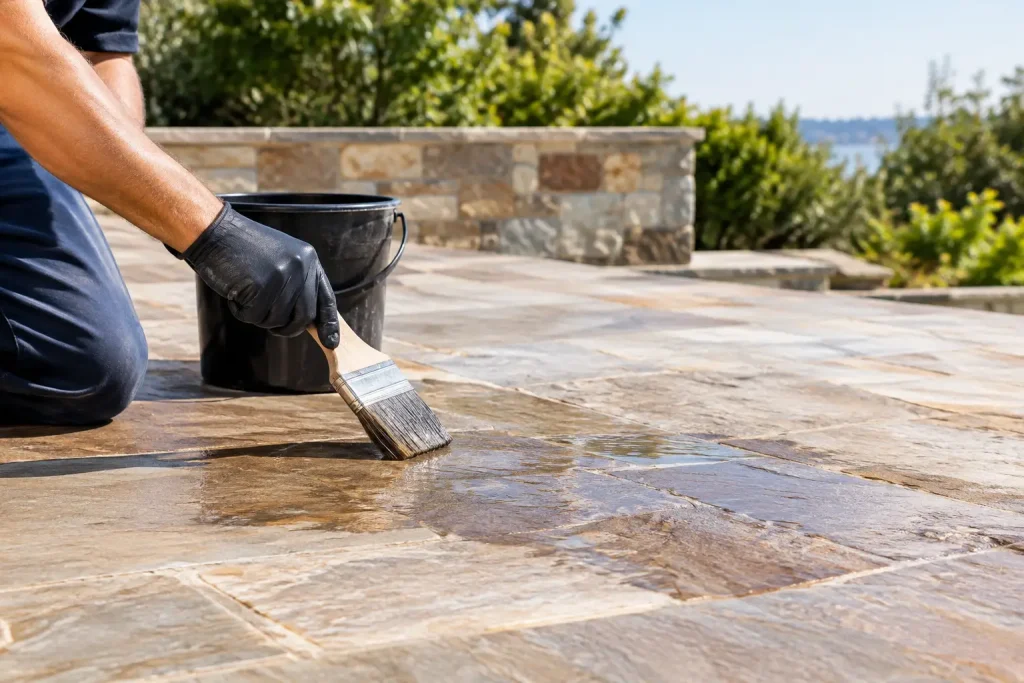
For horizontal areas such as patios, paths and courtyard paving, staining and foot traffic become more relevant. Food spills, leaf tannins, grease from outdoor cooking and soil can penetrate unsealed porous stone. The right sealer can make routine cleaning more manageable, but it will not turn a textured natural stone into a maintenance-free surface. Good drainage and regular cleaning still matter.
Walls around garden beds, irrigation zones or splash-prone areas need particular care. Continual moisture from behind or below a wall can cause problems that a surface sealer cannot solve. If water is entering through failed capping, poor drainage, leaking plumbing or rising damp, address the moisture source before coating. Sealing over an active moisture issue can lead to patchiness, whitening, loss of adhesion or salt deposits.
Penetrating protection or a surface film?
This is one of the most useful distinctions when choosing a masonry sealer.
A penetrating sealer is intended to soak into a porous substrate and provide protection within the surface. It is often selected where retaining a natural, low-sheen appearance is important. For limestone and sandstone, this can be a practical approach when the goal is to reduce water absorption and staining without noticeably changing the character of the stone.
A film-forming coating sits more on the surface and may alter the appearance, sheen or colour depth. It can be suitable in some masonry applications, but it requires closer consideration of compatibility, moisture conditions and future maintenance. On highly porous natural stone, a surface film may be more likely to show wear, patchiness or adhesion issues if preparation is poor or moisture moves through the substrate.
Neither approach is automatically better. If you want the masonry to retain its natural look, a compatible penetrating system is often the sensible starting point. If a decorative or more visibly coated finish is required, assess the surface condition carefully and follow the relevant technical data sheet. Always test a small, inconspicuous area first, particularly on natural stone where colour change can vary.
Check whether the surface has been sealed before
Existing coatings are one of the main reasons masonry sealing projects become unpredictable. Water beading on the surface can indicate a previous treatment, but it does not reveal what product was used or whether it remains sound. A glossy appearance, flaking areas or obvious brush marks may point to an older film-forming coating.
Do not assume a new sealer will penetrate or adhere simply because the surface looks dry. Contamination, old waxes, silicone-based treatments, oils, mould treatments and coating residues can all affect the result. Where an existing coating is present, establish whether it is stable and compatible with the proposed system. If this cannot be confirmed, seek practical advice before proceeding.
Efflorescence also needs attention. These white, powdery salt deposits are a sign that moisture is moving through the masonry and carrying salts to the surface. Brushing the salts away may improve the appearance temporarily, but the underlying moisture path needs consideration before sealing. Applying a coating over untreated efflorescence is unlikely to provide a reliable finish.
Preparation is part of the sealer system
The sealer is only the final stage. The surface needs to be clean, dry enough for the selected product and free from loose material, dust, oil, algae and contaminants. For porous stone, avoid cleaning methods or chemicals that can damage the substrate, leave residues or force excessive water into the wall or paving.
Allow washed masonry to dry thoroughly before application. The required drying time depends on the material, weather, level of saturation and the sealer being used. A surface can feel dry while still holding moisture below. Check the product instructions and avoid sealing when rain, heavy dew or unsuitable temperatures are likely to interfere with application.
Repairs should also be compatible with the surrounding masonry. Fresh mortar, patch compounds or render may absorb sealer differently from the original surface, producing a visible variation. Testing is especially useful where appearance matters, such as front elevations, feature walls and sandstone paving.
Appearance: natural, enriched or coated
Many customers want protection without changing the look of limestone or sandstone. Others want a slightly deeper, enriched appearance or a visible finish that makes cleaning easier. Be clear about the outcome before you start, because the desired look influences product selection.
A natural-look sealer is usually chosen to preserve the existing colour and texture as closely as possible. Even then, some change may occur depending on the stone, its moisture level and the application rate. Over-application can leave excess material on the surface, which may dry unevenly or create a patchy look.
An enhancing or film-forming product can deepen colour and create a more noticeable finish, but this should be treated as a design decision as well as a protection decision. It may highlight variations already present in the stone and can change how the surface weathers. Sample areas are not optional on prominent natural stone surfaces – they are the most practical way to assess appearance and application method.
Apply to the coverage rate, not by guesswork
Porous masonry can absorb more product than expected, particularly on the first coat. Dense stone may need much less. Coverage figures are useful planning guides, but the actual result depends on porosity, profile, joints, wastage and application technique.
Measure the area accurately, then allow for returns, capping, deep mortar joints and textured faces. Apply the sealer in manageable sections so you can maintain an even wet edge and remove excess material where the product instructions require it. Flooding a surface with extra product does not necessarily provide better protection. It can create residue, uneven sheen or drying issues.
Use the application method specified for the product, whether that is brush, roller, lambswool applicator or suitable spray equipment. Spraying may be efficient on some surfaces, but it requires control of overspray and careful back-working where directed. Protect nearby glass, paving, garden areas and painted finishes before starting.
When to ask for product advice
Some projects benefit from a quick check before purchase. Contact a coatings supplier if the masonry is unusually soft, heavily stained, previously coated, salt-affected, damp, near a pool, or expected to carry regular traffic. The same applies when sealing a large commercial area where consistent appearance and product quantities matter.
BG Coatings can help customers compare suitable limestone and sandstone sealer options, confirm preparation requirements and provide the relevant technical and safety documentation. For trade work, it is worth confirming the full system before materials are ordered, particularly where different substrates occur across one site.
A good masonry sealer should support the way the surface is used, not hide a preparation or moisture problem. Take the time to identify the masonry, test the finish and follow the product directions carefully – that is the practical path to a cleaner-looking, easier-to-maintain result.