Sandstone can look excellent around patios, paths, courtyards and pool surrounds, but it is not a surface to seal with a one-size-fits-all product. The best sealer for sandstone pavers is one that suits the stone’s porosity, the location, the finish you want and the existing condition of the pavers. Get those factors right before application and you are far more likely to achieve an even, practical finish that is easier to maintain.
For most exterior sandstone, a quality penetrating sealer designed for natural stone is the sensible starting point. It protects below the surface rather than forming a heavy coating on top. That matters on porous pavers exposed to rain, dirt, leaf tannins, oils and the strong Australian sun.
What makes a good sandstone paver sealer?
Sandstone is a natural, porous material. Its colour, texture and absorption can vary noticeably, even within the same paved area. A suitable sealer needs to reduce the uptake of water and common stains without blocking the stone completely or leaving an unsuitable surface film.
A penetrating or impregnating sealer is often preferred for outdoor sandstone because it soaks into the pores of the stone. It can help make routine cleaning easier while retaining much of sandstone’s natural texture and appearance. These sealers are generally the better choice where you want a low-sheen, natural-looking result rather than a coated finish.
The right product should also be selected for the intended use. A front path, covered courtyard, barbecue area and pool surround face different types of contamination and wear. For example, an entertaining area may need stronger resistance to food and oil marks, while a shaded path may need regular cleaning to manage organic growth regardless of the sealer used.
Sealer is not a substitute for good drainage, regular cleaning or sensible maintenance. It is part of the protection system, not a cure for a surface that holds water, is already heavily stained or has failing coatings on it.
Best sealer for sandstone pavers: choose the finish first
Before comparing products, decide how you want the sandstone to look after sealing. This prevents a common mistake: buying for protection, then being disappointed by a change in colour or sheen.
Natural-look penetrating sealers
A natural-look penetrating sealer is usually the most practical option for exterior sandstone pavers. It is designed to preserve the stone’s original character as closely as possible while reducing absorption. The pavers may look slightly richer after application, particularly while wet, but the aim is not to create a glossy or noticeably coated surface.
This finish suits most driveways, paths, courtyards and general outdoor paving. It is also a good option for homeowners who want protection without turning natural stone into a shiny decorative feature.
Enhancing sealers
An enhancing sealer deepens the natural colour and can make sandstone appear more like it does when wet. This can be attractive on pale, faded or colour-varied stone, but it should never be applied across a full area without testing first.
Colour enhancement can be uneven on sandstone with mixed porosity, previous spot treatment or weathered sections. Test on several representative pavers, including lighter and darker pieces, then allow the sample to dry fully before deciding. What looks right immediately after application may change as the sealer settles and cures.
Surface coatings and high-build finishes
Film-forming coatings are not automatically the best choice for sandstone pavers. A coating that sits on the surface can change the look and feel of the stone, and may require more careful maintenance in exposed areas. If the product is not suited to the paver, existing treatment or site conditions, it can wear unevenly or create an appearance that is difficult to rectify.
A surface finish may have a place on certain decorative or sheltered stone surfaces, but it needs a compatible system and clear product guidance. For busy external paving, do not assume that a glossy finish equals better protection.
Check the sandstone before buying sealer
The same sealer can perform differently on freshly laid sandstone, older weathered pavers and stone that has been treated before. Take time to assess the surface instead of selecting solely from a photograph or a general product description.
Start by checking water absorption. Sprinkle a small amount of clean water onto a few dry pavers. If it darkens and absorbs quickly, the sandstone is likely quite porous. If the water beads strongly, a previous sealer may still be present. This is only a useful site check, not a replacement for confirming the correct product and preparation method.
Look for efflorescence, algae, mould, rust marks, oil stains, grout haze, old sealers and loose or powdery stone. These issues need attention before sealing. Applying sealer over contamination can lock in marks, prevent even penetration or leave a patchy result.
New paving also needs to be clean, dry and ready for treatment. Mortar, grout or jointing materials may require adequate curing time, depending on the materials used. Always follow the product technical data sheet for substrate requirements and application conditions.
Preparation has more impact than most people expect
A good sealer cannot compensate for poor preparation. Sandstone must be cleaned in a way that suits natural stone, with residues thoroughly removed before sealing. Avoid assuming that a strong cleaner is better. Some cleaning products can damage stone, alter its appearance or leave residues that interfere with sealer penetration.
Remove dirt, leaves, dust and surface contaminants first. Treat stains with a method appropriate to the stain and the stone, then rinse where required. If you use a cleaner, allow sufficient time for the pavers to dry fully. Sealing damp sandstone can reduce penetration and may lead to an inconsistent finish.
Preparation should include the surrounding area as well. Protect walls, garden edges, glass, metalwork and adjacent surfaces from overspray or spills. Clear the pavers so you can work in a controlled sequence and avoid walking on freshly treated areas.
For larger areas, contractors and property-maintenance teams should test preparation and sealer application on a small section before committing to the whole job. A test patch confirms absorption, appearance, coverage expectations and application technique on the actual paving.
Applying sandstone sealer evenly
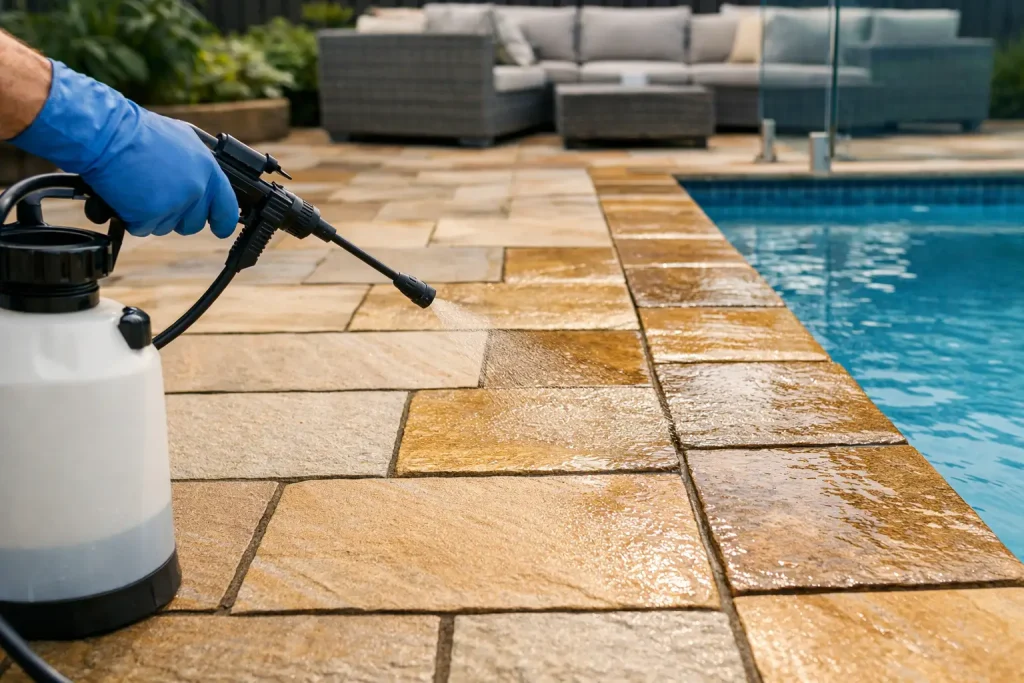
Application method depends on the product, but the principle is consistent: apply evenly, keep a manageable wet edge and do not leave excess sealer sitting on the surface. Excess material can dry unevenly and create visible patches, streaks or residue.
Use the application tool specified in the technical data sheet, which may be a roller, brush, lambswool applicator or suitable low-pressure sprayer. Work in small sections rather than trying to coat a large paved area at once. Pay attention to textured faces, edges and joints, where absorption can differ from the centre of the paver.
Do not apply in unsuitable weather. Very hot surfaces can cause product to flash off too quickly, while rain, heavy dew or a damp substrate can affect the result. Plan the work for suitable conditions and allow the area to remain protected from traffic and moisture for the period stated in the product instructions.
Coverage will vary substantially with sandstone porosity, texture and application method. Use the manufacturer’s stated coverage as a guide, then allow for test areas and potentially higher absorption on older or more open stone. Buying exactly to a theoretical square-metre figure can leave a project short of product.
Common mistakes to avoid
The most expensive sandstone sealing problems usually start with a rushed decision or skipped test patch. Avoid these common issues:
- Applying sealer over a damp, dirty or stained surface.
- Choosing a glossy coating when a penetrating natural-look finish is more suitable.
- Failing to remove excess sealer during application.
- Treating every paver as if it has identical porosity.
- Using incompatible products over an unknown existing sealer.
- Expecting sealer to fix drainage problems, loose pavers or stone damage.
If you are unsure what has previously been applied, test a discreet area and seek product advice before proceeding. In some cases, the existing treatment may need to be removed or allowed to weather before a new compatible sealer can be used.
A practical way to select your sealer
For most outdoor sandstone paving, begin with a penetrating natural-look sealer formulated for sandstone or similar porous natural stone. If you specifically want a richer colour, consider an enhancing option only after successful test patches. Where the surface has previous coatings, heavy staining or unusual conditions, product compatibility should be confirmed before purchase.
BG Coatings supplies sandstone and limestone sealer options backed by practical manufacturer guidance. Review the relevant technical data sheet and safety data sheet, measure the area carefully and test the selected system on your actual pavers before treating the full space.
The best result is rarely about finding the strongest-looking product on the shelf. It comes from matching the sealer to the sandstone, preparing the surface properly and giving the test patch enough time to show you what the finished paving will really look like.