A timber door can look excellent with a clear finish, but it is also one of the more demanding surfaces to coat. It is handled daily, exposed along its edges and often sits under an eave where it receives uneven sun and weather. Choosing the right clear varnish for timber doors starts with knowing whether the door is internal or external, how exposed it is and what is already on the timber.
A clear coating preserves the timber’s grain and natural colour, but it does not hide poor preparation, water staining or incompatible old coatings. Getting those fundamentals right will make a greater difference to the finished result than adding extra coats over a poorly prepared surface.
Start with the door’s exposure
The first question is not simply, “Which varnish is clear?” It is, “What conditions does this door need to handle?” An internal bedroom or pantry door has very different demands from an external front entry door facing afternoon sun or driving rain.
For internal timber doors, the priority is generally a smooth, hard-wearing finish that stands up to fingerprints, cleaning and everyday use. For external doors, ultraviolet exposure and moisture are the bigger issues. The coating system needs to be suitable for exterior joinery, and it needs regular inspection. Even a quality exterior clear finish requires maintenance because sunlight gradually breaks down clear coatings and timber movement puts stress on the film.
Exposure also varies across the same door. The top edge, bottom edge, hinge side and lock edge can absorb moisture if they are left bare or thinly coated. These areas deserve the same preparation and coating attention as the visible door face.
Clear finishes are not all interchangeable
A clear varnish may be oil-based, water-based or part of another clear coating system. Each type has different application characteristics, appearance and compatibility requirements. Rather than selecting solely by sheen or colour, check that the product is specified for the surface and location.
A product suitable for interior furniture may not be suitable for a weather-exposed external door. Likewise, a coating designed for exterior timber should not be applied over an unknown existing finish without checking compatibility. The technical data sheet is the right place to confirm suitable substrates, preparation, recoating requirements and application conditions.
Assess the timber before choosing varnish
New timber, previously varnished timber and previously painted timber each require a different approach. Clear coatings are transparent, so the condition of the substrate will remain visible.
New bare timber should be clean, dry and free from waxes, oils, mill glaze and surface contaminants. Some timber species contain natural oils or resins that can affect adhesion or create uneven absorption. If the timber type is uncertain, test a small, inconspicuous area and confirm the recommended preparation for that species.
Previously coated doors need closer inspection. If the old coating is sound, clean, well-adhered and compatible with the new system, sanding to create a uniform key may be enough. If it is peeling, cracking, whitening, soft, badly weathered or flaking around edges, remove failed material before recoating. Applying a fresh clear coat over a failing film only traps the existing problem beneath the new finish.
A painted door cannot be returned to a natural timber appearance by applying clear varnish over paint. The paint must be completely removed and the underlying timber assessed. Even then, colour variations, old stain and sanding marks may remain visible.
Preparation makes the finish
Most varnish failures on doors can be traced back to contamination, moisture, inadequate sanding or missed edges. Preparation is not an optional extra before coating – it is part of the coating system.
Start by removing hardware where practical, or carefully mask handles, locks, glass and surrounding surfaces. Clean the door to remove dirt, hand oils, polish, grease and airborne contaminants. Allow it to dry fully before sanding.
Sand bare timber in the direction of the grain using an appropriate abrasive grade for its condition. The aim is an even, smooth surface, not a polished one. Overly fine sanding can reduce coating penetration on some timber, while coarse scratches can show clearly once the varnish is applied. Work through the necessary grades gradually rather than trying to remove old marks with very fine paper.
After sanding, remove dust thoroughly from the door, frame and nearby surfaces. Fine dust can settle into wet varnish and leave a rough finish. Pay particular attention to mouldings, routed details and the top and bottom edges, where dust often collects.
Check moisture and weather conditions
Timber needs to be dry before it is coated. Moisture held in the timber can interfere with adhesion and may contribute to blistering, cloudiness or premature coating breakdown. This is especially relevant for external doors after rain, washing or extended humid conditions.
Avoid coating in direct hot sun, during rain or when condensation is likely. High temperatures can cause the varnish to dry too quickly, making it harder to maintain a wet edge. Cool or humid conditions can extend drying and recoating times. Follow the product’s technical data sheet for the recommended temperature, drying and recoat guidance rather than relying on a fixed timetable.
Applying clear varnish for timber doors
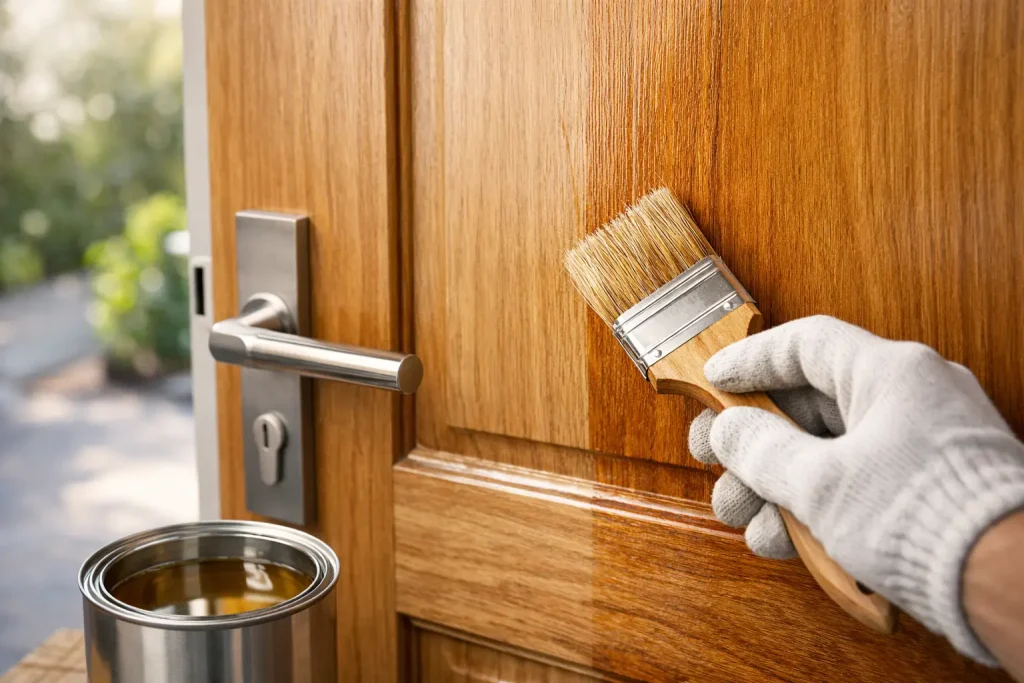
Use the application method recommended for the chosen product. A quality brush is often practical for doors because it gives good control around profiles and edges. Some products can also be rolled and laid off with a brush, while spraying may suit experienced trade applicators in an appropriate, controlled setting.
Stir the varnish thoroughly before and during use where directed. Do not shake a coating unless the product instructions specifically allow it, as this can introduce bubbles. Apply even coats in the direction of the grain and avoid overworking the surface once the coating begins to tack off.
Thin, even coats are generally easier to control than one heavy coat. Heavy application can lead to runs, curtains, slow drying and an uneven sheen, particularly on vertical door faces. Check the door from different angles while the coating is still wet, then lightly brush out any runs before they set.
Allow the recommended drying time between coats. If the system requires sanding between coats, use a light, even sand to remove raised grain or dust nibs, then remove all sanding dust before recoating. Do not rush this stage. A door may feel dry to touch before it is ready for sanding, recoating or regular use.
For an external door, coat all accessible edges, including the top and bottom. It is often easiest to coat the bottom edge before hanging the door, or when the door is temporarily removed and supported safely. Leaving these areas unsealed creates an easy path for moisture to enter the timber.
Sheen, colour and the reality of clear finishes
Clear varnish changes the appearance of timber, even when it is described as clear. It can deepen the colour, emphasise grain variation and create a wet-look effect depending on the product and sheen level. Test a small offcut or hidden section first if the final appearance is important.
Gloss finishes tend to highlight grain and can be easier to wipe clean, but they also show scratches, fingerprints and application imperfections more readily. Satin offers a softer look and can be more forgiving on broad door faces. The best choice depends on the timber, surrounding joinery and the level of maintenance the door will receive.
If the door needs a colour adjustment as well as protection, a stain-and-varnish system may be more appropriate than varnish alone. The stain must be compatible with the chosen clear topcoat, and both products should be applied according to their individual instructions.
Plan for maintenance, not just the first coat
External clear-finished timber should be checked regularly, particularly on the sun-facing side and around joins, glazing beads and bottom edges. Look for loss of sheen, fading, fine cracking, water entry or areas where the film is thinning. Maintenance coats applied while the existing finish is still sound are generally more straightforward than restoring a coating that has already failed.
Clean the door gently before inspection and avoid harsh cleaners that may damage the finish. If recoating is needed, follow the preparation requirements for the existing coating condition. A light sand and maintenance coat may suit a sound surface, while extensive weathering may require more thorough removal and preparation.
For help selecting a suitable varnish or sealer system, BG Coatings can provide practical product guidance and technical documentation so you can match the coating to the timber, exposure and finish you want. The best-looking timber door is usually the one that was prepared carefully, coated evenly and maintained before weather damage takes hold.