A sealer can either protect the character of natural stone or leave it looking noticeably coated. That difference sits at the centre of penetrating versus film forming sealers. Both have a place on limestone, sandstone and other masonry surfaces, but they work in fundamentally different ways. Selecting by appearance alone can lead to patchiness, reduced adhesion or a finish that does not suit the surface or its exposure.
For a lasting result, start with the material itself: how porous it is, whether it has been previously treated, where it is located, and what you want the finished surface to look and feel like. The right answer is not always the glossiest option or the one that claims the strongest water resistance.
What is a penetrating sealer?
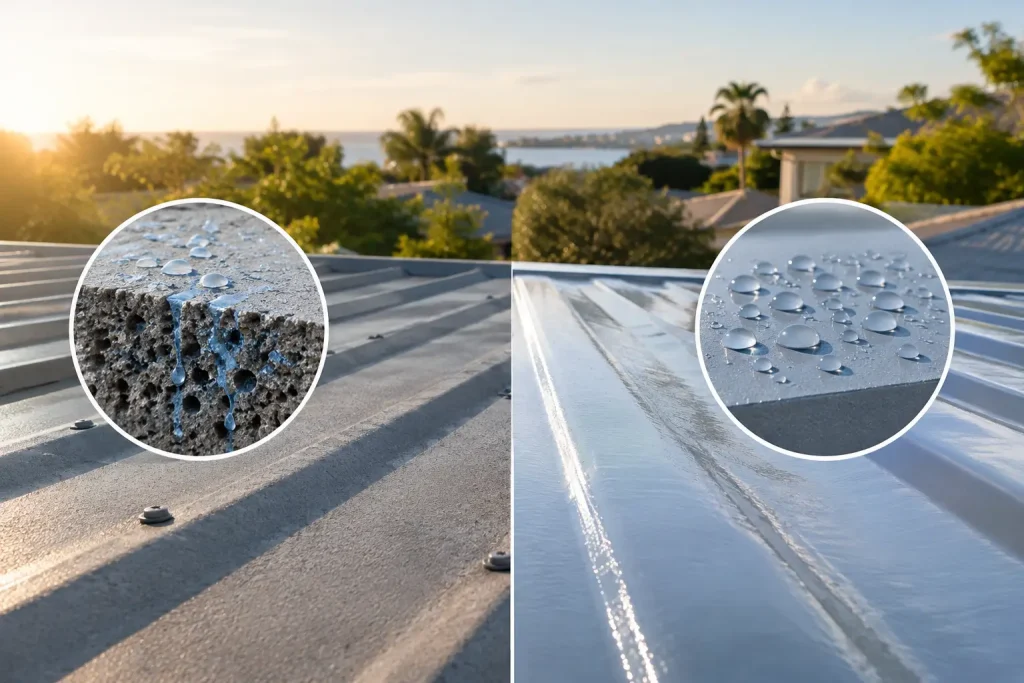
A penetrating sealer is designed to soak into a porous surface rather than build a visible layer over it. Once absorbed, it helps reduce the uptake of water and contaminants while retaining a more natural-looking finish.
This makes penetrating sealers a practical option where the original colour, texture and slip characteristics of limestone or sandstone are important. On a well-prepared, absorbent surface, the sealer works below the face of the stone rather than changing it into a coated finish.
Because there is little or no surface film, penetrating sealers are often preferred for exterior masonry exposed to changing weather. Moisture movement through the substrate still needs consideration, particularly on walls, paving and stonework that may hold moisture behind or beneath the surface. A penetrating product is not a cure for drainage problems, rising damp or failed mortar, but it can be a sensible part of a suitable protection system.
The degree of colour change varies by product and substrate. Some penetrating sealers dry very close to the untreated look, while others may deepen the colour slightly. Always test a small, inconspicuous area first. Limestone and sandstone can vary considerably from one piece to the next, even within the same area.
What is a film forming sealer?
A film forming sealer remains on the surface and creates a continuous protective coating. Depending on the product, it may provide a matt, satin, gloss or colour-enhancing finish. It can make porous masonry easier to clean and can give decorative stone a more pronounced, finished appearance.
The visible film is also the reason it needs more careful selection. On the right surface, a film forming sealer can provide an attractive, uniform finish. On a damp, contaminated, friable or poorly prepared surface, it may peel, whiten, blister or wear unevenly.
Film forming products are generally best considered where a surface finish is wanted as well as protection. For example, a decorative feature wall or sheltered masonry element may suit a coating that enriches colour and creates a more defined sheen. They are less forgiving on highly exposed or moisture-affected surfaces, particularly where water can travel through the substrate and push against the underside of the film.
A surface film can also alter traction. This matters on paths, steps, entertaining areas and any location that gets wet. Do not assume a clear sealer will leave the surface exactly as it was. Check the intended use, product data and any slip-resistance requirements before choosing a film forming system for pedestrian areas.
Penetrating versus film forming sealers: the practical differences
The simplest distinction is where the protection sits. A penetrating sealer protects within the pores of an absorbent substrate. A film forming sealer protects by forming a layer over the surface.
That one difference affects appearance, maintenance and preparation. Penetrating sealers generally preserve a natural, low-build appearance and are less likely to peel because they do not rely on a thick surface layer. However, they may not give the colour enhancement, sheen or easy-clean surface that some customers want.
Film forming sealers can make colour richer and provide a more decorative result, but the coating itself becomes part of the maintenance requirement. As it weathers, it may need cleaning, recoating or more extensive removal before another compatible product is applied. The condition of the existing finish is critical.
Neither type is automatically better. A lightly weathered limestone wall may benefit from a penetrating system that keeps the stone looking natural. A dry, decorative sandstone feature with a desired enhanced finish may be better suited to a compatible film forming sealer. The correct choice depends on the surface and the result you need to achieve.
Start with the substrate, not the label
Limestone and sandstone are naturally variable materials. Some areas can be open and absorbent, while nearby sections are dense, smooth or affected by previous sealers. Before buying, assess the whole surface rather than basing the decision on one clean patch.
A simple water-drop check can be useful as an initial guide. If clean water darkens and absorbs quickly, the surface is likely porous. If it beads or sits on top, there may be an existing sealer, contamination or a denser substrate. This is not a full compatibility test, but it helps identify where further checking is needed.
Existing coatings deserve particular attention. A penetrating sealer may not absorb into stone already sealed with a film forming product. Applying a new film forming sealer over an unknown old coating can create adhesion issues or an uneven appearance. If the existing treatment is flaking, glossy, patchy or softens with an appropriate cleaner, identify it and follow a suitable removal and preparation process before resealing.
Do not try to seal over dirt, efflorescence, algae, waxes, oils or loose material. Sealers can lock in stains and contamination, and a clean-looking surface is not necessarily sound enough to coat. Allow cleaned masonry to dry thoroughly, then check for powdery areas, cracking, loose mortar and persistent moisture before proceeding.
Match the finish to the location
Exterior surfaces face ultraviolet exposure, rain, windblown dirt and temperature changes. For exposed natural stone, a penetrating sealer is often the more practical starting point when retaining the original appearance is the priority. It reduces the risk of creating a highly visible coating that can weather differently across sun-exposed and shaded areas.
Film forming sealers can be appropriate outdoors, but location matters. A sheltered vertical feature is very different from horizontal paving near a pool, a garden path or a driveway. Horizontal surfaces experience more abrasion and water exposure, while textured stone can make an even film difficult to achieve.
Inside, appearance and cleanability may carry more weight. A film forming product can suit selected interior masonry where a deeper colour or finished sheen is wanted. Even then, test first. A richer look on a sample can become too glossy, too dark or too uneven when applied across an entire room.
For heritage-style limestone, porous sandstone and irregular natural stone, subtle protection often looks better than a high-build coating. The sealer should support the material rather than make it look like plastic.
Preparation and application make the difference
Good preparation is not optional with either sealer type. Remove loose dust and residues, clean the surface with a method suitable for the masonry, and allow adequate drying time. Avoid applying sealer to hot stone in direct sun, during unsuitable weather or when rain is expected before the product has had time to perform as specified.
Apply only at the rate and by the method stated in the technical data sheet. Over-application is a common problem, especially with penetrating sealers. Excess product left on the face can dry patchy, shiny or tacky instead of absorbing evenly. With film forming systems, applying coats too heavily can affect drying, appearance and adhesion.
Test areas are worthwhile for every project, not just high-value work. Apply the proposed system to a representative section that includes the different stone colours and textures present. Check absorption, colour change, sheen, uniformity and the result after the recommended drying period.
BG Coatings can assist Perth and WA customers with practical product selection and access to technical documentation for suitable masonry sealer systems. Bring clear photos and details of the surface, previous coatings and exposure conditions when seeking advice. That information makes product guidance far more accurate.
When to pause before sealing
Do not rush to seal masonry that shows active moisture issues, salt deposits, mould growth, substantial cracking or failing previous coatings. Sealer cannot replace the work needed to address the underlying cause. Applying a film over moisture-affected stone can make later correction more difficult.
It is also worth pausing if you cannot identify a previous coating. A small test patch, a compatibility check and the relevant technical data are more useful than making assumptions from appearance alone. This is particularly important for older limestone and sandstone, where earlier products may have been applied in several stages.
Choose the sealer that suits how the surface behaves, not just how it looks in the tin. A well-prepared test area will tell you more than a label ever can, and it is the best place to confirm that the finish belongs on your stone.