Limestone can look excellent around Perth homes, but its open, absorbent surface also collects dirt, moisture and stains more readily than many painted walls. Knowing how to seal limestone walls starts with recognising that the sealer is only one part of the job. The wall must be clean, dry, sound and matched with a coating system that suits both the stone and its exposure.
A well-chosen sealer can help make routine cleaning easier and reduce the rate at which water and contaminants enter the surface. It will not correct loose mortar, cracking, drainage problems or a wall that stays damp from behind. Address those issues first, then seal the limestone under suitable weather conditions.
How to Seal Limestone Walls: Start With the Surface
Limestone is not always the same material. Natural limestone, cut limestone, reconstituted limestone blocks and limestone-clad walls can have different levels of porosity, texture and previous treatment. Before selecting a product, establish whether the wall is bare, previously sealed, painted or showing signs of moisture movement.
A simple water-drop test can be useful as an initial check. Place a small amount of clean water on an inconspicuous section. If it darkens and absorbs quickly, the surface is likely porous. If it beads on the surface, a previous sealer or coating may still be present. This does not replace checking product compatibility, but it helps identify what you are working with.
Look closely for powdery deposits, dark damp patches, flaking coatings, mould, surface dust and friable joints. White crystalline deposits, often called efflorescence, are a particular warning sign. They usually indicate salts and moisture moving through the masonry. Sealing over active efflorescence can trap the problem rather than solve it.
For retaining walls, garden walls and boundary walls, inspect the ground level and drainage as well. Soil piled against the wall, failed capping, leaking irrigation or poor drainage can continually feed moisture into limestone. A sealer should protect a prepared surface, not be relied on as a waterproofing repair system.
Choose a Sealer That Suits Limestone
The right product depends on the finish you want and the conditions the wall faces. In many exterior limestone applications, a penetrating, breathable masonry sealer is the practical choice. It is designed to absorb into the substrate rather than form a heavy surface film, helping to retain the natural appearance while reducing water uptake.
A film-forming clear coating can create a more noticeable finish, sometimes with added colour depth or sheen. However, it needs more careful consideration on porous exterior masonry. If moisture is present behind the coating, it may contribute to whitening, blistering or peeling. It can also change the appearance of limestone more than expected, particularly on pale or unevenly coloured blocks.
Consider these questions before buying:
- Is the wall exterior or interior, sheltered or fully exposed to weather?
- Do you want the limestone to retain a natural, low-sheen appearance, or is an enhanced finish acceptable?
- Is the wall dry, stable and free from active salts or moisture ingress?
- Has it been sealed, painted or treated before?
- Does the product’s technical data sheet specifically identify limestone or suitable porous masonry substrates?
Do not assume a general-purpose clear coating is suitable just because it looks clear in the tin. Some products can darken stone, leave patchiness on dense areas or form a surface film that is not appropriate for the wall’s moisture conditions. Always complete a test area in a discreet location and allow it to dry fully before committing to the whole job.
Preparation Makes the Difference
Poor preparation is the most common reason a sealer looks uneven or does not perform as expected. Limestone holds dust in its pores, and even a wall that appears clean can have loose surface material that prevents even absorption.
Start by removing loose dirt with a stiff, non-metallic brush. Wash the wall using a suitable masonry cleaner if needed, following the cleaner’s instructions carefully. Rinse thoroughly so no cleaning residue remains. Avoid acidic cleaners unless they are specifically approved for your limestone and you understand the application process. Acid can etch calcareous stone, alter its appearance and create a larger problem than the stain you were trying to remove.
Pressure washing can be useful on some exterior walls, but it must be approached carefully. Excessive pressure or holding the nozzle too close can damage softer stone, erode mortar joints and drive water further into the wall. If using a pressure washer, use a controlled setting, keep a sensible distance and test an unobtrusive section first.
Mould or algae should be treated and removed before sealing. The same applies to chalky residue and loose existing coating. If an old sealer is flaking or has failed unevenly, it may need to be removed before a new compatible system is applied. Applying a fresh coat over an unstable surface rarely produces a consistent result.
Once cleaned, allow the wall to dry thoroughly. Drying time depends on the wall’s thickness, weather, shade, humidity and how much water was used during cleaning. A surface can feel dry while moisture remains within the masonry. Avoid sealing after rain, when rain is expected soon, or when the wall is still holding moisture.
Apply the Sealer Evenly, Not Excessively
Read the technical data sheet and safety data sheet before starting. They provide the manufacturer’s instructions for preparation, application method, coat requirements, coverage guidance, drying conditions and personal protective equipment. Coverage will vary significantly with limestone texture and porosity, so use product guidance as a planning figure rather than assuming every square metre will absorb the same amount.
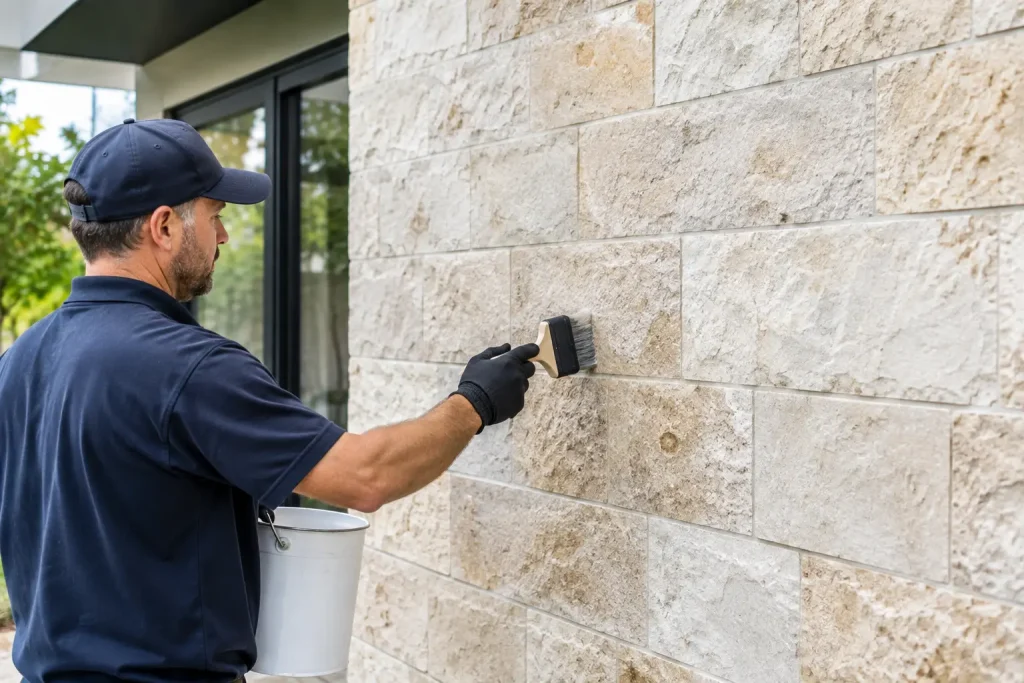
For many penetrating sealers, a brush, roller or low-pressure sprayer can be suitable. The best choice depends on the wall texture, access and product instructions. A brush is useful for cut edges, joints and detailed areas. A roller can provide controlled coverage across flatter blocks. Spraying can be efficient on larger walls, but only where the product allows it and overspray can be properly managed.
Work in manageable sections and maintain a wet edge to reduce lap marks. Apply enough product for even absorption, but do not flood the wall or allow heavy runs to dry on the face of the stone. Excess sealer can leave glossy patches, sticky residue or visible streaking, particularly on denser blocks.
Pay attention to cappings, wall tops, joints and transitions near render, paving, doors or painted surfaces. Mask adjacent areas where necessary. If the product calls for a second coat, apply it within the stated recoat window. Waiting too long, or applying a second coat after the first has fully sealed the pores, can lead to uneven uptake.
Check the Finish Before Completing the Job
After the test patch and first full section have dried, step back and inspect the wall in different light. Limestone often looks different in morning shade, afternoon sun and after a light rain. Check for dark patches, missed sections, drips and unwanted changes in sheen.
If the appearance is even and the product has been applied according to its instructions, continue in the same controlled manner. Do not try to correct every natural variation in limestone with extra coats. Variations in colour, texture and absorption are part of the material, and over-application can create a less natural result.
Keep records of the product used, batch details, application date and any preparation products. This is useful for future maintenance, especially on larger properties or strata and commercial sites where several people may look after the building over time.
When to Ask for Product Advice
Some limestone walls need more than a standard sealing approach. Seek technical guidance before proceeding if there is persistent dampness, visible salt movement, an unknown existing coating, heavy staining, a wall below ground level or a request for a particular gloss or colour effect. These conditions affect product selection and may require a different preparation process.
For homeowners and trade customers, BG Coatings can provide practical guidance on selecting a suitable limestone or sandstone sealer and checking the relevant technical documentation. Bringing clear photos, approximate wall dimensions and details of any previous coating will help narrow down the appropriate system.
A properly prepared limestone wall does not need to look heavily coated to be protected. Choose a sealer for the wall’s condition, test it first and give preparation the same attention as application. That approach gives the finish the best chance of staying clean, even and true to the character of the stone.