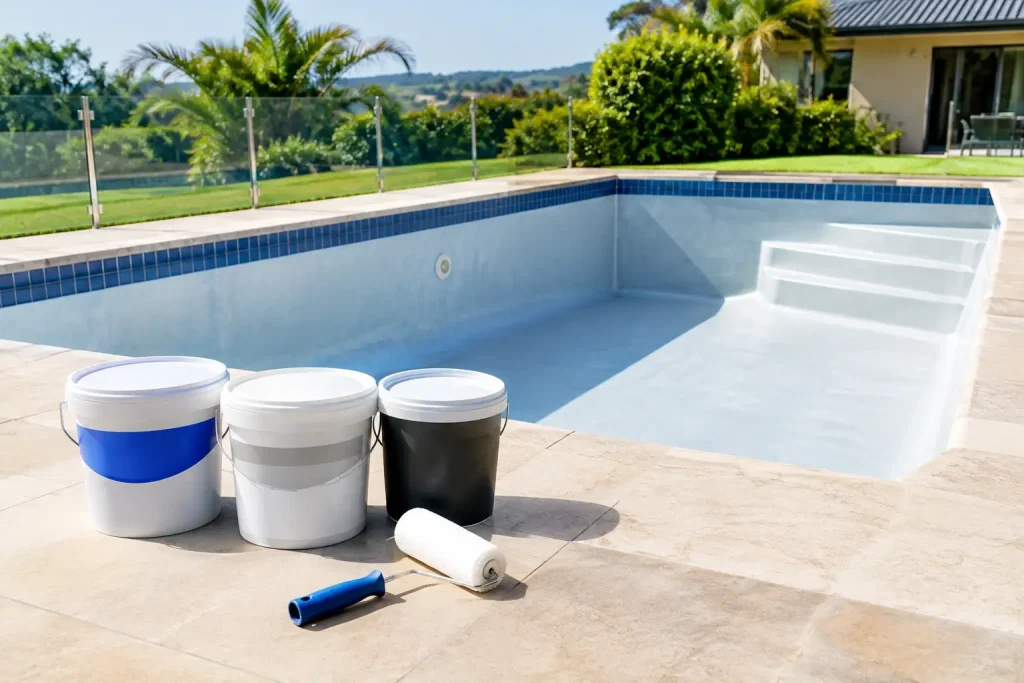
A pool can look ready for paint once it has been drained and cleaned, but the surface underneath tells the real story. Bare concrete, fibreglass and an old coating each need a different approach. This pool primer comparison explains where primer earns its place in the system, when it may not be suitable, and why compatibility matters more than simply choosing the toughest-looking topcoat.
Pool primer is not a universal first coat. It is part of a coating system designed to prepare a particular substrate for a compatible pool paint. Selecting it properly helps reduce uncertainty at the most important stage of the job: before the first finish coat goes on.
Why the right primer matters in a pool coating system
Pool interiors are demanding surfaces. They spend long periods under water, are exposed to pool chemicals, and can show up every shortcut in preparation. Primer helps create a suitable foundation between the existing surface and the selected paint, but it cannot compensate for loose coatings, contamination, moisture issues or an unsuitable paint system.
The practical question is not, “Which primer is best?” It is, “What is my pool surface, what is on it now, and which primer and paint are specified to work together?”
That distinction is particularly useful when comparing chlorinated rubber and two-pack epoxy pool paint systems. Both can have a place, but their surface preparation and compatibility requirements are not interchangeable. Always check the relevant technical data sheet before ordering or applying product.
Pool primer comparison by surface type
Bare concrete and cement-rendered pools
New or previously uncoated concrete is a common reason to consider primer. Concrete is porous and its condition can vary considerably, especially where there are patches, aged repairs, laitance, dusting or signs of moisture. A suitable primer can assist with forming an even base for the nominated pool coating system.
Preparation remains the priority. The pool must be empty, clean, dry as required by the product system, and free from dirt, oils, algae, chalky material and weak cement. Smooth, dense areas may also need mechanical preparation so the coating system can achieve a sound bond. Any surface defects should be assessed and rectified with materials compatible with the paint system before priming.
Do not assume every concrete pool needs the same primer or that a primer suits every pool paint. The selected primer needs to match the finish coat, and the substrate must meet the preparation requirements in the technical documentation.
Fibreglass pools
Fibreglass pools require careful identification and preparation because the visible surface is usually a gelcoat or a previously applied coating, rather than bare fibreglass itself. The surface may appear sound yet carry waxes, oils, sunscreen residue or a weathered, glossy finish that prevents a new coating from bonding properly.
For fibreglass, the decision often comes down to whether the existing surface is a stable gelcoat or an older paint film, and whether the chosen pool paint system is approved for that substrate. Cleaning and mechanical abrasion are generally central to preparation. A compatible primer may be specified, but it should never be chosen on the assumption that all primers bond to all smooth composite surfaces.
If you are unsure whether you are looking at gelcoat, fibreglass or a previous coating, pause before buying. Clear photos and a description of the surface condition can help a coatings supplier guide you towards the right system.
Previously painted pools
An existing coating creates the most variables in any pool primer comparison. The old paint may be chlorinated rubber, epoxy, acrylic or another system. It may also have been recoated more than once. If the coating type is known, selecting a compatible repaint system is far more straightforward.
The existing paint must be checked for peeling, cracking, blistering, chalking and poor adhesion. Any weak or failing material needs to be removed rather than painted over. Sound areas still require thorough cleaning and preparation to remove chemical residue and provide a suitable surface for recoating.
Primer is not always applied across every sound, previously painted pool. Depending on the coating system and the condition of the old paint, it may be unnecessary, or it may be required only over bare patches and repaired areas. The product data sheet should determine this, not a general rule from a different project.
Unknown coatings and mixed surfaces
A pool with an unknown coating history needs a conservative approach. Applying a new system over an unidentifiable old paint can introduce compatibility risks, even if the existing surface looks acceptable on the day.
Where the coating cannot be identified, seek technical advice before proceeding. You may need to remove unsound or incompatible material, conduct an appropriate test area where advised, or select a different preparation route. This takes more planning, but it is preferable to committing to a full repaint with an uncertain foundation.
Primer versus finish coat: do not substitute one for the other
Primer and pool paint have different jobs. Primer is formulated to suit the substrate and support the coating system. The finish coat provides the intended protective and decorative layer. Using extra finish paint in place of specified primer, or applying a primer as though it were a finish coat, changes the system and may affect the outcome.
It is also worth avoiding the temptation to mix products from unrelated coating systems. A chlorinated rubber finish coat, for example, should be paired only with preparation and primer products confirmed as compatible with that system. The same principle applies to two-pack epoxy coatings, where mixing ratios, induction periods, pot life and recoating windows may be relevant.
For trade painters and maintenance teams, following one documented system also makes planning easier. It clarifies preparation, product quantities and application stages before the pool is out of service.
How to make the right choice before ordering
Start by identifying the pool substrate and the current coating, if there is one. Note whether the surface is bare concrete, fibreglass, painted concrete or a combination of repaired and previously coated areas. Take note of any peeling, chalking, cracking, staining or suspected moisture concerns.
Next, choose the finish coat system first. The paint system determines the compatible primer, not the other way around. Review the technical data sheet and safety data sheet for both products, including surface preparation, mixing and application requirements, recoat timing and coverage guidance.
Then estimate quantities based on the pool dimensions, depth and surface type. The BG Pool Paint Calculator is a practical starting point before purchasing. It helps estimate how much pool paint and primer may be required, reducing the chance of ordering based only on water volume or a rough visual estimate. Allow for extra attention where bare areas, repairs or surface texture may affect product use.
Finally, plan the project around suitable application conditions and the full preparation process. A clean, dry, properly prepared pool surface is more valuable than rushing to get paint on early. Do not paint a pool while it contains water.
Common primer mistakes to avoid
The most expensive primer mistake is treating it as a cure-all. Primer cannot reliably bind loose old paint, hide contamination or resolve a surface that has not been prepared to specification. If the old coating is failing, address that first.
Another common mistake is priming an entire pool without confirming whether the selected repaint system requires it. This can add unnecessary material and, more importantly, may introduce a layer that is not intended for the finish coat. Conversely, skipping primer over bare substrate or repairs when it is specified can leave the system incomplete.
Also allow for the practical differences between one-pack and two-pack products. Two-pack epoxy systems require accurate mixing and attention to working time. Use clean equipment, follow the stated mix ratio, and only prepare the amount that can be applied within the product’s stated pot life.
Get the coating system right from the start
A useful pool primer comparison should lead to a decision, not just a product list. Match the primer to the substrate, match it to the selected pool paint, and base both choices on the documented coating system. BG Coatings can provide practical product guidance and technical documentation for customers planning pool paint projects across Australia.
Before placing an order, use the BG Pool Paint Calculator, confirm the existing surface and read the relevant data sheets. A few careful checks before preparation begin can make the rest of the project clearer and more manageable.