A pool paint job is only as good as the coating system underneath it. When comparing epoxy versus rubber pool coatings, the right answer is not simply the toughest product or the easiest product to apply. It depends on what your pool is made from, what has been painted on it before, how sound that existing coating is, and how much preparation the surface genuinely needs.
For homeowners planning a repaint and trade customers specifying a system, chlorinated rubber and two-pack epoxy are both established pool-coating options. They perform differently, require different preparation approaches and are not interchangeable over every surface. Getting that decision right before buying paint can avoid unnecessary stripping, adhesion issues and wasted product.
Epoxy versus rubber pool coatings: the main difference
Two-pack epoxy pool paint is a coating system made by combining two components before application. Once mixed and cured in line with the product instructions, it forms a hard, durable film suited to suitable prepared pool surfaces. It is commonly selected where a strong, longer-term coating system is required and the pool can be prepared thoroughly.
Chlorinated rubber pool paint is a single-pack coating with a different chemistry and maintenance profile. It is often a practical choice for repainting compatible chlorinated rubber surfaces, particularly when the existing coating is sound and preparation can be completed without taking the pool back to bare substrate.
The key point is compatibility. A coating can look good when first applied but fail early if it has been put over an incompatible finish, loose paint, contaminants or a damp substrate. The existing coating type should guide the selection process before colour or finish is considered.
Start with the pool surface and coating history
Concrete, fibreglass and previously painted pools each need a different assessment. Bare concrete may require a suitable primer or sealer as part of the coating system. Fibreglass needs careful cleaning, sanding and confirmation that the selected coating is suitable for the substrate. Previously painted pools demand the most investigation because the old paint determines what can safely go over it.
If the existing coating is known to be chlorinated rubber and remains firmly bonded, another compatible chlorinated rubber system may be the most straightforward path. If the pool has an existing epoxy coating, a compatible epoxy system may be appropriate, subject to its condition and the relevant technical guidance.
Do not rely on appearance alone. Epoxy and rubber coatings can both weather, chalk or fade over time, and an old paint layer may have been applied over an earlier system. If the coating history is uncertain, test a small inconspicuous section or seek technical advice before committing to a full repaint. A simple compatibility check is far easier than removing a failed new coating later.
When two-pack epoxy may suit
Epoxy pool paint is generally suited to projects where thorough preparation is possible and the selected system is compatible with the surface. Its hard cured finish makes it a strong option for suitable concrete pools and other approved substrates where a more demanding coating system is justified.
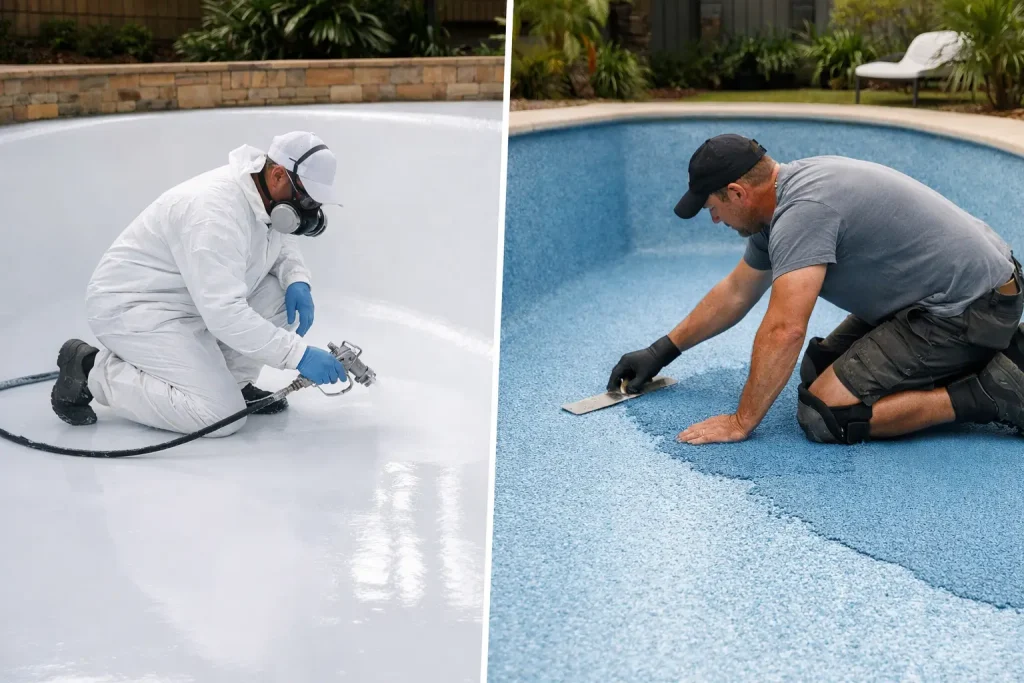
It also asks more of the applicator. The two components must be mixed accurately, used within the specified working time and applied in suitable conditions. Preparation standards are not optional: failed paint, chalking residue, body oils, sunscreen deposits, scale and loose material all need to be dealt with before coating begins.
For professional painters and experienced DIY renovators, this process can be manageable when planned properly. For a first-time DIY customer, it is worth reading the technical data sheet before purchase so the mixing, recoat and cure requirements are understood from the outset.
When chlorinated rubber may suit
Chlorinated rubber pool paint can be a sensible option for compatible existing chlorinated rubber coatings. Because it is a single-pack product, it does not require mixing a separate hardener before use, which can make application planning more straightforward.
That does not mean it is a shortcut around preparation. The existing coating still needs to be stable, clean and properly prepared. Any peeling areas, weak edges, algae residue, scale or surface contamination can affect adhesion. Glossy surfaces may also require abrading as specified to provide a suitable key.
Chlorinated rubber is often considered for maintenance repaints where coating compatibility has been confirmed. If the pool has previously been finished in epoxy, however, changing systems without a clear preparation plan can create problems. This is where product documentation and practical manufacturer advice matter.
Preparation determines the result
Most premature pool-paint failures begin before the tin is opened. Pools need to be empty, dry and prepared according to the coating system requirements. This includes removing loose or failed paint, cleaning away contaminants, treating surface issues appropriately and allowing the substrate to dry as required.
Concrete surfaces can hold moisture, particularly after washing or wet weather. Coating too soon may compromise adhesion or cause blistering. Older concrete can also have porous areas, repairs or patchy previous coatings that change how paint is absorbed. These conditions should be assessed before selecting primer quantities and topcoat coverage.
A practical preparation sequence usually involves cleaning, removing unsound material, sanding or abrading where required, removing all dust, and checking the surface is dry and ready for the nominated primer or paint system. Always follow the product technical data sheet and safety data sheet for the specific coating you are using.
Do not paint over a pool that still contains water. Plan the project around drying time, weather conditions and the coating’s specified curing period before refilling. Rushing this stage can undermine an otherwise well-applied coating system.
Application differences that affect planning
Two-pack epoxy requires more careful scheduling because the mixed material has a limited usable period. Only mix the amount that can be applied within the stated pot life. Use the specified mixing ratio, allow any induction time if required by the product instructions, and keep application equipment ready before mixing begins.
Chlorinated rubber gives a different workflow, but application still needs to follow the recommended thinning, recoat and environmental-condition guidance. Do not assume that a single-pack coating can be applied in any weather or over any old paint. Temperature, humidity, ventilation and surface dryness all affect the job.
For either system, maintain a wet edge and apply coats at the recommended spread rate rather than trying to stretch product too far. Applying too thinly can affect film build and appearance; applying too heavily can create drying and curing issues. Coverage figures are planning guides, not a substitute for assessing surface profile, porosity and condition.
Cost is more than the price of the paint
A direct comparison based only on litres or tin price can be misleading. Epoxy may involve additional preparation, primer requirements and more exact application planning, while chlorinated rubber can be more practical for a compatible maintenance repaint. The lower-effort choice is not always the right choice if it does not suit the existing coating.
Calculate the full system requirement: surface preparation materials, primer where needed, topcoats, application tools and enough time for correct curing. A pool with extensive loose paint or unknown coating history may need more investigation before any paint system is selected.
Before ordering, use the BG Pool Paint Calculator to estimate the likely quantity of pool paint and primer from your pool dimensions or water volume and existing surface type. It is a useful planning tool for reducing uncertainty, but it should sit alongside a proper check of the substrate and coating compatibility.
Choosing the right system with confidence
Choose two-pack epoxy when the pool surface, preparation standard and project plan suit a harder two-pack system. Choose chlorinated rubber when it is compatible with the existing coating and provides the practical maintenance solution the pool needs. Neither coating is automatically better in every situation.
If you are unsure what is currently on the pool, pause before purchasing. Check the coating condition, review the technical documentation and get practical product-selection guidance with the pool surface details, photos and any known paint history. A well-matched coating system, properly prepared and applied, gives your pool the best starting point for a clean, durable finish.