A pool can look tired long before its structure is ready for major work. Chalky colour, staining and a worn coating are often signs that it is time to assess the paint system. Choosing the right epoxy pool paint kit is not simply a matter of selecting a colour and ordering enough tins. The existing surface, old coating type, preparation standard and application conditions all affect whether a new finish performs as intended.
Two-pack epoxy is a high-performance pool coating system suited to particular substrates and preparation methods. It can be an excellent choice where the surface and existing coating are compatible, but it is not a universal paint-over solution. Taking time to identify what is already on the pool is the first step towards a better result.
What an epoxy pool paint kit is designed to do
An epoxy pool paint kit is generally based on a two-pack coating system. Before application, the epoxy base and curing component are mixed in the specified ratio. Once combined, the material has a limited working life, so planning the job, tools and application sequence before mixing is essential.
Epoxy pool paint is commonly considered for concrete, cement-rendered and fibreglass pool surfaces, subject to the product’s technical documentation and the condition of the substrate. It forms a hard, durable coating film when correctly applied over a properly prepared surface. That makes preparation more than a preliminary chore – it is part of the coating system.
A kit may include the coating components required for the nominated product quantity. Depending on the pool surface and coating history, you may also need a compatible primer, cleaning products, repair materials, rollers, brushes, mixing equipment and personal protective equipment. Always confirm exactly what is supplied and what must be purchased separately before starting.
Start with the existing pool surface
The most common mistake in pool repainting is assuming any new coating will adhere to any old one. It will not. Existing pool coatings can include epoxy, chlorinated rubber, acrylic systems or finishes that have been applied over many years with uncertain preparation.
If the pool has been previously painted, identify the existing coating before selecting a new system. Applying epoxy over an incompatible coating can lead to softening, lifting, poor adhesion or premature failure. A small test area and advice based on the pool’s history can help, but a test patch is not a replacement for checking the relevant technical data sheet.
For an unpainted concrete pool, assess the surface for soundness, porosity, contamination and moisture-related issues. Loose or friable material, cracking, delamination and old repair compounds all need attention before coating. A paint system can improve appearance and protect a suitable surface, but it cannot compensate for underlying structural faults or an unstable substrate.
Fibreglass pools also need careful assessment. The surface must be clean, sound and suitably abraded where required by the coating system. Glossy, contaminated or poorly prepared fibreglass can prevent paint from achieving the necessary mechanical bond.
Why preparation determines the result
Pool paint is exposed to water, treatment chemicals, sunlight and regular cleaning. Its performance starts with a clean, stable surface. Rushing this stage to get to the painting is a false economy.
The pool must be empty before work begins. Remove dirt, oils, sunscreen residue, body fats, mineral deposits, algae and loose paint. The correct cleaning process depends on the substrate and existing coating, so follow product guidance rather than using a one-size-fits-all method. Thorough rinsing is equally important, as cleaner residue can affect adhesion.
Once clean, inspect the surface closely. Scrape or sand back flaking paint until only firmly adhered coating remains. Address compatible patching and repairs as required, then sand or abrade the surface to the profile specified for the chosen epoxy system. Vacuum dust and keep the pool free of contamination before painting.
Dryness matters. Concrete and rendered surfaces can retain moisture, particularly after cleaning, wet weather or groundwater movement. Applying a coating over a damp substrate can create adhesion problems. Allow suitable drying time and follow the technical data sheet for moisture and environmental requirements. If there is any uncertainty around moisture, substrate condition or old paint compatibility, seek product advice before opening the kit.
Choosing between epoxy and other pool paint systems
Epoxy is not automatically the right answer for every repaint. The best coating is the one that is compatible with the existing surface and can be prepared and applied correctly.
A pool already coated with chlorinated rubber may be better suited to a compatible chlorinated rubber repaint system rather than an epoxy changeover. This can reduce compatibility risk and may suit maintenance repainting where the old coating is sound. Conversely, an epoxy system may be appropriate for suitably prepared concrete, fibreglass or existing compatible epoxy surfaces where a hard two-pack finish is required.
The practical question is not which paint sounds strongest. It is whether the chosen system suits the pool’s current condition, the old coating, the preparation you can complete and the application window available. For unfamiliar surfaces, refer to product technical documentation and get guidance before purchase.
Work out how much paint and primer you need
Under-ordering can interrupt application at the worst possible time. Over-ordering can leave you with unused mixed material that cannot be stored after the components have been combined. Accurate quantity planning is especially important with two-pack coatings.
Measure the pool’s length, width and depth, including walls, floor, steps, benches, ledges and any other coated areas. Water volume alone can be useful, but it does not always account for the actual surface area to be painted. Surface texture and porosity can also affect practical consumption.
Before purchasing, use the BG Pool Paint Calculator to estimate the quantity of pool paint and primer that may be required from your pool dimensions or water volume and existing surface. It is a practical planning tool that reduces uncertainty, particularly for first-time DIY painters and property managers coordinating a maintenance job. Check the estimate against the stated coverage rate and number of coats in the relevant product data sheet.
Do not stretch product beyond its recommended coverage rate to make up a shortfall. Film build is part of how a coating system performs. Equally, do not assume an extra-thick coat is better. Apply the specified number of coats at the recommended spread rate.
Applying a two-pack epoxy system carefully
Read the product label, technical data sheet and safety data sheet before starting. These documents set out the mixing ratio, induction period if required, pot life, thinner guidance, application method, recoat window and curing requirements. They are the working instructions for the particular system, not optional reading after the job has started.
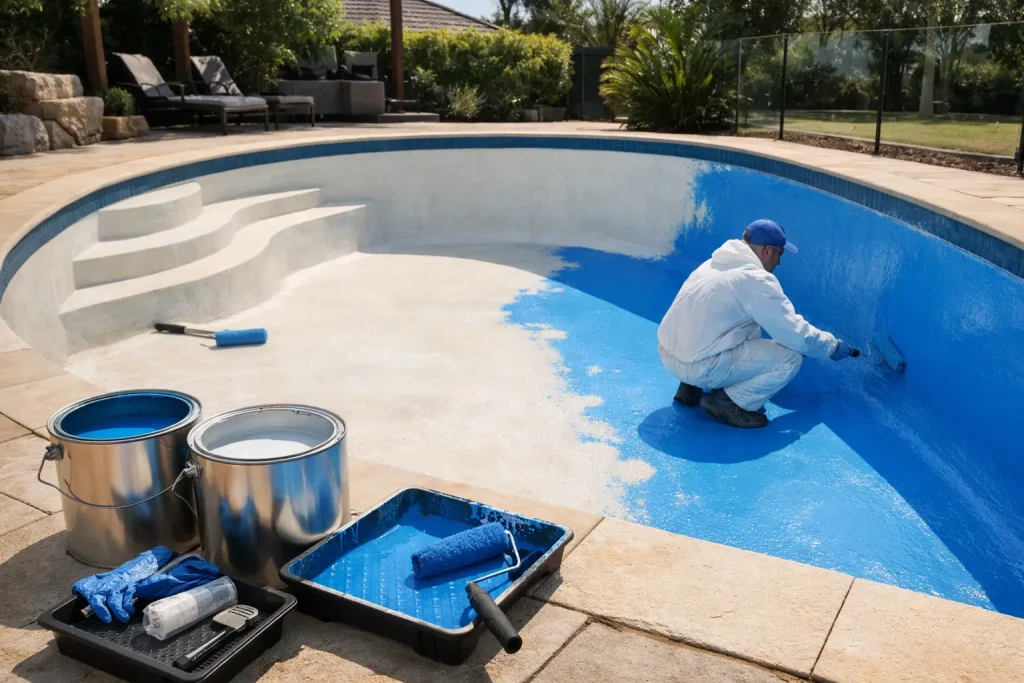
Organise the work area and tools before mixing. Use clean mixing containers, accurate measuring equipment where needed, suitable rollers and brushes, and appropriate protective equipment. Mix only the amount that can be applied within the stated pot life. Once a two-pack epoxy begins curing in the container, adding solvent or extra material will not restore it.
Apply in manageable sections, maintaining a wet edge and paying attention to steps, corners, coves and fittings. These areas are easy to miss and can use more product than large flat walls. Allow each coat to dry and recoat only within the specified window. Weather conditions matter too: excessive heat, cold, humidity, wind-blown debris and rain can all affect application.
After the final coat, allow the full cure period specified by the product before refilling the pool. Filling too soon can compromise a coating that may feel dry but has not yet developed its required cure. Follow the product instructions for recommissioning and pool chemical balancing.
Get the system right before you order
A well-chosen epoxy pool paint kit can be a practical way to renew a compatible pool surface, but the kit is only one part of the job. The key decisions happen first: identify the existing coating, assess the substrate, prepare it thoroughly and calculate the required paint and primer quantities.
BG Coatings manufactures pool coating systems and provides practical technical guidance for customers selecting and applying the correct product. Use the BG Pool Paint Calculator before purchasing, then check the relevant technical and safety documentation so the coating system, preparation method and application plan all work together.