A pool can look tired long before its structure needs attention. Fading, chalking, patchy colour and a worn finish often point to a coating decision, not a complete rebuild. Chlorinated rubber pool paint can be a practical choice when it matches the existing coating system and the pool has been prepared properly. The key is not simply choosing a colour. It is identifying what is already on the surface, checking compatibility and following the correct coating process.
For homeowners, renovators and trade painters, this is where a little planning can prevent wasted paint and premature coating failure. Pool paint is a system, and every part of that system matters.
What is chlorinated rubber pool paint?
Chlorinated rubber pool paint is a solvent-based, single-pack coating commonly used on suitably prepared swimming pools. It has long been used for pool maintenance because it provides a practical painted finish and can be maintained with the right compatible products.
Its most suitable use is generally recoating an existing chlorinated rubber finish, subject to the condition of that coating and the product’s technical instructions. This is why identifying the previous paint matters so much. Applying one coating chemistry over another without confirming compatibility can lead to lifting, softening, poor adhesion or an uneven finish.
A pool’s appearance alone will not tell you exactly what it has been painted with. Old coatings can fade, be repaired in different areas or have several paint layers beneath the surface. If the coating history is unclear, do not assume that a chlorinated rubber product is the right answer. Review the product technical data sheet, inspect the surface carefully and seek practical advice before committing to a full repaint.
When chlorinated rubber pool paint is a sensible choice
The strongest case for chlorinated rubber pool paint is a pool that has an existing, sound chlorinated rubber coating and needs a maintenance repaint. A compatible recoat can be more straightforward than changing to a different coating type, provided the old paint is firmly adhered and prepared as required.
It can also suit owners who want a familiar single-pack pool coating system and are prepared to follow the preparation and application requirements closely. That includes allowing the pool to be empty and dry, cleaning thoroughly, removing unsound material and observing the specified recoat and curing periods before refilling.
It is not automatically the best option for every concrete, fibreglass or previously painted pool. Bare or newly prepared surfaces may require a particular primer or a different pool coating system. Pools with an unknown finish, widespread peeling, moisture issues or contamination need more investigation before paint is ordered.
Two-pack epoxy pool paint is another option for some pool surfaces and conditions. It is a different coating system with its own preparation, mixing and application requirements. The right choice depends on the substrate, existing paint, pool condition and the manufacturer’s current technical documentation, rather than a one-size-fits-all rule.
Check the existing pool coating before you buy
A sound repaint starts with a clear assessment. Look for peeling, cracking, bubbling, chalking, staining, rough patches and areas where bare substrate is showing. Pay close attention to steps, waterline areas, corners and previous repair sections, as these can reveal whether the coating is still well bonded.
If you know the pool was previously painted with chlorinated rubber pool paint, retain any product information you have and compare it with the intended coating system. If you do not know what is on the pool, treat it as an unknown until it has been assessed. A small compatibility test may be appropriate, but it should be carried out in line with the relevant product guidance and should not replace proper preparation.
Do not paint over a surface that is actively failing in the hope that fresh paint will hold it together. Loose or poorly adhered coatings need to be removed to a sound edge or sound substrate as required. A new finish is only as dependable as the surface underneath it.
Look beyond the paint itself
Pool coatings can be affected by more than age and sunlight. Body oils, sunscreen, mineral deposits, algae residue and general grime can interfere with adhesion. A pool that looks clean may still have contaminants on the surface.
Check whether there are signs of water pressure or moisture movement behind the coating, particularly on concrete pools. Blistering or recurring coating failure can indicate a condition that painting alone will not solve. In that situation, pause and obtain suitable technical guidance before selecting a new coating system.
Preparation is where the result is won or lost
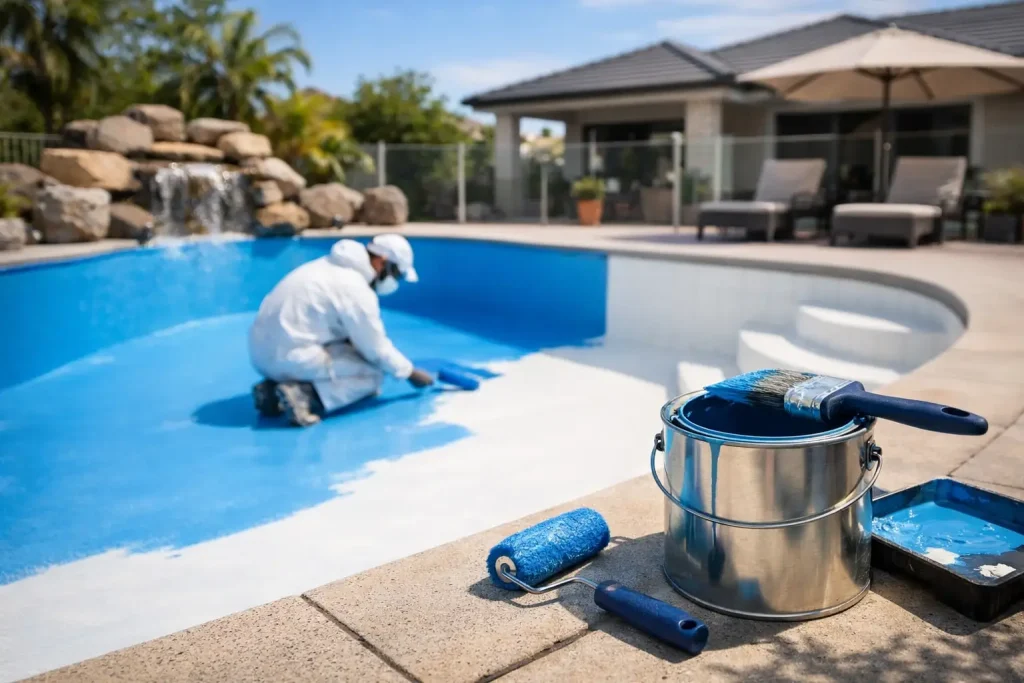
Preparation takes longer than application, and that is normal. Start with the pool empty, clean and safe to access. Follow applicable local requirements for draining and handling pool water. Never apply pool paint to a pool containing water.
Remove loose paint, dirt, chalky residue and other contamination. The method will depend on the existing coating, substrate and product system, so use the technical data sheet as the working document. Surfaces must then be thoroughly cleaned, rinsed where required and allowed to dry fully before coating.
Mechanical abrasion may be needed to create a suitable profile on a sound existing coating. Bare areas may need specific treatment or priming. Avoid guessing at these steps, particularly where different paint layers or exposed concrete are involved. Using the wrong primer, or skipping a required primer, can compromise the whole job.
Before opening paint, inspect the weather forecast and plan around the application conditions stated in the technical documentation. Temperature, humidity, direct sun, surface temperature and drying conditions all affect how a coating applies and cures. A hot pool shell can behave very differently from the surrounding air temperature suggests.
Applying a chlorinated rubber pool paint system
Once preparation is complete, read the product label, technical data sheet and safety data sheet before starting. These documents set out the correct tools, mixing or stirring requirements, thinning advice if permitted, recommended coat sequence, coverage guidance, recoat windows and cure requirements.
Use only the thinner, primer and related products specified for the coating system. Substituting products may affect application and compatibility. Stir paint thoroughly and maintain a consistent method across walls, floor, steps and difficult edges. Cutting in carefully before rolling broader areas can help keep the finish even.
Apply coats at the specified spread rate rather than trying to stretch the product too far or applying excessive thickness in one pass. Coverage varies with the pool surface, profile, porosity and existing condition. Rough concrete and heavily textured areas use more material than a smooth, previously painted surface.
Allow each coat to dry and recoat only within the stated timeframes. The final coating must receive its full specified cure before the pool is returned to service. Filling too early can damage a coating that looks dry but has not yet cured through.
Plan quantities before ordering
Estimating pool paint by eye is unreliable. Measure the length, width and average depth of the pool, including steps, ledges and any areas that will be coated. The existing surface type also affects whether primer is needed and how much paint is likely to be required.
Before purchasing, use the BG Pool Paint Calculator. It is a practical planning tool that helps estimate paint and primer quantities from your pool dimensions or water volume, while taking the existing pool surface into account. It reduces uncertainty and gives you a more useful starting point than a rough litre estimate.
For a pool with unusual geometry, extensive bare patches or an uncertain existing coating, contact BG Coatings with the relevant details before ordering. As an Australian manufacturer and direct supplier based in Malaga, BG Coatings can help customers work through product selection, technical documentation and quantity planning. Pool paint products are supplied across Australia.
Common mistakes to avoid
Most disappointing pool-paint outcomes can be traced back to a few avoidable decisions:
- Recoating without confirming what the existing paint is.
- Painting over peeling, chalky or contaminated surfaces.
- Skipping required cleaning, abrasion or primer steps.
- Applying outside the product’s recommended conditions.
- Estimating quantities without measuring the pool or accounting for surface condition.
- Refilling the pool before the coating has completed its specified cure.
A compatible coating system, sound preparation and realistic quantity planning will do more for the final result than any shortcut. Start with the pool’s existing condition, use the BG Pool Paint Calculator before purchase, and let the technical data sheet guide each stage of the job.