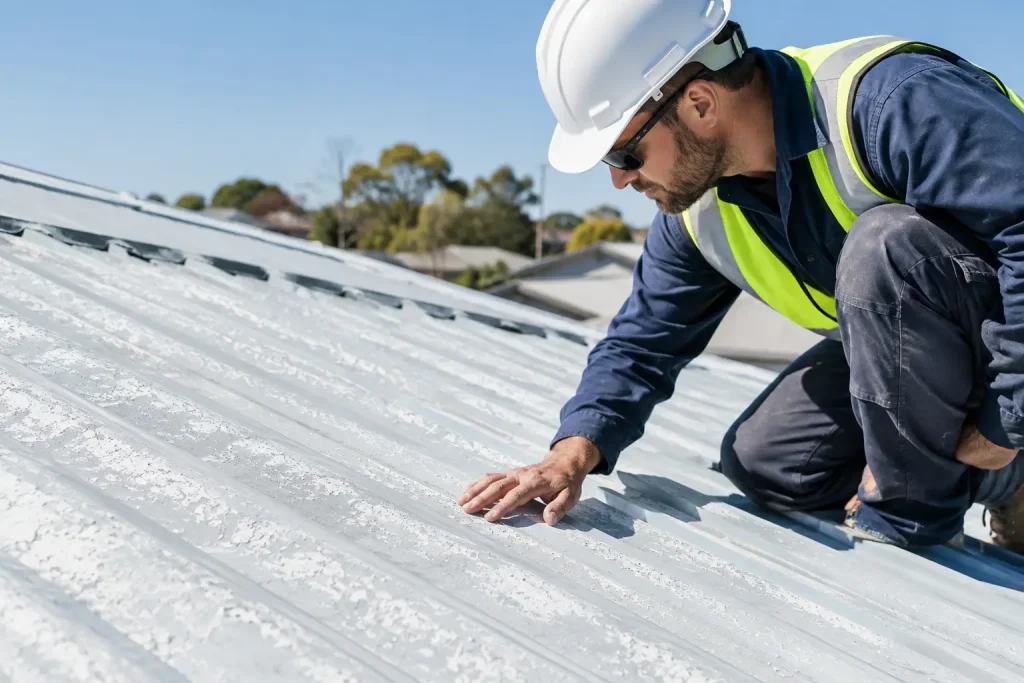
A faded roof can still look reasonably tidy from the street, yet leave a pale powder on your hand when you touch it. If you are asking, why does roof paint chalk, the short answer is weathering: sunlight, heat, moisture and time have broken down part of the coating at the surface. The practical question is what that chalking means for your roof and what preparation is needed before applying another coat.
Chalking is common on older painted metal and tiled roofs exposed to Western Australian conditions. It does not automatically mean the roof substrate has failed, but it does mean a new coating should not be applied straight over the powder. A sound recoating job starts with identifying the coating condition, cleaning thoroughly and choosing a compatible system for the surface.
What roof paint chalking actually is
Most exterior paints contain pigments, which provide colour and opacity, held together by a resin or binder. The binder forms the protective film that keeps the coating adhered to the roof and helps hold those pigments in place.
Over years of exposure, ultraviolet light can gradually degrade the binder at the outermost surface. Rain, condensation, dust and heat cycles add to the process. As the binder wears away, loose pigment and filler are left behind as a fine, dusty residue. That residue is called chalking.
A small amount of powder on a weathered roof is not unusual. Heavy chalking, where colour comes away freely on a cloth or hand and the roof looks patchy or washed out, needs proper attention. Paint applied over it may be adhering to loose powder rather than to a stable existing coating or the roof itself.
Why does roof paint chalk in Australian conditions?
Roof coatings work in one of the toughest environments around a property. They deal with direct sun, high surface temperatures, windblown grit, moisture and movement in the roof material. Several factors can make chalking appear sooner or become more severe.
UV exposure and heat
Sunlight is usually the main driver. UV radiation slowly attacks the exposed paint film, particularly on north- and west-facing roof areas that receive strong afternoon sun. Dark colours can also reach higher surface temperatures, increasing the stress on the coating as it expands and contracts.
This is normal ageing to a degree, but the rate varies with the original coating quality, film build, colour, roof orientation and local environment. A coating system formulated for roof exposure is designed for these conditions, but no exterior paint remains unchanged indefinitely.
An unsuitable or ageing coating system
Not every paint is intended for roofs. A general-purpose paint, an incompatible older coating or a product applied outside its intended use can weather poorly. The same applies where an existing coating has already lost cohesion and is then covered without adequate preparation.
Compatibility matters. A roof may have an older acrylic coating, a solvent-based coating, bare metal areas, previously primed sections or repairs completed at different times. Treating all these surfaces as identical can lead to uneven adhesion and weathering.
Inadequate surface preparation
Roof surfaces collect dirt, airborne salts, soot, lichen, mould and loose paint. These contaminants can trap moisture and prevent the next coat from making direct contact with a sound substrate.
Chalking is especially relevant here because it can look like ordinary dust. If the powder is not removed, the new coating may initially look acceptable but can lose adhesion as the weak layer underneath continues to break down. Cleaning is not simply a cosmetic step. It is part of the coating system.
Thin, uneven or poorly applied coats
Coating thickness affects durability. If a roof paint was spread too far, applied inconsistently or not built to the manufacturer’s specified film thickness, it may weather more quickly in exposed areas. Application conditions also matter. Coating over a damp surface, applying when the roof is excessively hot, or painting in unsuitable weather can affect how the film forms.
This does not mean every chalked roof was painted incorrectly. Many roofs chalk simply because the coating has reached a later stage of service. It does mean that the next application should follow the product data sheet for spreading rate, recoating intervals and suitable conditions.
How to tell chalking from other roof problems
A wipe test is a useful first check. Rub a clean dark cloth over a dry section of the roof. A light dusty mark may indicate mild weathering; a strong coloured or pale powder transfer suggests more significant chalking.
Look beyond the powder as well. Peeling, blistering, cracking, rust staining on metal roofs, exposed bare areas, loose pointing on tiled roofs and biological growth each need separate attention. Chalking alone is generally a surface-coating issue. Peeling can indicate an adhesion or moisture problem, while rust needs correct treatment before recoating.
White deposits should also be assessed carefully. On masonry or concrete surfaces, they can be mineral salts rather than paint chalk. Roofs near coastal areas may carry salt residue. A suitable cleaning method and coating system depend on what is actually on the surface, so avoid assuming all white powder is the same thing.
How to prepare a chalky roof for recoating
The goal is to remove loose material and leave a clean, dry, stable surface that the new coating can properly bond to. The exact method depends on the roof material, existing coating and its condition.
Start by checking the roof from a safe position. Roof work has obvious fall risks, and fragile materials, steep pitches and wet surfaces require appropriate access and safety measures. If the roof condition cannot be safely assessed, engage a qualified professional to inspect it.
Remove loose debris, then clean away surface dirt, chalk, mould and contaminants using a method suitable for the roof material and site conditions. Pay attention to laps, valleys, ridges and areas beneath trees where grime can build up. Cleaning runoff should be managed responsibly, particularly around gardens and stormwater drainage.
After cleaning, allow the roof to dry fully. Inspect again for peeling sections, failed previous repairs, corrosion or bare substrate. Loose or poorly bonded paint needs to be removed back to a firm edge. Bare areas may need an appropriate primer, particularly on metal surfaces or where the recommended coating system specifies one.
Do not use a new topcoat to hide an unstable surface. It may improve the appearance temporarily, but it cannot turn loose chalk or failing paint into a sound base. Preparation takes time, although it is usually the part of the job that has the greatest influence on the final result.
Choosing the right coating system
A roof coating should be selected for the roof material and the condition of the existing surface, not only for the colour you want. Establish whether you are coating metal, concrete tile, terracotta tile or another substrate, and identify as much as possible about the existing paint.
For a roof with sound but weathered paint, cleaning and a suitable roof coating may be the appropriate pathway. Where there are widespread adhesion problems, exposed substrate or mixed surface conditions, additional preparation and priming may be required. The product technical data sheet should guide surface preparation, application equipment, coverage and recoating requirements.
Colour choice has practical implications too. Darker colours can create higher roof surface temperatures, while lighter colours may show dirt differently. If colour matching an existing roof or coordinating with gutters and fascia, test the selected colour in the relevant light before committing to the full area.
BG Coatings can help customers in Perth and Western Australia match a suitable roof coating system to the substrate and existing coating condition. Having clear photos, roof material details and a description of the current paint condition makes technical advice more useful.
Mistakes to avoid with chalky roof paint
The most common mistake is treating chalking as ordinary dust and applying paint after only a quick sweep. Another is assuming a high-build topcoat will solve peeling or corrosion underneath. Neither approach addresses the weak layer that can compromise adhesion.
Avoid mixing coating types without checking compatibility, and do not guess at coverage based only on roof footprint. Roof pitch, corrugations, tile profiles, overlaps and surface condition all affect the actual area and amount of product required. Measure carefully and allow for the specified number of coats.
Finally, do not skip technical documentation. A roof coating may look straightforward to apply, but the correct preparation, primer choice, drying conditions and application rate are specific to the product. Reading these details before cleaning or purchasing helps prevent costly rework.
A chalky roof is often a clear signal that the existing coating needs attention, not a reason to rush into repainting. Clean back to a stable surface, assess what is underneath and build the next coating system from that sound foundation.