A roof coating can look sound from ground level yet still release when a new coat is applied. If the existing paint is chalky, poorly bonded or incompatible with the proposed coating system, recoating over it simply transfers the problem to the new finish. Knowing how to test roof adhesion before recoating helps you make a sensible decision about preparation, primer and whether the old coating can remain.
Adhesion testing does not replace proper surface assessment or the technical data sheet for your chosen product. It does, however, give homeowners, painters and roof maintenance teams a practical indication of whether an existing coating is holding firmly enough to be recoated.
Why roof adhesion should be checked first
Roof surfaces deal with strong UV exposure, heat, rain, airborne salts and movement through daily temperature changes. Over time, an older coating may fade, lose its binder, become brittle or separate from the substrate. These issues are not always obvious until washing, scraping or applying a fresh coat disturbs the surface.
A new roof coating relies on the layer underneath it. If that layer is weak, the new coating may peel with it, even when the product itself has been applied correctly. Testing first can prevent wasted material and the much bigger job of removing a failed coating later.
Adhesion results are only one part of the picture. You also need to assess cleanliness, chalking, rust, loose pointing, cracked tiles, previous coating type and moisture. A firmly attached coating that is heavily chalked, for example, still needs thorough cleaning and preparation before it can be recoated.
Start with a close visual inspection
Before using tape or making a small test cut, inspect the roof from a safe position. Look closely at areas around gutters, ridges, penetrations and laps on metal roofing. These locations often show coating stress earlier than broad, open roof areas.
Check for peeling edges, blistering, flaking, rust staining, powdery residue, cracking and bare substrate. Run a clean dark cloth over several dry areas. A light dusting may be manageable with suitable cleaning, but heavy chalking indicates that the surface needs more preparation and may not provide a reliable base for recoating.
Pay attention to variations across the roof. A northern or western elevation may be more weathered than a sheltered section. Test more than one representative area rather than relying on a single spot near the roof edge.
Never carry out an inspection or test on a wet, hot, windy or unsafe roof. Use appropriate access methods and fall protection. If safe access is not available, arrange for a suitably qualified professional to inspect the roof.
Check for loose coating by hand
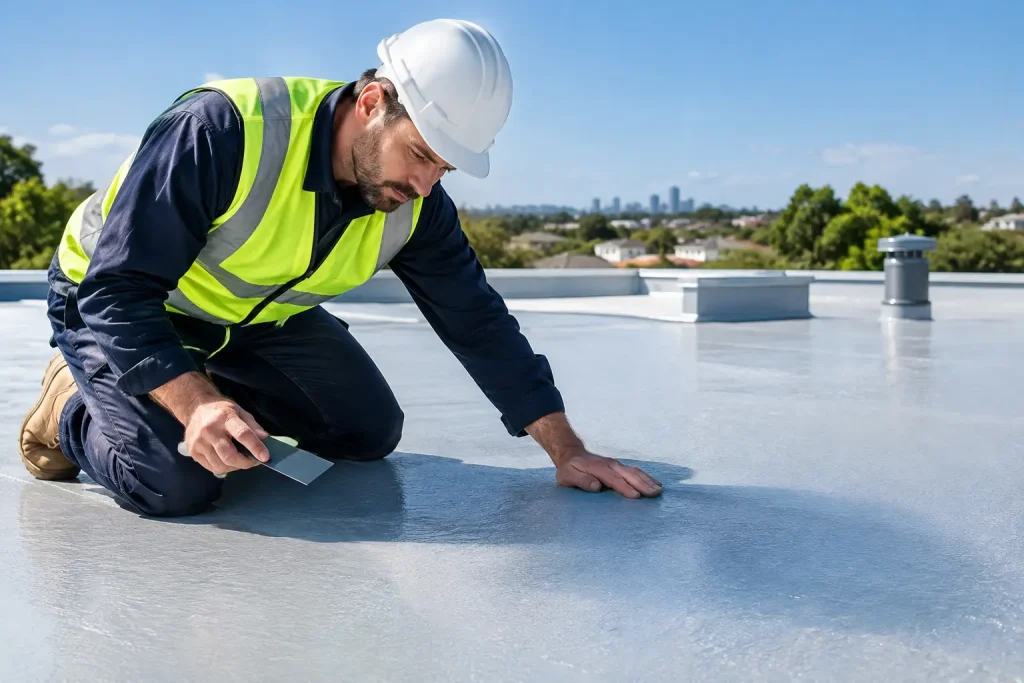
At a small, inconspicuous area, gently rub the coating with a gloved hand or cloth. Then use a blunt scraper to see whether the coating lifts easily at an existing chipped edge. Sound paint should resist light scraping and remain attached to the substrate.
Do not use this check to gouge, damage or aggressively strip the roof. The aim is to identify obviously unsound coating, not to prove that every old finish is indestructible. If paint lifts in sheets, curls at the edges or exposes a weak layer underneath, treat that section as failed coating and remove it as part of the preparation process.
How to test roof adhesion with a tape test
A simple tape test is useful for checking the bond of an existing coating in small areas. It is particularly helpful where the roof looks intact but you are uncertain whether weathering has weakened the coating.
Choose a dry, clean test area away from obvious damage. If the roof has been washed, allow it to dry fully before testing. Lightly score a small cross-hatch pattern through the coating using a sharp blade, taking care not to cut deeply into the roof substrate. A grid around 25 mm by 25 mm is generally enough for a practical field check.
Press a good-quality pressure-sensitive tape firmly over the scored section. Smooth it down with consistent pressure, then pull it back sharply at roughly 180 degrees. Inspect the tape and the test area.
If little or no coating comes away, the existing finish may be adequately bonded in that location. If multiple squares lift, paint comes away in flakes, or the coating separates between layers, the roof needs further assessment and more extensive removal of weak material before recoating.
This is a comparative site check, not a laboratory rating. Repeat it in several areas, including the most weathered sections, so one favourable test does not disguise wider coating failure.
When not to use a cross-hatch test
Do not cut, sand, drill or otherwise disturb older fibre cement roofing if there is any possibility it contains asbestos. Seek advice from a licensed asbestos professional or follow applicable safety requirements before any work begins. A coating decision is never worth creating a dust hazard.
Take care with fragile tiles and heavily corroded metal as well. Where scoring could damage the surface, rely on visual checks, gentle edge testing and professional assessment instead. A pull-off adhesion test may be more appropriate for some commercial or industrial projects, but it requires specialised equipment and should be performed to the relevant test method by an experienced operator.
Read the result in context
A tape test can reveal three common situations. The best outcome is when the coating remains intact and the surface is clean, stable and compatible with the proposed recoating system. In this case, preparation may involve cleaning, treating isolated defects, abrading where required and applying the specified primer or roof coating.
The second outcome is localised failure. Perhaps paint lifts around a rust spot, near a gutter line or on a particularly exposed slope, while the rest of the coating holds well. Remove loose material back to a firm edge, address the underlying cause and prepare the repaired area according to the coating system requirements. Rust, for example, needs to be dealt with properly rather than hidden beneath a fresh coat.
The third outcome is broad failure, where coating lifts from numerous test areas or separates between older paint layers. Recoating directly over this surface is not a sound shortcut. The weak coating needs to be removed or stabilised using an appropriate preparation method before a compatible system is selected.
The substrate matters. Metal roofs may have old acrylic, alkyd or other coating layers, and areas of corrosion need separate attention. Concrete tile roofs can be porous or retain contamination in their surface profile. Previously painted surfaces with unknown coatings need a cautious approach, particularly where the old finish is glossy, soft, powdery or has been patched with different products over time.
Preparation is what turns a test into a lasting result
A positive adhesion test is permission to proceed carefully, not permission to skip preparation. Roofs should be cleaned to remove dirt, salts, biological growth, chalk and loose material. Allow the surface to dry, then repair and spot-prime where the selected system requires it.
Compatibility is equally important. A coating can adhere well to the roof but still react poorly with an incompatible topcoat. Always confirm the existing surface type, the proposed coating system, recoat requirements and primer recommendations in the relevant technical data sheet. If you cannot identify the existing coating, test a small area first and ask for product guidance before coating the whole roof.
For larger roofs, plan the work in manageable sections and keep an eye on weather conditions. Applying over dew, trapped moisture or a surface that is too hot can compromise application, even where the underlying paint tested well.
When to seek technical advice
Ask for advice before proceeding if the test exposes multiple coating layers, widespread chalking, soft paint, recurring blistering, corrosion, or an unknown substrate. The right answer may be additional cleaning, removal of failed coating, a compatible primer or a different roof coating system.
BG Coatings can help customers in Perth and Western Australia work through surface type, preparation questions and relevant product documentation before they purchase. Clear photographs of the roof, close-ups of failed areas and details of any previous coating can make that discussion more useful.
A small adhesion test takes little time, but it puts the condition of the existing coating in plain view. Test several areas, prepare the roof for the condition you actually find, and choose a coating system that suits both the substrate and the old finish beneath it.