Steel rarely fails without warning. Rust staining around bolts, bubbling beneath old paint, and flaking along edges all point to moisture reaching the metal. Selecting the right anti corrosion paint for steel is part of the answer, but the coating will only perform as well as the surface preparation and system beneath it.
For handrails, gates, structural steel, sheds, machinery, tanks and maintenance work, the correct approach depends on where the steel is located, its present condition and the exposure it must withstand. A protected indoor frame has very different requirements from exterior steel facing Perth sun, coastal air, rain and regular condensation.
Start with the steel environment
Before choosing a primer or topcoat, consider what the steel is exposed to. The more often water, salt, chemicals or abrasion reach the surface, the more important coating selection and preparation become.
Steel in a dry internal area may need a straightforward protective coating system. Exterior steel needs better weather resistance and a topcoat suited to ultraviolet exposure. Coastal and industrial locations demand closer attention because airborne salt and contaminants can settle on surfaces, hold moisture and accelerate corrosion. Steel that is regularly wet, immersed, subject to chemical splash or exposed to high temperatures may require a more specialised system.
Also look at the existing coating. Is the steel bare, lightly rusted, heavily corroded, previously painted, galvanised, or coated with an unknown product? These details affect primer compatibility and whether the old finish can remain. Applying a new coating over loose, chalky or incompatible paint may look acceptable at first, then fail as the underlying layer lets go.
What an anti corrosion paint system does
Anti-corrosion protection is usually a system, not simply one coat of paint. The system commonly includes surface preparation, a suitable primer and one or more finishing coats. Each layer has a different role.
The primer is designed to bond to the steel and provide the first barrier against moisture. Depending on the product and substrate, it may also assist with corrosion resistance or adhesion to particular metals. The topcoat protects the primer from weathering, sunlight, dirt and day-to-day wear while delivering the required colour and finish.
Two-pack epoxy coatings are often considered where a hard, durable coating with strong chemical and moisture resistance is needed. They can be an appropriate choice for many industrial and maintenance applications, but they are not automatically the best finish for exposed exterior steel. Epoxies can chalk under prolonged UV exposure unless protected by a suitable UV-resistant topcoat. This is why a coating system should be selected for the whole environment, not just for the word “epoxy” on the tin.
For exterior architectural steel, the finish coat also needs to retain its appearance in Australian conditions. For work exposed to direct sun, choose a compatible topcoat designed for exterior service and follow the relevant technical data sheet for recoat windows and film build requirements.
Preparation is where corrosion control begins
A premium coating cannot stabilise loose rust, oil, salt or failing paint. Preparation is the stage most likely to determine whether the job remains sound or begins peeling prematurely.
First, inspect the steel closely. Rust often starts at welds, sharp edges, joints, bolt heads and areas where water sits. If corrosion has caused deep pitting, thinning or structural concerns, obtain appropriate professional assessment before coating. Paint protects sound steel but does not restore lost metal.
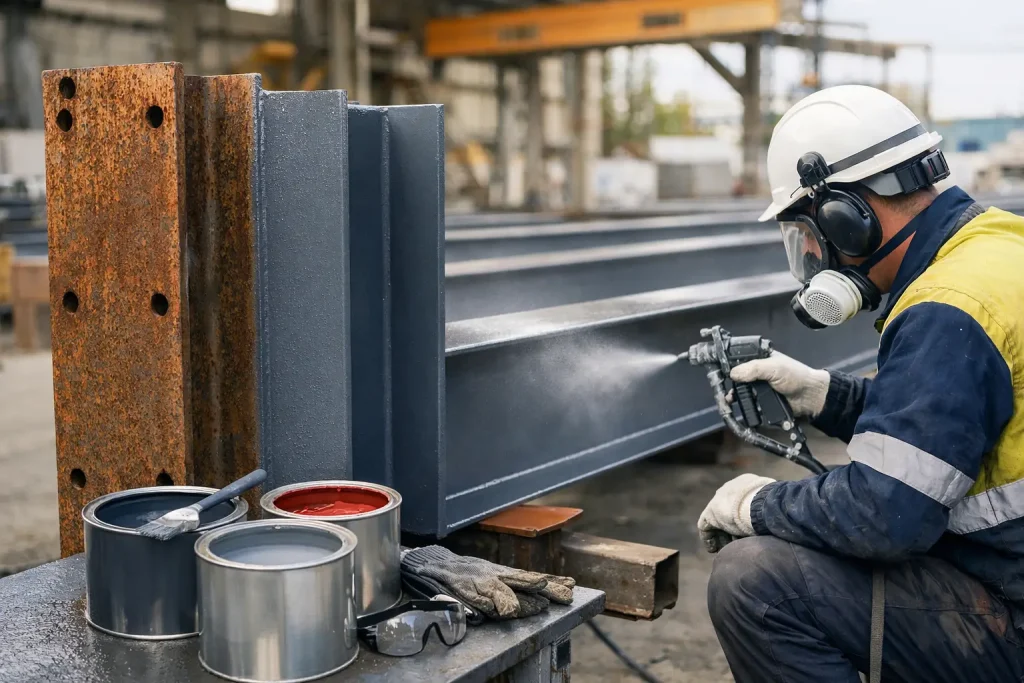
Remove loose and flaking material with appropriate mechanical methods. Depending on the condition and project requirements, this may involve scraping, wire brushing, sanding, grinding or abrasive blasting. The aim is a clean, firm surface with rust and failed coatings removed to the standard required by the chosen product system.
After mechanical preparation, remove dust thoroughly. Clean off grease, oil, wax and other contaminants with a suitable surface cleaner, using clean rags and changing them often so contaminants are lifted rather than spread around. Coastal steel deserves particular care. Salt deposits can remain invisible and may interfere with adhesion, so washing and allowing the substrate to dry properly can be essential.
Edges and welds need extra attention. Coatings naturally pull away from sharp edges during application, leaving a thinner film where corrosion often begins. Where the product system recommends it, stripe coating these areas before the full coats helps build protection over vulnerable details.
Do not paint steel that is wet from rain, condensation or cleaning. Likewise, avoid application when the surface is likely to become damp before the coating has reached the required stage of cure. Check the product documentation for acceptable temperature, humidity and application conditions rather than relying on a general rule.
Selecting a primer for steel
The right primer depends on the substrate, surface condition and topcoat. Bare mild steel commonly requires a dedicated metal primer before the finish coats. A primer suitable for steel may not be suitable for galvanised steel, aluminium or previously painted surfaces, so confirm the intended substrate before ordering.
Galvanised steel presents a common trap. Its zinc surface can be difficult for some coatings to grip unless it is properly cleaned, prepared and primed with a compatible product. New galvanised steel may also carry residues from manufacture or storage. Treat it as its own substrate, not as ordinary bare steel.
If old paint is sound, test its adhesion first and identify it where possible. Clean, abrade and spot-prime exposed steel or damaged sections using a compatible primer. If the existing coating is extensively peeling, cracking or unstable, removal and a complete system may be the more reliable choice.
When the prior coating is unknown, a small compatibility test area can prevent a larger problem. Look for lifting, wrinkling, softening or poor adhesion after the recommended drying period. Technical advice is particularly worthwhile on commercial maintenance projects, steel exposed to aggressive conditions, or jobs where an incompatible coating would be costly to remove.
Applying the coating at the correct film build
Coverage figures are useful for estimating product quantity, but they are not a substitute for applying the required dry film thickness. Steel coatings protect by forming a continuous barrier. If coats are spread too thinly, pinholes and insufficient film build can reduce protection. If they are applied too heavily, runs, solvent entrapment or curing issues may result.
Use the application method approved for the product, whether brush, roller or spray. Brushes are useful for working coating into welds, corners and irregular steel. Rollers can suit broad, accessible sections. Spray application may be efficient for larger work, but it requires appropriate equipment, site controls and safety measures.
Apply the stated number of coats and observe minimum and maximum recoat times. Recoating too soon can disturb the previous film; waiting beyond a maximum recoat window may mean the surface needs abrasion for adhesion. Allow for extra product on rough, pitted or heavily profiled steel, because these surfaces have more area than they appear to from a distance.
Plan the work so that joints, undersides, cut ends and water-trapping areas are not missed. A good finish on the front face of a gate is of limited value if its lower rails and concealed joins have been left thin or bare.
Common shortcuts that cause early failure
Most coating failures can be traced back to a few avoidable mistakes. Painting over active loose rust, skipping cleaning, selecting a topcoat without checking primer compatibility, and applying in unsuitable weather are all high-risk shortcuts. So is choosing a system based only on colour or price when the steel is exposed to salt, chemicals or frequent moisture.
Another issue is treating corrosion protection as a one-time job. Coated steel should be inspected periodically, especially around fasteners, welds, drainage points and impact-prone areas. Early touch-up of chips and scratches is usually simpler than allowing water to creep beneath the surrounding paint film.
Getting practical coating advice before you buy
For a reliable result, have the key job details ready: the type and condition of the steel, whether it is indoors or outdoors, the level of rust, the existing coating, the intended topcoat colour and the application method. Photos of the surface can also help explain what preparation may be required.
BG Coatings can assist customers with selecting suitable industrial coating systems, estimating quantities and accessing technical and safety documentation. For Perth and Western Australian projects, manufacturer-direct advice can help DIY customers, painters and maintenance teams avoid mismatched products before work begins.
Steel protection is won before the final coat dries. Prepare thoroughly, use a compatible primer and finish system, and give the coating the conditions it needs to form a continuous protective film.