Rust is not simply a colour problem. It is a sign that steel has begun to break down, often beneath an old coating that still looks mostly sound from a distance. If you are asking which primer suits rusty steel, the useful answer is not one product name. The correct choice depends on how much corrosion is present, how thoroughly the surface can be prepared, where the steel is located, and what topcoat will go over it.
A suitable primer should do more than make the surface look uniform. It needs to bond to properly prepared steel, slow further corrosion and remain compatible with the complete coating system. Get the preparation and primer right, and the finishing coats have a far better foundation.
Start by assessing the rust, not the paint colour
Before selecting a primer, inspect the condition of the steel closely. Light surface rust on a handrail is very different from deeply pitted steel on a coastal gate, a roof component or industrial equipment. A primer that performs well over lightly weathered steel may not be the right system where corrosion has caused scale, flaking or metal loss.
Check for loose or lifting paint, powdery red-brown rust, bubbling around fasteners, sharp edges, welds and areas where water can sit. Use a scraper, wire brush or suitable mechanical preparation method to find out whether the steel beneath is firm. If the metal is perforated, structurally weakened or still damp, coating it will not solve the underlying issue.
Also consider the exposure. Steel under cover in a dry Perth garage faces a very different environment from fencing near the coast, external plant, gutters, roof flashings or equipment regularly exposed to moisture and salt. Higher exposure generally calls for more thorough preparation and a higher-performance protective system.
Which primer suits rusty steel in each situation?
For most projects, the primer category should be matched to the level of preparation possible and the service environment. Always confirm the intended primer and topcoat are compatible by reading the relevant technical data sheets before starting.
Light surface rust after thorough hand or power-tool cleaning
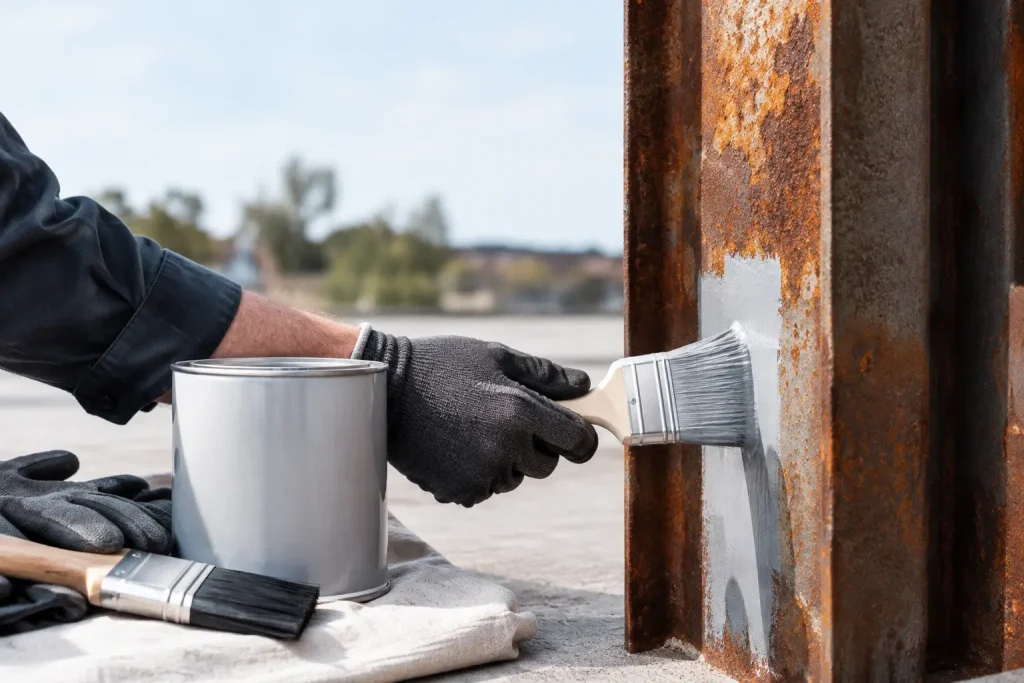
Where rust is limited and you can remove all loose corrosion, loose paint and contaminants, an anti-corrosive metal primer may be suitable. The objective is to expose a sound, stable surface with a firm feathered edge around any remaining coating.
This is often a practical approach for residential steelwork such as gates, balustrades, posts and outdoor furniture, provided the chosen topcoat is designed for exterior metal. Do not prime over glossy, poorly adhered old paint just because it is not visibly rusty. It still needs to be cleaned, abraded and checked for sound adhesion.
For a small area, hand tools may be enough. For larger jobs, mechanical wire brushing, sanding or grinding can produce a more consistent result. Remove sanding dust before priming, and avoid leaving freshly prepared bare steel exposed overnight where condensation or rain can begin new rusting.
Rusty steel that cannot be brought back to bright bare metal
An epoxy mastic or surface-tolerant epoxy primer can be a strong option where steel has been prepared thoroughly but some sound, tightly held staining or pitting remains. These systems are commonly considered for maintenance work because they can offer good barrier protection when applied over suitably prepared steel.
There is an important qualification: surface tolerant does not mean surface indifferent. Loose rust, mill scale, oil, salt, dirt and poorly adhered coatings still need to be removed. Epoxy products also have specific mixing, induction, thinning, application and recoating requirements. They are not interchangeable with single-pack paints, and the topcoat needs to be compatible with the epoxy system.
For exposed exterior steel, an epoxy primer is often followed by a suitable protective topcoat. Epoxies can be affected by sunlight if left exposed, so the complete system matters rather than the primer alone.
Severe corrosion, coastal exposure or demanding industrial conditions
Zinc-rich primers are used in protective coating systems where high-grade surface preparation is achievable and specified. They can provide sacrificial corrosion protection, but they are not a shortcut for rusty steel that has received only a quick wire brush.
These primers usually demand very clean, properly profiled steel and disciplined application control. In many cases, abrasive blasting and a specified surface cleanliness standard are required. They are better suited to professionally planned industrial maintenance systems than a typical DIY touch-up job.
If steel is in a severe coastal or industrial environment, speak with the coating manufacturer before choosing a system. The right recommendation may involve a particular primer, intermediate coat and topcoat, with preparation standards based on the actual exposure and steel condition.
Rust converters and rust treatments
Rust converters can be useful where they are specifically approved for the job, but they are not automatically a substitute for removing corrosion. These treatments are designed to react with residual rust and form a more stable surface for subsequent coating.
They work best on thin, firmly attached rust after loose scale has been removed. They are not suitable over greasy steel, damp surfaces, thick flaky rust or failed paint. Compatibility matters particularly here: some primers and topcoats should not be applied over a converter unless the product instructions clearly allow it.
Treat a converter as one step in a system, not as a universal repair product. If the steel can be cleaned back to a sound substrate, that is generally the better starting point.
Surface preparation decides the result
The most expensive primer cannot compensate for contamination or loose corrosion. Preparation is where a long-lasting steel coating system is won or lost.
Begin by washing away dirt, chalk, salt and other deposits with an appropriate cleaner. Rinse as required and allow the surface to dry fully. Solvent cleaning may be needed for oil or grease, but it should be done before abrasive work so contaminants are not spread across the steel.
Next, remove all loose and flaky material. Scraping, wire brushing, sanding, needle-gunning, grinding and abrasive blasting each have a place, depending on the size and condition of the job. Pay extra attention to welds, bolt heads, joints, underside edges and rust pits. These are common places for corrosion to return if preparation is rushed.
After mechanical preparation, remove dust carefully and inspect the surface again. A sound old coating can sometimes remain if it is firmly bonded and compatible with the new system, but any edge between old paint and bare steel should be feathered smooth. Sharp coating edges are weak points where moisture can enter.
Prime within the time stated in the product instructions. Bare steel can flash rust quickly, particularly in humid conditions or after rain. Do not apply coatings to wet steel or when conditions are likely to cause condensation before the coating has dried as specified.
Match the primer to the finishing coat
A primer is only one layer of the coating system. The topcoat provides colour, weather resistance and, in many cases, the main defence against UV exposure. Choosing a primer without considering the topcoat can lead to wrinkling, poor intercoat adhesion, extended drying or premature coating failure.
As a general rule, stay within a compatible system where possible. If you are applying a two-pack epoxy primer, check exactly which topcoat is approved over it and the recommended recoating window. If you are using a single-pack metal primer, make sure the selected finish coat is suitable for that primer and for exterior steel.
Do not assume an existing coating is compatible just because it looks like paint. Older steelwork may have alkyd, epoxy, chlorinated rubber, bitumen-based material or an unknown maintenance coating beneath the surface. A small test area can be sensible where the old system is uncertain, but it does not replace following technical advice for the full job.
Practical application points
Use the application method, spread rate and film-build guidance in the technical data sheet. Applying a primer too thinly can leave inadequate protection, while heavy application may cause sagging, slow curing or solvent entrapment. Brushes are useful for working primer into edges, welds and pits, while rollers or spray equipment may suit broader areas where the product allows it.
Stir single-pack coatings thoroughly. For two-pack products, measure and mix the components exactly as directed, observe any stated induction period and do not use material beyond its pot life. Wear suitable personal protective equipment, work with adequate ventilation and follow the safety data sheet for handling and clean-up.
If you are coating a roof, plant item or larger structural steel section, plan the work so prepared areas can be primed before weather changes. Check that the steel temperature, ambient conditions and surface dryness fall within the product requirements.
Get advice before buying the wrong system
A clear photo of the steel, details of its location, the current coating condition and the proposed topcoat can make product selection much more straightforward. BG Coatings can help customers work through suitable coating options, technical documentation and practical preparation questions for their project.
The best primer for rusty steel is the one specified for the condition you actually have, applied to a clean and stable surface, then protected with a compatible topcoat. Taking an extra hour to assess and prepare the steel properly is usually far more valuable than trying to save time with a one-coat fix.