A tin of paint is only one part of a coating job. When choosing paint supplies Malaga homeowners and trade customers need, the better question is: what surface are you coating, what is already on it, and what preparation will the new system need? Getting those answers right before buying helps avoid incompatible products, unnecessary waste and disappointing results.
BG Coatings manufactures and supplies coating systems from its Malaga facility for projects ranging from a faded metal roof or interior repaint to a pool coating or masonry sealer. The practical advantage of buying from a manufacturer is access to product knowledge as well as the coating itself. That matters when a surface is weathered, previously painted, porous, or exposed to water and hard Australian conditions.
Paint supplies Malaga customers should choose by surface
Paint is not a one-size-fits-all material. A coating designed for an interior plaster wall does a different job from a roof coating, pool paint or clear sealer. Start with the substrate and the environment it faces, then select the coating system around those facts.
For interior and exterior walls, consider whether the surface is new or previously painted, sound or chalky, and likely to be exposed to moisture, direct sun or regular cleaning. A quality wall paint system can provide an even, durable finish, but it still depends on cleaning, patching and priming where required. Exterior surfaces deserve particular attention because loose material, chalking and old failing paint can prevent a new coat from bonding as intended.
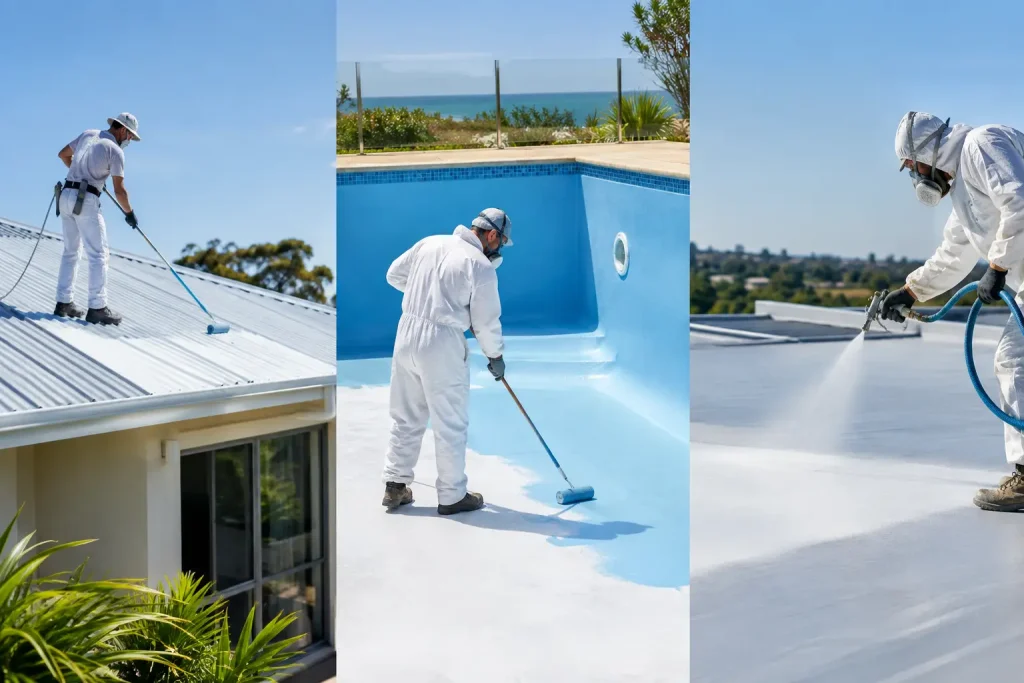
Roofs need a coating suited to the roof material and its exposure. Metal and tile roofs may both look tired after years of sun and weather, but their preparation and primer requirements can differ. Check for rust, loose coatings, dirt, lichen and other contaminants before deciding on the system. A roof coating should be selected as part of a compatible primer and topcoat approach, rather than as a quick cover-up for unresolved surface issues.
Swimming pools require the most careful product selection. Pool paint must suit the existing surface and any existing coating, whether that is concrete, fibreglass, chlorinated rubber or another system. The pool must be empty, clean, dry and properly prepared before coating. If you are planning a pool repaint, use the BG Pool Paint Calculator before purchasing. It is a practical way to estimate paint and primer quantities from pool dimensions or water volume, while helping you start the conversation about the correct coating system.
For limestone, sandstone and similar masonry, a clear sealer or varnish may be more appropriate than an opaque paint. The aim may be to help protect a porous surface while retaining its natural appearance. It depends on the stone, its condition, whether it has been sealed before and the finish you want. Always check that the product is suitable for the exact substrate and location.
Industrial surfaces need a system, not a guess
Industrial maintenance jobs often involve steel, concrete, machinery areas or other demanding substrates. These projects may need specialist primers, industrial topcoats or two-pack epoxy coatings selected around exposure, substrate condition and application requirements. A product that looks suitable on the shelf may not be suitable for chemical exposure, regular abrasion, moisture or a previously coated surface.
For trade customers, technical data sheets and safety data sheets should be part of the planning process, not paperwork considered after the product arrives. They set out key information on suitable uses, preparation, mixing where applicable, application methods, safety and recoat requirements. This is especially relevant for two-pack products, which need accurate measuring, mixing and use within the stated working time.
Preparation is part of your paint supplies
Customers often focus on colour and litres, then find that the job needs more cleaning materials, abrasives, fillers, masking or primer than expected. Preparation products are not extras. They are part of the coating system.
A sound starting point is to inspect the surface in good light. Look for peeling paint, powdery residue, rust, stains, cracks, mould, salt contamination or glossy areas that may need abrasion. Remove loose and unsound material, clean the surface thoroughly and allow it to dry as required by the coating instructions. Do not paint over a surface simply because it appears dry from a distance.
Primer is often where the decision becomes important. Bare masonry, exposed metal, repaired patches and highly porous surfaces may need a compatible primer or sealer before the topcoat. Primer can help create a more consistent base and improve the way the finish coat applies. It is not automatically required on every repaint, however. If the existing coating is sound and compatible, preparation may be different. The product documentation and the actual condition of the surface should guide the decision.
The same principle applies to old paint. If you do not know what coating is already present, avoid assuming a new product will adhere without issue. A small test area and technical advice can be worthwhile before committing to the full job, particularly for pools, roofs and industrial substrates.
Estimate quantities without relying on floor plans alone
Coverage rates are useful planning figures, but real-world quantities depend on the surface. A rough, porous wall can use more coating than a smooth, sealed wall of the same size. Corrugated roofing has more surface area than its footprint suggests. Repairs, edges, changes of colour and the specified number of coats also affect the total.
Measure the areas to be coated, then subtract large openings where appropriate. Check the stated coverage information for the selected product and allow for the required coats. For a roof, include the profile and condition of the substrate in your estimate. For walls, consider whether patching and porosity will increase product use. When colour matching or ordering for a larger job, allowing for future touch-ups can be sensible, but avoid buying solely on a broad rule of thumb.
For pools, use the calculator rather than trying to estimate from a few quick measurements. Pool shape, depth, surface type and the chosen system all affect the quantity required. It is a better planning tool than treating every pool as a standard rectangle.
Select colour and finish with the surface in mind
Colour is a practical choice as well as a visual one. Large exterior areas can look different in bright Perth sun than they do on a small colour sample. Existing building colours, surrounding materials and the direction of light all change how a shade appears. Where a specific colour is needed, colour-matching support can reduce uncertainty, but the final choice should still be assessed for the particular project.
Finish also affects the result. Some surfaces suit a low-sheen or matt appearance, while others benefit from a finish selected for cleanability, exposure or the desired look. On masonry and natural stone, a clear product may change the appearance of the surface. Read the product information and test a discreet area where practical before coating a highly visible space.
Buy with the application method planned
Before collecting or ordering paint supplies, decide whether the product will be brushed, rolled or sprayed. The right applicators, roller nap, brushes, masking materials and cleaning equipment make the work more controlled and help achieve an even finish. Application conditions matter too. Avoid applying coatings outside the conditions listed in the technical documentation, and plan the job so each coat has the preparation and recoat time it needs.
Local collection in Malaga can suit Perth customers who want to discuss a project, organise a colour match or confirm their product selection before starting. Pool paint is supplied across Australia, while delivery availability for other ranges can vary by product and destination. If the job involves an unfamiliar surface, a specialist coating or an existing paint system you cannot identify, ask for technical guidance before opening the tin.
The most useful paint supplies are the ones that match the surface, preparation and application plan. Take a few extra minutes to identify the system properly, check the documentation and calculate quantities with care. That is how a coating job starts with fewer unknowns and a better chance of looking right when the work is finished.