A pool repaint can fail long before the first coat is applied. The usual cause is not the paint itself – it is applying a new coating over an unknown, unsound or incompatible finish. This pool coating compatibility guide explains how to identify what is already on your pool, what can be recoated, and when complete removal or a different coating system may be required.
Pool paint is not a one-product-fits-all job. The existing surface, previous coating type, preparation standard and primer requirements all affect the result. Taking time to confirm compatibility before ordering can prevent wasted product, peeling paint and an unnecessary second repaint.
Start with the existing pool surface
Before selecting a coating, establish whether you are painting bare concrete, fibreglass, a previously painted concrete pool or another specialist surface. A pool that looks like plain painted concrete may have several generations of coatings underneath, and those layers matter.
The most common pool coating systems are chlorinated rubber and two-pack epoxy. Each has a different chemistry, preparation requirement and suitability for recoating. Do not assume that a new coating will bond because the old finish looks clean or because it has been painted successfully in the past.
If you have records from the previous owner, pool builder or painter, use them. A product name, invoice, old tin or photograph of the label can provide the answer quickly. If no information is available, inspect the coating closely and plan for testing before committing to a full application.
Why coating compatibility matters
A coating adheres properly only when it can form a reliable bond with the surface underneath. Dirt, body oils, sunscreen residue, mineral deposits and loose paint can interfere with that bond. More importantly, some paint types are not suitable to apply directly over others.
Chlorinated rubber pool paint is commonly used for repainting compatible chlorinated rubber surfaces. Two-pack epoxy pool paint is a higher-build, more chemical-resistant system suited to properly prepared concrete and suitable previously coated surfaces. However, epoxy should not simply be applied over an unidentified or poorly bonded coating in the hope that its strength will solve the problem.
A fresh coat can initially look excellent over an unsuitable surface. Problems may show later as lifting, blistering, cracking or delamination. That is why preparation and compatibility checks are part of the coating system, not optional extras.
Pool coating compatibility guide: common repaint scenarios
Recoating a chlorinated rubber pool
If the existing paint is confirmed as chlorinated rubber, a compatible chlorinated rubber pool paint is generally the straightforward recoating option, provided the old coating is sound. The surface still needs thorough cleaning, removal of chalky or loose material, and sanding or abrasion where specified in the relevant product documentation.
Do not coat over areas that are flaking, soft, blistered or lifting at the edges. These are signs that the existing coating has lost adhesion. Painting over them only seals in the problem temporarily.
Recoating a two-pack epoxy pool
A sound epoxy coating may be suitable for recoating with a compatible two-pack epoxy system after proper cleaning and mechanical abrasion. Epoxy coatings are hard and less forgiving of poor preparation, so a uniformly dull, keyed surface is usually needed for reliable intercoat adhesion.
If the existing epoxy is severely chalked, cracked or peeling, assess whether local repairs will leave a stable overall surface. In some cases, broader coating removal is the better path. The condition of the old coating is as important as its type.
Coating bare concrete or cement render
Bare concrete and cement-rendered pools need to be dry, clean, sound and properly cured before coating. New concrete can hold moisture and alkalinity that may affect a coating system, so follow the product technical data sheet for substrate requirements, preparation and any recommended primer.
Concrete also needs close inspection for laitance, contamination, cracks and weak or powdery areas. Paint is a protective finish, not a structural repair product. Address substrate issues before selecting the final coating system.
When the old coating cannot be identified
An unknown existing finish is where caution pays off. Do not choose a coating based on colour, gloss level or what a neighbour used. A simple solvent rub test may sometimes provide a clue, but it is not a substitute for a confirmed specification or a full compatibility assessment.
Where the coating is unknown, carry out a small test area only after preparing it correctly and allowing it to cure in line with the proposed product system. Check for softening, wrinkling, poor adhesion or other reactions. If there is any doubt, seek technical advice before proceeding across the pool.
Preparation determines whether the system can work
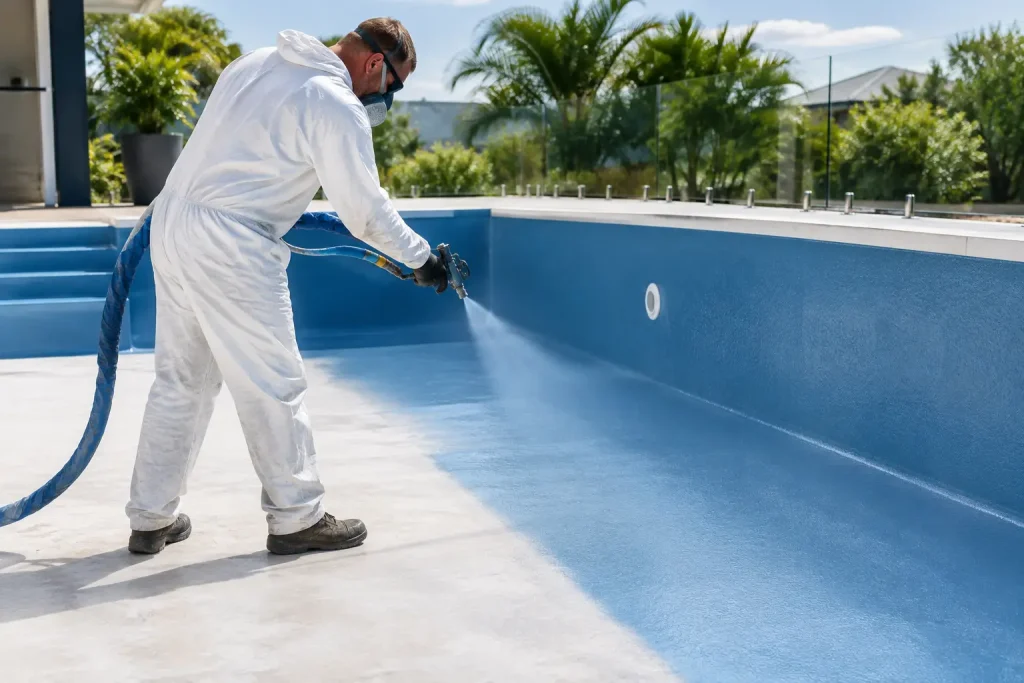
Every pool surface should be emptied before preparation and painting. Once empty, remove leaves, sediment, oils, sunscreen residue, scale and other contaminants. Pool surfaces can look clean while still carrying residues that reduce adhesion.
Use the preparation method specified for the coating system. This may involve washing, degreasing, acid etching where appropriate, sanding, grinding or other mechanical preparation. Avoid treating every pool the same way. Acid etching may suit certain mineral surfaces, but it does not replace removal of failing paint or mechanical abrasion of sound existing coatings.
Pay particular attention to the waterline, steps, corners, returns and areas around fittings. These locations often hold more contamination or have thinner, damaged coatings. Any loose paint must be removed back to a firm edge, then feathered so the new coating does not bridge over an unstable boundary.
Allow the surface to dry fully as required by the product system. Moisture beneath a coating can cause adhesion problems, particularly on concrete. Weather, ventilation, pool depth and substrate condition all affect drying, so avoid relying on a one-size-fits-all timeframe.
Primer is not always optional – or always required
A primer can be essential on certain bare or prepared mineral surfaces, but it is not automatically needed over every existing painted pool. The right answer depends on the existing coating, substrate condition and the chosen topcoat system.
Using an unnecessary primer can add cost and create another compatibility layer. Skipping a required primer can compromise adhesion. Check the technical data sheet for the specific pool paint and primer, rather than relying on general paint advice.
For a repaint, the key question is usually: is the old coating sound and compatible enough to serve as the prepared base? For bare concrete, the question becomes: does the selected system require a primer to achieve the intended bond and finish?
Choose the system before you calculate quantities
Once you know the surface and coating system, use the BG Pool Paint Calculator before purchasing. It helps estimate the amount of pool paint and primer you may need from pool dimensions or water volume, while accounting for the existing pool surface.
This is especially useful for DIY customers planning a first pool repaint and trade buyers working out product quantities across multiple pools. It reduces uncertainty, but it should follow – not replace – a compatibility decision. Calculating litres for the wrong system still leaves you with the wrong system.
Coverage can vary with surface texture, porosity, previous coating condition and application method. Allow for the number of coats stated in the product information and avoid stretching product beyond its recommended coverage rate to make quantities go further.
Application checks before the first full coat
Before applying across the entire pool, confirm the weather and surface conditions meet the product requirements. Two-pack products also require accurate mixing ratios and attention to pot life. Mix only the amount you can apply within the stated working time.
Read the technical data sheet and safety data sheet before starting. They set out the product-specific requirements for preparation, mixing, application, recoat intervals, curing and personal protective equipment. This information is more reliable than a generic online tip because it applies to the actual coating system in your hands.
If you are unsure whether an existing coating is chlorinated rubber, epoxy or another material, stop before buying the topcoat. BG Coatings can provide practical product guidance to help you match the pool surface and preparation plan to a suitable coating system. A little certainty before painting is far easier than fixing an incompatible repaint later.