A pool can look faded long before its structure needs attention. Chalky walls, patchy colour and previous paint that has lost adhesion are usually coating-system questions first. This swimming pool coating selection guide helps you identify the existing surface, choose a compatible pool paint system and plan the preparation work that gives the new coating its best chance of performing well.
The most expensive mistake is choosing paint by colour alone. Pool coatings need to suit the substrate, any existing coating and the condition of the surface beneath. A well-chosen product cannot compensate for loose old paint, contamination, moisture issues or inadequate preparation.
Start with the surface and existing coating
Before selecting pool paint, establish what you are coating. Common residential pool surfaces include concrete, rendered cement, fibreglass and previously painted surfaces. Each can require a different approach, particularly where an older coating is still present.
For a previously painted pool, the key question is not simply what the surface is made from. It is what is currently on it. Chlorinated rubber and two-pack epoxy systems have different compatibility requirements. Applying one system over an unknown or unsuitable previous coating can lead to softening, lifting or poor adhesion.
If you know the brand and type of the existing paint, retain that information. If you do not, inspect any leftover tins, ask the previous owner where possible, or carry out an appropriate coating identification or test patch process in line with the product technical documentation. When the coating history cannot be confirmed, do not guess. Removing unsound or incompatible material may be the more reliable path.
The condition of the existing paint matters just as much. Sound, firmly adhered coating may be suitable for preparation and recoating. Flaking, bubbling, powdery or peeling paint needs to be dealt with before any new coating is applied. Repainting over failure only hides it temporarily.
Choosing between chlorinated rubber and two-pack epoxy
For many painted pools, the decision comes down to chlorinated rubber pool paint or a two-pack epoxy pool coating. Both are specialist systems, but they are not interchangeable.
Chlorinated rubber pool paint
Chlorinated rubber is commonly selected for pools that have previously been coated with a compatible chlorinated rubber system. It can be a practical recoating option where the existing finish is sound and preparation is completed correctly.
This option may suit owners looking to refresh a compatible painted pool without changing coating chemistry. However, compatibility still needs to be confirmed. Do not assume that every older painted pool has chlorinated rubber on it, even if it looks like a conventional pool paint finish.
Two-pack epoxy pool paint
Two-pack epoxy is a more demanding coating system that requires accurate mixing, careful timing and thorough surface preparation. It is often considered for suitable concrete or cement-based pool surfaces and for projects where an epoxy system is appropriate for the existing substrate and coating history.
The practical trade-off is application discipline. Two-pack products are mixed in set ratios and have defined working times. Professional painters and experienced DIY users should follow the relevant technical data sheet closely, including mixing, induction time where specified, thinning instructions, recoat windows and cure requirements.
Epoxy is not automatically the right answer simply because it is a two-pack product. If the pool has an existing chlorinated rubber coating that is not compatible, applying epoxy over it can create problems. The correct system is the one that matches the surface and preparation plan.
Preparation decides the result
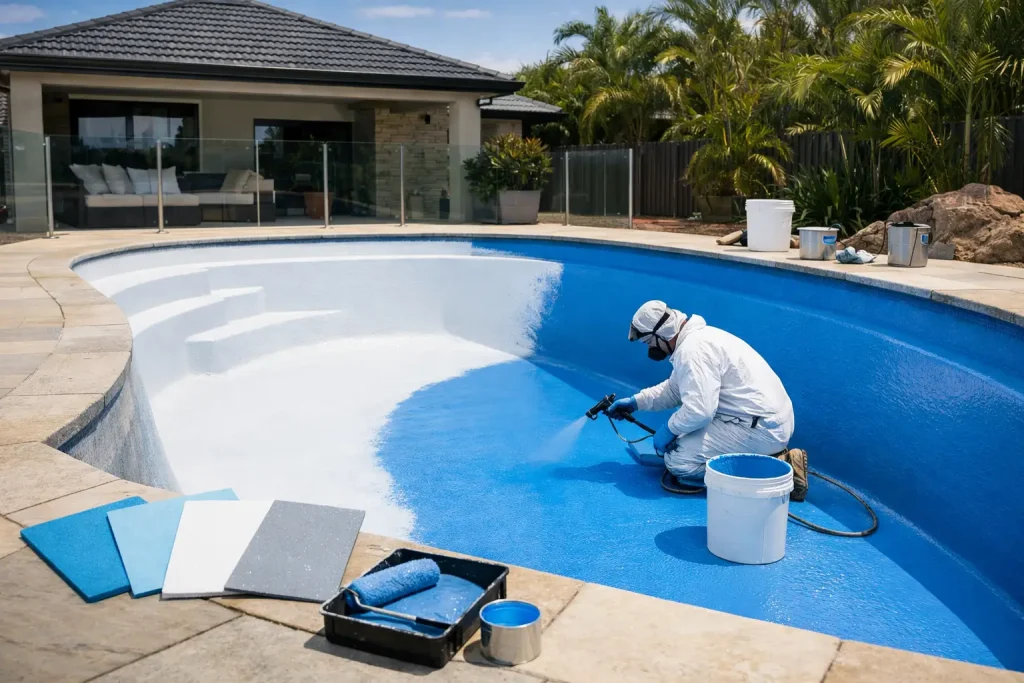
A pool coating project begins after the pool is drained and the surface is safe to access. The basin must be clean, dry and free of materials that could interfere with adhesion. That includes loose paint, dirt, oils, sunscreen residue, algae, mineral deposits and unsuitable previous coatings.
Preparation usually involves cleaning, removal of loose or failing paint, and creating the surface profile specified for the chosen coating system. Concrete and cement-based surfaces may need additional treatment or a suitable primer, depending on their condition and the selected product. Fibreglass and previously coated surfaces also need system-specific preparation.
Do not skip the technical data sheet because the pool appears straightforward. Product requirements can differ according to substrate, existing coating, temperature, humidity and whether the surface is bare or previously painted. The safety data sheet should also be reviewed before starting, particularly when handling two-pack materials, solvents or cleaning products.
A few practical checks can prevent a disappointing result:
- Test that old paint is firmly bonded rather than lifting at edges or turning chalky under pressure.
- Check for cracks, delamination, moisture concerns and areas where the substrate is deteriorating before coating.
- Remove contamination thoroughly, including residues around waterlines, steps and corners.
- Allow cleaning and preparation stages to dry as required by the coating system.
- Keep leaves, dust, insects and foot traffic away from the prepared surface and fresh coating.
These are not minor details. Pool paint is a finishing system, not a structural repair product. Where the substrate itself has issues, resolve the underlying condition before selecting a coating.
Primer is part of the system, not an optional extra
Whether primer is needed depends on the pool surface and chosen coating system. Bare cementitious surfaces, porous areas or particular change-of-system situations may require a compatible primer to help create the right foundation for the topcoat.
Using the right primer can also make quantity planning more accurate. A pool with a mix of bare patches and existing paint may absorb product differently across the surface. Trying to stretch topcoat across unprimed porous sections can affect finish consistency and may leave insufficient product for the specified coats.
Treat primer and topcoat as one system. Match them according to the product information rather than combining products based on convenience. This is particularly relevant where a pool has been partly stripped, patched or has different surface conditions from one area to another.
Work out quantities before ordering
Pool shape can make paint quantities difficult to estimate by eye. Walls, steps, ledges, deep ends and sloping floors all add surface area, and coating coverage varies with surface texture and product specification.
Use the BG Pool Paint Calculator before purchasing. It is a practical planning tool that helps estimate the paint and primer required from pool dimensions or water volume, while accounting for the existing pool surface. It reduces guesswork and helps you plan for the correct coating system and number of coats.
The calculator is a starting point, not a replacement for checking the product coverage information. Very rough concrete, heavily profiled surfaces, repairs and wastage during application can affect actual consumption. Trade users should also allow for normal site variables when planning material quantities.
Plan the application window
A coating choice is only as good as the conditions in which it is applied. Schedule the work around the conditions stated in the technical data sheet, including acceptable temperature, humidity and weather requirements. Perth summers can bring heat, while cooler or damp conditions can slow drying and curing. The right window depends on the specific product, not a general rule.
Read the application instructions before opening the product. Have the correct rollers, brushes, mixing equipment and personal protective equipment ready. For two-pack epoxy, organise the work so mixed material can be applied within its stated working time. For all pool coatings, apply the specified number of coats and observe the required interval between coats.
Do not refill the pool until the coating system has cured for the period stated in the product documentation. Filling too early can compromise a coating that otherwise appeared dry on the surface. This is one area where patience is part of the coating system.
Get support before committing to a system
A clear description of the pool surface, its current coating and the preparation already completed makes product advice far more useful. Photos of problem areas, details of any known previous paint, the pool dimensions and the condition of the surface can help narrow down the appropriate system.
BG Coatings manufactures and supplies specialist pool coating systems from Malaga, with pool paint available to customers across Australia. For homeowners, contractors and property-maintenance teams alike, reviewing the technical data and confirming compatibility before purchase is the sensible way to avoid unnecessary rework.
Choose the coating after you understand the surface, not before. A compatible system, careful preparation and realistic quantity planning will do more for the finished pool than selecting a colour from a screen ever can.