Fresh galvanised steel can look like the easiest surface to paint. It is clean, bright and free of rust, but its zinc coating is also smooth and chemically active. Apply the wrong coating system over it and the finish may lose adhesion long before the topcoat itself has worn out. Choosing the best primer for galvanised steel starts with identifying the steel’s condition, then matching the primer to the intended topcoat and service environment.
For a gate, shed framing, fascia, handrail or industrial component, primer is not just an extra coat. It is the adhesion layer between the zinc surface and the paint system above it. Good preparation and product compatibility matter as much as the name on the tin.
What makes galvanised steel difficult to coat?
Galvanised steel is protected with a zinc layer. That layer helps resist corrosion, but it can make paint adhesion more difficult than it is on bare steel. New galvanised surfaces may also carry oils, passivation treatments or residues from manufacturing and handling. These contaminants are often invisible, yet they can interfere with primer bonding.
Weathered galvanised steel presents a different situation. After exposure, the zinc develops a duller surface layer, sometimes called zinc salts or white rust. A light, even weathered appearance can be more paint-friendly than a brand-new glossy finish, but loose white corrosion products still need to be removed. If the surface is flaking, chalky or contaminated, paint should not be applied until it is properly cleaned and stabilised.
This is why there is no single primer that suits every galvanised item. The right choice depends on whether the steel is new or weathered, where it is located, how it will be exposed, and what topcoat will be applied.
Best primer for galvanised steel: choose by coating system
In most cases, the best primer is one specifically formulated or approved for galvanised metal and compatible with the topcoat. Do not assume that a general-purpose metal primer will adhere to zinc simply because it adheres well to bare steel.
Etch or wash primers
Etch primers, sometimes called wash primers, are designed to promote adhesion on difficult non-ferrous surfaces, including galvanised steel. They are generally applied as a thin coat and are not intended to provide high film build or replace a protective undercoat where one is required.
They can be a practical first coat on clean, sound galvanised steel, particularly when the selected topcoat system calls for an etch primer. However, compatibility is critical. Some topcoats are not suitable over particular etch-primer chemistries, while other systems require an additional compatible primer or undercoat before finishing.
Two-pack epoxy primers
A suitable two-pack epoxy primer can offer strong adhesion and a durable base in more demanding applications, provided it is specified for galvanised substrates and applied over correctly prepared steel. Epoxy systems are commonly considered where moisture, industrial exposure, regular cleaning or a higher-performance topcoat system is involved.
The trade-off is that two-pack products require accurate mixing, attention to pot life, suitable personal protective equipment and close adherence to the technical data sheet. They are often a better fit for experienced applicators, commercial maintenance work and projects where the full system has been selected for the exposure conditions.
Single-pack primers made for galvanised metal
For many residential and light-commercial projects, a quality single-pack primer specifically approved for galvanised steel can be the straightforward option. These products are easier to use than a two-pack system, but they still need a clean, correctly prepared surface and a compatible finish coat.
This approach can suit items such as fencing, metal trim, downpipes or light steelwork, depending on the product’s documented uses. Always check whether the primer is intended for exterior exposure, whether it needs a topcoat, and the allowable recoat window.
Start with the condition of the steel
Before selecting a primer, inspect the surface closely. New steel may be bright and shiny, while older galvanised steel may be dull grey, stained or marked with white salts. Areas around overlaps, welds, fixings and water traps deserve extra attention because contamination and corrosion are more likely to develop there.
If the galvanising is sound but dirty, cleaning is usually the first job. Remove dirt, grease, oil and handling residues with an appropriate cleaning method, then rinse where required and allow the surface to dry fully. A detergent wash alone may not be enough for oily or heavily soiled steel.
Next, lightly abrade the surface where the coating system requires it. This creates a more even profile for the primer to grip. Use a method appropriate to the item and avoid damaging sound galvanising. On larger or heavily weathered work, professional surface-preparation specifications may call for sweep blasting. This needs to be controlled carefully because aggressive blasting can remove too much zinc protection.
Any white rust, loose oxidation, peeling old paint or failed coating must be removed. If red rust is visible, the galvanised layer has been compromised in that area. Treat it as a repair zone and select the preparation and primer system accordingly rather than painting straight over it.
Check the topcoat before buying the primer
A primer and topcoat work as a system. The primer may adhere well to galvanised steel but still be unsuitable beneath the finish coat you want to use. Solvent strength, recoat timing, film thickness and coating chemistry can all affect the result.
For example, a decorative exterior topcoat may need a particular undercoat for opacity and uniform colour, while an industrial finish may require an epoxy primer beneath a compatible protective topcoat. Dark colours on exterior metal can also run hotter in direct sun, so product selection should consider the exposure as well as appearance.
Read the technical data sheet for both products before starting. Confirm approved substrates, preparation requirements, mixing instructions where relevant, application method, coverage guidance, minimum and maximum recoat times, and curing conditions. Safety data sheets should also be followed for ventilation, handling and personal protective equipment.
If you are repainting an existing coated surface, identify the old coating where possible. A sound previous finish may only need cleaning, abrasion and a suitable preparation coat. A poorly adhering or unknown coating creates more uncertainty. In that case, a test patch in an inconspicuous area can help confirm compatibility before the whole job is coated.
Application details that protect adhesion
Even the right primer can fail if it is applied over condensation, dust or surface contamination. Paint only when the steel is dry and the conditions meet the product data sheet. Metal cools quickly overnight and can collect moisture that is easy to miss, especially on outdoor work completed early in the morning.
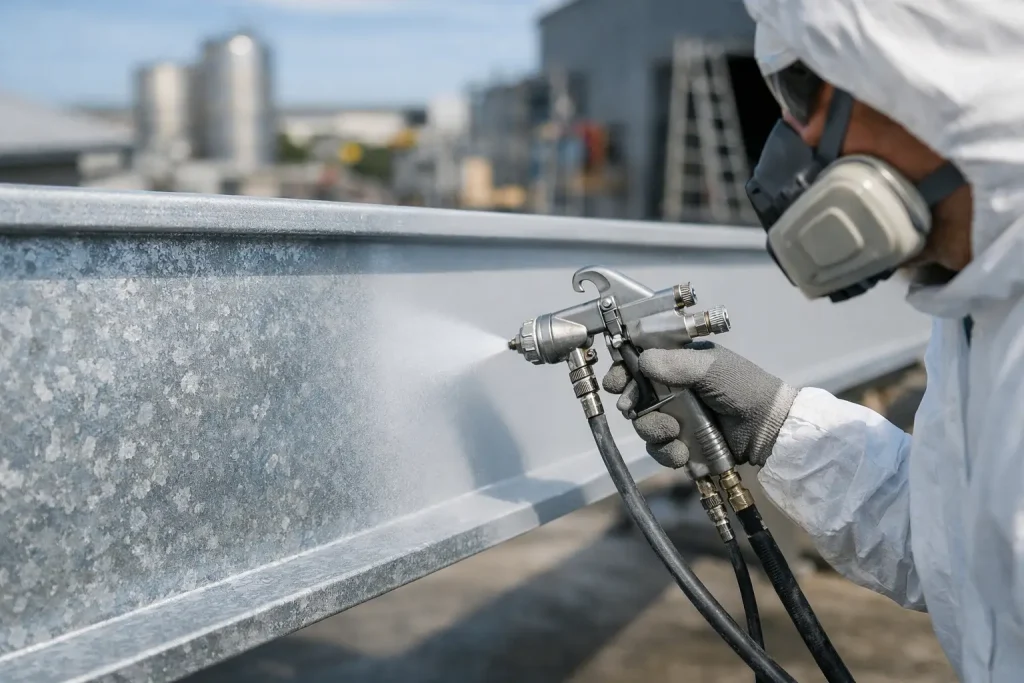
Apply the primer at the recommended spread rate. Coating too heavily can create drying and curing issues, while spreading it too far may reduce protection and hide coverage. Brush, roller and spray application can all be appropriate depending on the product and the shape of the item, but edges, corners, welds and fasteners need deliberate coverage.
Allow the primer to dry or cure for the specified time before topcoating. Do not treat recoat times as a rough guide. Applying too soon can trap solvent or disturb the primer film; waiting beyond the stated window may mean further abrasion is needed for intercoat adhesion.
A practical buying checklist
Before purchasing, have four details ready: whether the galvanised steel is new or weathered, whether there is existing paint, the location and exposure, and the topcoat you plan to use. Those answers narrow the suitable primer options quickly.
For DIY projects and trade work alike, it is worth getting technical advice where the substrate is heavily weathered, near coastal exposure, regularly wet, previously painted, or part of an industrial maintenance system. BG Coatings can help customers work through compatible coating options and technical documentation so the primer, topcoat and preparation method are selected as one system.
The best result usually comes from a simple discipline: clean the zinc surface thoroughly, prepare it to the primer specification, use a primer made for galvanised steel, and topcoat within the correct window. That approach gives the finish a sound base to perform as intended.