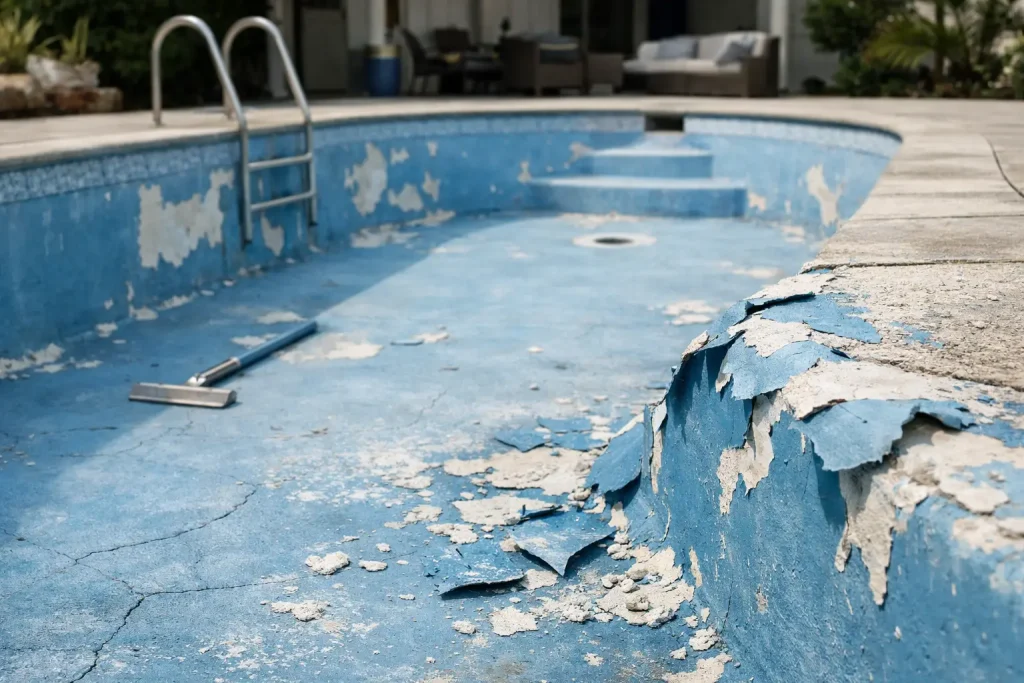
A peeling pool surface rarely starts with the final coat. The visible flakes, blisters or lifting paint are usually the result of an earlier issue with preparation, moisture, coating compatibility or application conditions. Understanding why pool coatings peel helps homeowners, DIY renovators and trade painters avoid spending time and money recoating a surface that is not ready.
Pool paint is a coating system, not simply a colour finish. It needs a clean, sound and dry surface, the right primer where required, and a compatible topcoat applied in suitable conditions. If one part of that system is missed, adhesion can be compromised.
Why pool coatings peel in the first place
Peeling happens when the coating loses its bond with the surface underneath, or when one coat loses its bond with another. The failure may appear in a small area at first, but water pressure, chemical exposure and regular pool use can make it spread.
The cause is not always obvious from the top. A coating may lift cleanly from bare concrete, which points to a substrate or primer issue. If the peeled section has an older paint layer attached to its back, the weak point may be the previous coating. Looking at where the separation occurred is useful before selecting a repair method or new coating system.
Poor surface preparation
Inadequate preparation is one of the most common reasons pool coatings fail. Concrete and rendered pool surfaces can hold fine dust, loose material, salts, old chalky paint, body oils, sunscreen residue and other contaminants. Even when the pool looks clean, these can interfere with adhesion.
All loose or poorly bonded existing paint needs to be removed before recoating. Painting over flaking areas only transfers the problem to the new finish. Sound existing paint may sometimes be recoated, but it must be thoroughly cleaned, abraded where required and checked for compatibility with the proposed product.
Smooth or dense surfaces also need enough surface profile for the coating to grip. The correct preparation method depends on the pool substrate and the existing coating. Follow the applicable product technical data sheet rather than assuming every painted pool needs the same process.
Moisture coming through the substrate
A pool shell can look dry while moisture remains within the concrete or moves through it from behind. This is especially relevant for concrete pools where groundwater, drainage issues or moisture vapour may affect the substrate.
When moisture pressure builds behind a coating, it can cause blistering, bubbling or sections of paint to lift away. Repainting over the affected area without addressing the moisture source may lead to the same failure again.
A damp surface can also prevent proper bonding at the time of application. Allowing the pool to dry sufficiently after draining, cleaning or rain is essential. Drying time will vary with weather, ventilation, surface porosity and the condition of the pool, so it should not be treated as a fixed number of days for every project.
Incompatible old and new coatings
Not all pool paints can be applied over one another. A pool may have been painted years ago with chlorinated rubber, epoxy or another coating type, and the existing finish may no longer be easy to identify. Applying an incompatible product can lead to lifting, softening, wrinkling or poor intercoat adhesion.
This is why identifying the existing coating matters. If records are unavailable, inspect the surface and seek practical product advice before proceeding. In some cases, a sound existing coating can be prepared and recoated with a compatible system. In others, more extensive removal may be needed to create a reliable base.
A small adhesion or compatibility test can be useful, but it should support – not replace – the preparation and product guidance set out in the technical documentation.
Skipping or using the wrong primer
Primer is not an optional extra where the coating system calls for it. On bare or suitably prepared concrete, the correct primer helps create a stable bond between the substrate and the pool paint. Using no primer, using an unsuitable primer, or applying the topcoat outside the primer’s recommended recoat window can contribute to peeling.
Primers are formulated for specific substrates and topcoats. A general-purpose paint primer is not automatically suitable for an immersed pool environment. Select the primer and topcoat as a matched system, and check the data sheet for mixing, application and recoating requirements.
Application in unsuitable conditions
Pool coatings need appropriate conditions to cure as intended. Applying paint onto a hot surface, during damp weather, when rain is likely, or outside the recommended temperature range can affect film formation and adhesion.
Direct sun can make a pool wall or floor much hotter than the surrounding air temperature. It may cause paint to dry too quickly on the surface, making application harder and affecting the finish. Conversely, cool or humid conditions can slow drying and increase the risk of moisture affecting the coating.
Plan the job around the weather and work methodically. Check the product’s technical data sheet before starting, particularly for temperature limits, mixing instructions, pot life for two-pack products and recoat intervals.
Incorrect mixing or film thickness
Two-pack epoxy pool paint depends on accurate mixing of its components. An incorrect ratio, incomplete mixing or use after the stated pot life can affect curing and adhesion. Measuring carefully and mixing only what can be applied within the working time is part of the coating system.
Applying coats too heavily can also create problems. A thick surface film may skin over before the lower layer has cured properly, leaving a weaker finish. Applying too thinly may not deliver the film build intended by the manufacturer. Use the specified application method and coverage guidance rather than trying to stretch product beyond its recommended rate.
How to prevent peeling before repainting
The best time to prevent peeling is before buying paint. Start by assessing the pool surface once it has been drained and made safe to inspect. Note whether the pool is bare concrete, rendered, fibreglass or previously painted, and whether existing paint is sound, chalky, blistered or lifting.
If the coating is peeling widely, do not assume a light sand and fresh coat will solve it. Remove failed material until you reach a sound surface, then determine why the failure occurred. Check for signs of moisture, staining, cracking, contamination or unknown layers of old paint.
For a practical planning process:
- identify the pool substrate and any existing coating type;
- remove loose, flaking and poorly bonded paint;
- clean and prepare the surface according to the selected system;
- allow the substrate to dry properly before coating;
- use the recommended primer where required; and
- apply compatible coats at the specified spread rate and recoat interval.
This approach takes longer than painting straight over a problem area, but it gives the new coating a proper base. Preparation is where a pool painting project is won or lost.
Choosing the right pool coating system
The correct system depends on the surface and what is already on it. Chlorinated rubber pool paint and two-pack epoxy pool paint are different coating types with different preparation, compatibility and application requirements. The right choice is not simply the one with the strongest reputation – it is the one suited to the pool substrate, existing coating and project conditions.
Before purchasing, use the BG Pool Paint Calculator to estimate the amount of pool paint and primer you may need from your pool dimensions or water volume. It is a useful way to plan quantities and reduce uncertainty, particularly where the pool has walls, steps, ledges or an unusual shape.
BG Coatings manufactures pool coating systems in Western Australia and can provide practical guidance on product selection, preparation and technical documentation. Have clear photos of the surface, the pool dimensions and details of any existing paint available when seeking advice. The more accurately the substrate is identified, the more confidently the coating system can be selected.
When peeling points to a bigger problem
Not every coating failure is purely a paint issue. Repeated blistering in the same location, persistent damp patches, obvious movement in the pool surface or significant cracking may indicate a substrate or moisture issue that needs attention before recoating.
A new coating should not be expected to bridge active cracks or stop water pressure from behind the surface. Resolve underlying condition issues first, then prepare and coat a sound substrate in line with the relevant product instructions.
A pool coating is only as reliable as the surface beneath it. Take the time to identify the old finish, prepare thoroughly and plan quantities with the BG Pool Paint Calculator before starting – that is the practical path to a cleaner, more dependable repaint.