A pool can look tired long before its structure is ready for major work. Fading, chalking, stains and an uneven finish are common reasons Australians look for pool paint. But choosing pool paint Australia wide is not simply a matter of picking a colour. The existing surface, previous coating, preparation standard and coating system all affect whether the new finish has the best chance to adhere and perform as intended.
For homeowners, renovators and trade applicators, the practical starting point is to identify what is already in the pool. That one step helps determine whether a chlorinated rubber or two-pack epoxy system may be suitable, whether a primer is required, and how much preparation is involved.
Start with the pool surface and existing coating
Painted concrete pools are a common candidate for recoating, but not every concrete pool should receive the same product. A pool may have bare cement render, an older epoxy coating, chlorinated rubber paint, or several unknown layers applied over the years. Fibreglass pools also need a careful assessment because the condition of the gelcoat and any existing paint matters.
The most useful information is the type of coating currently on the surface. If records are available from a previous painter, owner or supplier, keep them. A compatible recoating system is generally simpler and lower risk than applying a different chemistry over an unknown finish.
Where the coating type cannot be confirmed, do not guess based on colour or age alone. A small test area, practical advice from the manufacturer and the relevant technical documentation can help establish a suitable approach. In some cases, thorough removal of poorly bonded or incompatible coating may be necessary before repainting. The right answer depends on the substrate and what remains sound after preparation.
Chlorinated rubber or two-pack epoxy pool paint?
The two systems are designed for different situations. Selecting between them should be based on compatibility, site conditions, application capability and the manufacturer’s instructions rather than a broad claim that one is always better.
Chlorinated rubber pool paint
Chlorinated rubber pool paint is commonly used for recoating pools that already have a compatible chlorinated rubber finish. It can be a practical option for certain repainting projects, particularly where maintaining coating compatibility is the priority. As with any pool coating, sound preparation is still essential. Applying new paint over loose, chalky or contaminated material only transfers the problem to the fresh finish.
Check the product data sheet for the recommended thinner, application method, recoat interval and coverage guidance. These details are part of the coating system, not optional extras.
Two-pack epoxy pool paint
Two-pack epoxy pool paint is a specialist coating system that requires accurate mixing of its separate components. It is often selected for suitable concrete pools and other compatible substrates where the preparation and application conditions can be controlled carefully.
Because it is a two-pack product, measure and mix only in line with the technical data sheet. Mixing ratios, induction periods where specified, pot life and application windows all matter. Once activated, the material cannot simply be put aside indefinitely for later use. Professional painters will be familiar with these requirements, while DIY users should plan the job carefully before mixing.
Epoxy can be an excellent choice in the right system, but it is not a shortcut around poor substrate condition. If the surface is damp, contaminated, unsound or coated with an incompatible material, solve that issue first.
Preparation determines the result
Most pool paint failures begin before the first coat is applied. Pools need to be empty, clean, dry and properly prepared before painting. Never apply a coating to a pool containing water.
Start by inspecting the entire surface in good light. Look for flaking paint, hollow or loose render, chalking, staining, algae residue, oils, mineral deposits and areas where the previous coating has lost adhesion. Remove loose or failing paint and clean the surface using the preparation process specified for the selected product.
Cleaning is not just about appearance. Sunscreen, body oils, leaves, dust and chemical residue can interfere with adhesion even where the surface looks reasonably clean. Rinse thoroughly after cleaning steps where required and allow adequate drying time. Moisture in concrete can cause problems, so follow the product guidance for substrate condition and suitable weather.
Pay particular attention to steps, corners, waterlines, fittings and transitions between surfaces. These areas often collect contamination or retain weak paint. If there are structural defects, cracks or substrate problems, assess and address those before coating. Paint is a finish, not a repair system for every underlying issue.
Check the weather before opening the tin
Australian conditions can change quickly, especially during warmer months. Temperature, humidity, direct sun, wind and the chance of rain can all affect application. A surface in full afternoon sun may be much hotter than the air temperature, while a cool morning can leave condensation on the substrate.
Plan the job around the application conditions stated in the technical data sheet. Avoid rushing because the pool is empty or a weekend is available. Waiting for a suitable weather window is usually preferable to applying a coating outside its recommended conditions.
The same applies to curing. Allow the full cure period specified by the product documentation before refilling the pool. Refilling too early can compromise the coating system, regardless of how dry it feels on the surface.
Estimate pool paint quantities before you buy
Running short halfway through a coat makes it difficult to maintain an even finish. Buying far more product than required can also be wasteful, particularly with two-pack materials that have a limited pot life once mixed.
Before purchasing, use the BG Pool Paint Calculator. It is a practical planning tool that estimates the amount of paint and primer you may need from pool dimensions or water volume, while taking the existing pool surface into account. It reduces guesswork and gives you a clearer starting point for selecting the appropriate system.
Calculator results should be considered alongside the product’s stated coverage rate and the actual pool condition. Rough render, heavy surface profile, repairs and complex shapes can use more material than a smooth, straightforward pool. Measure carefully, include walls, floors, steps and ledges, and allow for the specified number of coats.
Application habits that help achieve an even finish
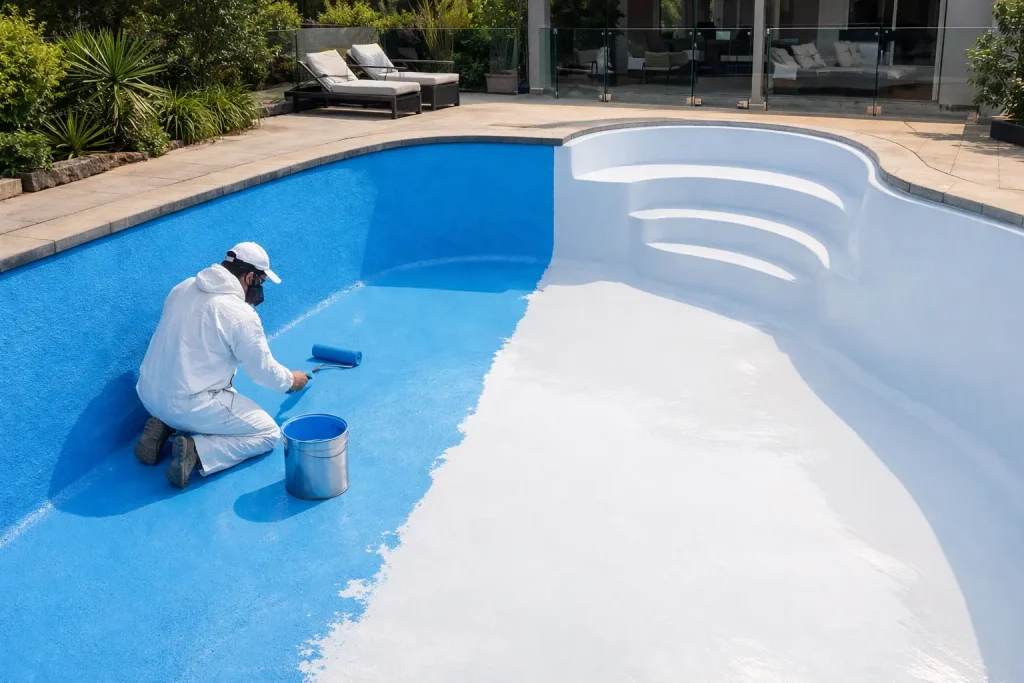
Use the roller, brush or spray method recommended for the product. Brushes are useful for cutting in around fittings, corners and steps, while rollers are commonly used across larger areas. Spray application may suit experienced applicators where the coating system and site conditions allow it, but it requires the correct equipment and safety controls.
Keep a wet edge where practical and apply consistent coats rather than trying to make one coat do the work of two. Uneven film build can affect appearance and performance. Stir single-pack paint as directed, and for two-pack epoxy, mix accurately and only prepare an amount that can be applied within the stated pot life.
Do not substitute solvents or make informal adjustments to thinness. Use only the recommended thinner where thinning is permitted, and follow the data sheet for recoat timing. These details are particularly important when coating over an existing finish or working with a two-pack system.
Choose support as well as paint
The best pool coating choice is the one that suits the pool in front of you, not the one that sounds most impressive on a label. For a pool with a known, sound coating, the pathway may be straightforward. For an older pool with unknown paint layers, exposed concrete or adhesion concerns, more assessment is needed before product selection.
BG Coatings manufactures pool coating systems in Australia and provides practical product guidance, colour support and technical documentation to help customers plan with more confidence. Review the relevant data and safety information before starting, use the BG Pool Paint Calculator to estimate quantities, and ask for advice when the existing surface is unclear. A careful decision before preparation begins is one of the most valuable parts of a pool repainting project.