A faded roof can make an otherwise well-kept property look tired, but roof paint is not a one-product decision. The existing roof material, condition of the surface, previous coatings and preparation work all affect whether a new coating system performs as intended. Getting those details right before application is usually what separates a neat-looking finish from a job that needs attention sooner than expected.
For homeowners and trade painters alike, the aim is simple: select a compatible system, prepare the surface thoroughly and apply it within the product’s stated conditions. A quality coating can then provide an even, refreshed finish suited to the demands placed on Australian roofs.
Start With the Roof Surface, Not the Colour
Roof coatings must suit the substrate beneath them. Metal roofing, concrete tiles and previously painted roofs can each require a different approach. The surface may also contain a mixture of materials, such as metal flashings on a tiled roof, which should be considered when planning the system.
On metal roofing, look carefully for corrosion, loose or failing old paint, chalking, dirt and residue around laps, gutters and fixings. Rust needs to be addressed properly before coating. Applying paint over unstable corrosion or poorly bonded old coating does not solve the underlying preparation issue.
Concrete tiles are porous and can hold dirt, biological growth and loose surface material. Their condition can vary across the roof, particularly on older properties. A clean, sound and properly prepared tile surface gives the coating a much better base to adhere to.
Previously painted roofs require an extra compatibility check. If the old coating is peeling, softening, powdery or unknown, a test area and closer assessment may be needed before choosing a new product. A new topcoat is only as reliable as the coating it is applied over.
What Preparation Does for Roof Paint
Preparation is not the glamorous part of a roof painting project, but it is where most coating failures are prevented. Paint needs a clean, dry, sound surface. Dust, mould, lichen, oil, loose coating and surface salts can all interfere with adhesion.
Cleaning should remove contamination rather than simply move it around. After washing, allow sufficient drying time before applying any primer or coating. This is particularly important for porous roof tiles and areas that receive limited sunlight. Moisture trapped in a surface can affect application and the finished film.
Before coating, inspect the roof methodically for the following:
- loose, flaking or chalky existing paint
- rust, exposed metal or deteriorated fixings
- cracks, damaged tiles or unstable surface areas
- mould, lichen, dirt and residue around roof details
Painting does not replace necessary roof repairs. Any damaged or unstable areas should be dealt with before a coating system is applied. For safety, only undertake work that can be completed safely and use appropriate access methods and personal protective equipment. If roof access or surface condition is outside your capability, speak with a suitably qualified professional.
Primers Are Part of the System
A primer is not automatically required on every roof, but it should never be treated as an optional extra without checking the coating specifications. Bare metal, prepared rust-affected areas, porous substrates and surfaces with compatibility concerns may need a suitable primer or sealer before the finish coats.
The right primer can help create a consistent base for the topcoat. It may also assist where the substrate has different levels of porosity or where exposed areas need additional preparation. The wrong primer, or no primer where one is required, can compromise the whole system.
Read the technical data sheet for the selected product before starting. It should guide you on suitable substrates, surface preparation, primer requirements, mixing where applicable, recoat windows, application methods and coverage. Safety data sheets are equally useful when planning handling, ventilation and personal protection.
Choosing Roof Paint for the Conditions
Western Australian roofs face intense sun, wind-driven rain, temperature changes and airborne contaminants. That makes product selection more than a colour decision. Choose a roof coating designed for the roof material and exposure conditions, then follow the manufacturer’s application instructions closely.
Colour matters for both appearance and maintenance planning. A darker colour can change the visual weight of a home, while lighter shades may show dust or staining differently depending on the location. If you are matching existing trims, gutters or walls, confirm the selected colour before ordering the full quantity. Colour matching support can be valuable where a standard shade is not the right fit.
Coverage should also be calculated from the actual roof area, not just the property’s floor plan. Roof pitch, overlaps, ridges, valleys and surface profile all increase the area that needs coating. Porous or textured surfaces may use more product than smooth surfaces. Check the stated coverage rate and allow for the number of coats required by the system.
BG Coatings can provide practical product guidance, technical documentation and colour support to help customers select a suitable coating system before purchasing. This is particularly useful where the existing coating is unknown, the roof has a mix of substrates or the surface condition is difficult to assess from ground level.
Application Conditions Matter
Even the correct product can be affected by poor application conditions. Avoid applying coatings when rain is likely before the product has had the required time to dry, when the surface is damp, or when conditions fall outside the ranges stated in the technical data sheet.
A roof surface can become substantially hotter than the surrounding air in direct sun. Check the product guidance for acceptable surface and ambient temperatures, rather than relying on the weather forecast alone. Very hot surfaces can make application harder to control, while cold or damp conditions may slow drying.
Maintain a wet edge where practical and apply coats evenly at the recommended spread rate. Trying to stretch product too far can reduce film build, while applying excessively heavy coats may create drying or finish issues. Use the application method specified for the product, whether that is brush, roller or spray equipment.
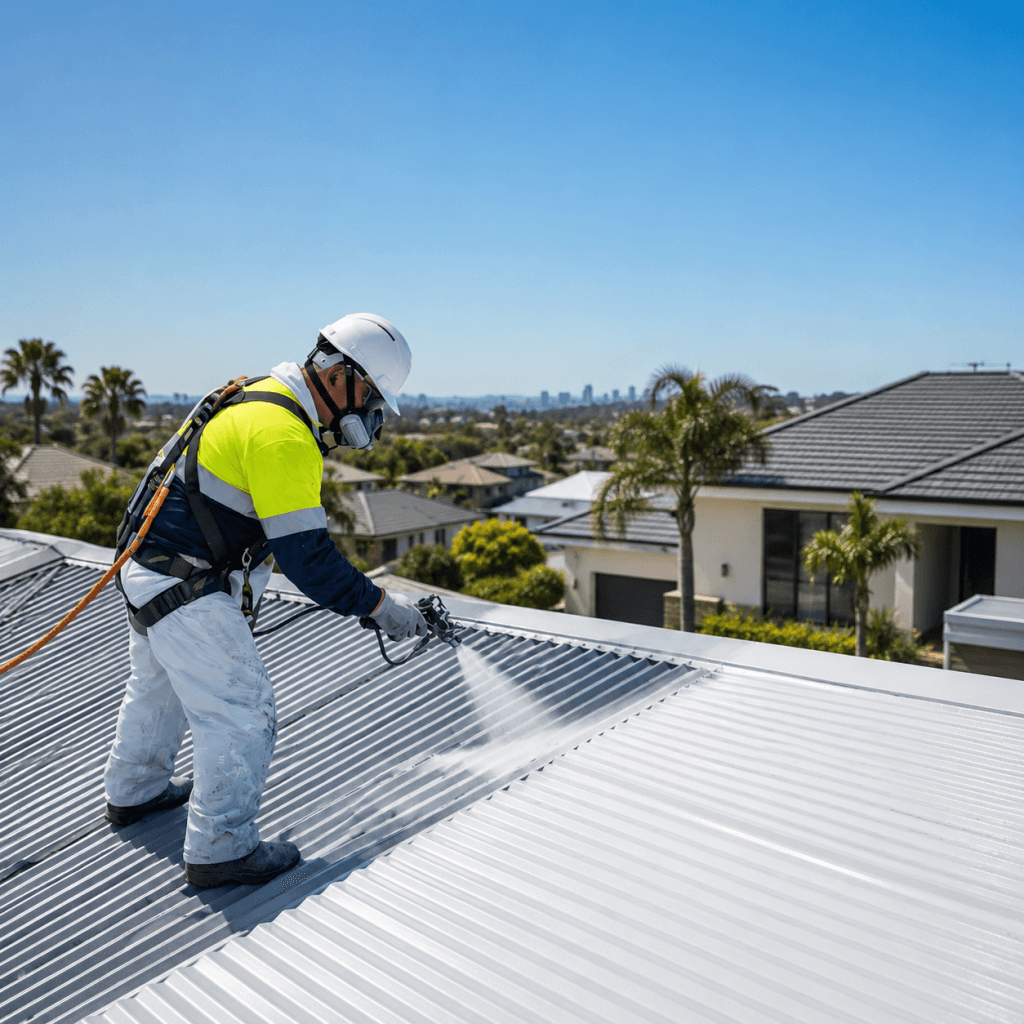
For spray application, equipment setup and operator technique have a direct effect on finish quality and material use. Trade painters should confirm nozzle selection, pressure and filtration requirements against product guidance. DIY customers may find brush and roller application more manageable for smaller sections and detailed areas, provided the selected coating allows it.
Do Not Rush Recoating
The time between coats is part of the system. Recoating too early can affect the previous coat, while waiting too long may require additional surface preparation. Follow the stated minimum and maximum recoat times, taking actual weather conditions into account.
Plan the job so you have enough product from the same batch where possible, especially for larger visible roof areas. This helps maintain a more consistent finish. Keep a record of the product, colour and application date for future maintenance planning.
Common Roof Coating Mistakes to Avoid
The most common mistake is painting over a surface that has not been properly cleaned or stabilised. Another is assuming that any roof coating will adhere to any existing paint. Compatibility is a technical question, not something that can be judged by colour or appearance alone.
It is also easy to underestimate quantities, particularly on tiled roofs and roofs with complex shapes. Running out midway through a coat can create avoidable variation in application. Measure carefully, review the coverage information and order for the full coating system rather than only the topcoat.
Finally, do not treat technical documentation as an afterthought. It provides the practical details that turn a product choice into a workable application plan. If something about the substrate, old coating or required preparation is unclear, ask before opening the tin.
A well-planned roof coating project starts with an honest assessment of the surface. Choose the compatible system, allow time for thorough preparation and work to the product instructions. That approach gives your roof paint the best opportunity to achieve a clean, consistent finish that looks right on the property.