A faded, chalky pool surface can make an otherwise well-kept backyard look tired. The right pool paint can restore colour, improve the finish and help protect the pool shell – but only when the coating system suits the existing surface and the preparation is done properly.
For most residential and commercial pools, the decision comes down to the current coating, the pool construction, its condition and how much preparation is required. A premium coating cannot compensate for loose old paint, moisture in the substrate or an incompatible system underneath it. Taking the time to identify those factors before ordering will save product, labour and frustration later.
Start with the existing pool surface
Before choosing a coating, establish what you are painting. Is the pool bare concrete, fibreglass, marble sheen, or previously painted? If it has been painted before, determine the existing paint type wherever possible. This is the most important compatibility check in the job.
Older pools are commonly coated with chlorinated rubber, while two-pack epoxy is often selected where a harder, more durable coating system is required. A new coating needs to be compatible with the surface beneath it. Applying a two-pack epoxy over an unknown or unsuitable old coating, for example, may lead to lifting, wrinkling or poor adhesion.
If the existing coating cannot be confidently identified, do not guess. Inspect any records from previous work, speak with the original contractor if available, or carry out a small test area after discussing the surface with a coatings supplier. In some cases, complete removal of the old coating is the most reliable option before applying a new system.
Choosing between epoxy and chlorinated rubber pool paint
Both systems have a place, but they are not interchangeable. The best choice depends on the pool surface, the previous coating and the expected service conditions.
Two-pack epoxy pool paint
Two-pack epoxy pool paint is a high-performance system made by combining a base component with a hardener before application. Once cured, it forms a tough film with strong adhesion when applied to properly prepared compatible surfaces. It is commonly chosen for concrete pools and demanding pool environments where a durable finish is the priority.
The trade-off is that epoxy requires more disciplined mixing, pot-life management and application conditions. Once the components are mixed, the product must be used within the stated working time. Surface preparation is also less forgiving. The concrete needs to be sound, clean and dry, and any gloss, contamination or failing coating must be dealt with before painting.
Chlorinated rubber pool paint
Chlorinated rubber pool paint remains a practical choice for suitable previously painted pools, particularly where the existing coating is chlorinated rubber and is in generally sound condition. It can be a straightforward maintenance option when the correct preparation and recoating process are followed.
As with any coating, it is not a shortcut around poor substrate condition. Loose or peeling paint needs to be removed, chalky areas need to be cleaned back, and the surface must be free of body oils, sunscreen residue, algae and other contaminants. Always confirm compatibility before applying a fresh coat over an existing finish.
Preparation is where a lasting finish begins
Pool painting is largely a preparation job. The coating stage matters, but adhesion and appearance are decided by the work done before the tin is opened.
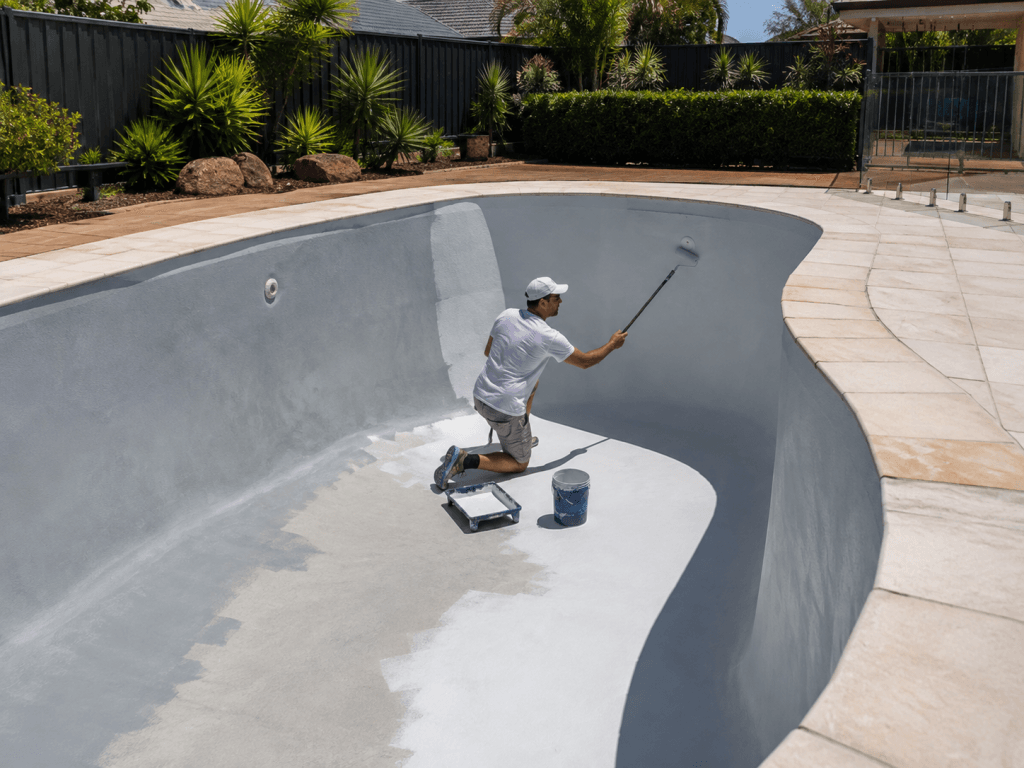
Begin by draining the pool in line with local requirements and allowing the surface to dry thoroughly. Remove leaves, dirt and debris, then inspect the shell closely for cracks, hollow areas, failed repairs, rust staining, calcium build-up and peeling paint. Structural cracking, leaks or major surface defects should be addressed before coating work starts.
Degreasing is essential. Pool surfaces collect oils from swimmers, sunscreen and maintenance products, often in a film that is hard to see. Use a suitable cleaner and rinse thoroughly. Bare concrete may also require etching or mechanical profiling to create the correct surface key, depending on the coating system. This work involves chemicals and dust, so follow the relevant safety instructions and use appropriate personal protective equipment.
After cleaning, remove all loose or unsound paint by scraping, sanding or other suitable mechanical means. Feather the edges between sound paint and bare areas so they do not show through the final finish. Vacuum or wash away dust, then give the pool enough drying time. Painting over trapped moisture is one of the most common causes of coating failure.
Primer requirements depend on the surface and system. Bare concrete, repaired sections and fully stripped pools may need a specified primer, while a sound compatible existing coating may have different requirements. Check the product technical data sheet rather than assuming one method suits every pool.
Plan quantities before you buy pool paint
Running short halfway through a coat is inconvenient. Ordering far too much is unnecessary. Coverage is affected by the pool dimensions, surface profile, number of coats, product type and whether primer is required.
The most practical first step is to use the BG Pool Paint Calculator before purchasing. It helps estimate the pool paint and primer quantities you may need from pool dimensions or water volume, while allowing for the existing pool surface. It is a useful planning tool for homeowners, painters and pool contractors because it reduces uncertainty before the job is scheduled.
Treat the calculator result as a considered estimate, then check the stated coverage rate on the relevant technical data sheet. Rough, porous concrete generally uses more material than a smooth, previously coated surface. Repairs, steps, ledges, deep ends and heavily weathered areas can also add to the real coating area.
If colour is being changed substantially, allow for the specified number of full coats. Trying to stretch product too far can leave thin areas that affect both appearance and service life.
Application conditions matter more than most people expect
A clean pool can still be the wrong pool to paint if the weather or substrate conditions are unsuitable. Avoid painting when rain, heavy dew, high humidity, strong winds or extreme heat may affect application and drying. Direct sun can cause a coating to flash off too quickly, while a damp surface can interfere with adhesion.
Read the product directions before starting and work within the recommended temperature and recoat windows. Two-pack products need accurate measuring and thorough mixing. Do not mix more than can be applied within the stated pot life, and do not attempt to revive material once it has begun to react.
Apply at the recommended spreading rate with the nominated roller, brush or spray equipment. Cutting in around fittings, steps and corners first can make the main application more controlled. Keep a wet edge where possible and maintain a consistent film thickness rather than applying one heavy coat in an effort to finish faster.
Allow each coat to dry or cure for the required time before recoating. The same principle applies before refilling the pool. Filling too early may compromise the finish, even if the surface feels dry to touch.
Avoid the mistakes that shorten coating life
The recurring problems are usually preventable: painting over loose material, skipping degreasing, selecting a coating without checking compatibility, applying too thinly, or refilling before the coating has cured. Another common issue is underestimating the extent of repairs needed once the pool is drained.
For professional painters and maintenance teams, documenting the existing surface, preparation method, weather conditions and batch details provides a useful record for the project. For DIY customers, clear photos of the drained pool, including close-ups of problem areas, can make technical advice more specific before product is ordered.
BG Coatings manufactures pool coating systems in Australia and can help customers work through surface type, preparation requirements, product selection and technical documentation. Before purchasing, use the BG Pool Paint Calculator, review the relevant data and safety information, and confirm the system is appropriate for the pool in front of you.
A pool repaint is not a job to rush around a warm weekend forecast. Identify the existing coating, prepare the surface thoroughly and give the system its full cure time. Those practical decisions are what give a fresh pool finish its best chance of looking good and staying put.