A pool coating can look tired long before the pool structure has reached the end of its useful life. Fading, chalking, staining, rough patches and widespread coating failure are all signs that it may be time to assess the finish. Choosing Australian pool coatings is not simply a matter of picking a colour. The existing surface, previous coating, pool condition and preparation work all determine which system is suitable.
For homeowners, renovators and trade painters, the best result starts with identifying what is already on the pool. A compatible coating system, applied to a properly prepared and dry surface, is far more important than rushing straight to the topcoat.
Start with the pool surface and existing coating
Most painted pools fall into one of two broad categories: previously painted concrete or fibreglass pools. Within those categories, the coating already on the surface matters just as much as the substrate underneath it.
A chlorinated rubber coating and a two-pack epoxy coating are different systems with different preparation and recoating considerations. Applying a new product over an incompatible old finish can lead to poor adhesion, lifting or early failure. If the previous coating is unknown, do not rely on colour or appearance alone. A practical assessment of the existing finish is needed before selecting the next product.
For example, a pool with an existing sound chlorinated rubber coating may be suited to a compatible chlorinated rubber repainting system. A bare or suitably prepared concrete pool may be a candidate for a two-pack epoxy system, depending on its condition and the manufacturer’s preparation requirements. Fibreglass pools also need careful assessment, particularly where the gelcoat, old paint or surface profile is uncertain.
When in doubt, gather as much information as possible about the old product, its age, its condition and any previous repairs. Technical data sheets and practical product advice can then help narrow down the correct system.
Chlorinated rubber or two-pack epoxy?
There is no single best pool paint for every pool. The right choice depends on the substrate, existing coating and the level of preparation that can be completed correctly.
Chlorinated rubber pool paint
Chlorinated rubber pool paint is commonly considered for repainting pools that already have a compatible chlorinated rubber finish. It is a practical option where compatibility is confirmed and the old coating is sound after cleaning and surface preparation.
The key word is sound. Coating over loose, chalky, peeling or poorly bonded paint will not correct the underlying problem. Failed material needs to be removed, edges feathered and the surface prepared in line with the relevant technical instructions before recoating.
Two-pack epoxy pool paint
Two-pack epoxy pool paint is a specialist coating system often selected for suitable concrete and fibreglass pool surfaces. Because it is a two-component product, accurate mixing and attention to working time are essential. Once the components are combined, the product must be applied within the stated pot life.
Epoxy systems can be an excellent choice when the substrate and preparation suit the product, but they are less forgiving of shortcuts. Surface contamination, moisture, insufficient profiling or incorrect mixing can affect the result. This is why product data sheets, safety data sheets and stated application conditions should be part of the planning process, not paperwork left until later.
Preparation is where Australian pool coatings succeed or fail
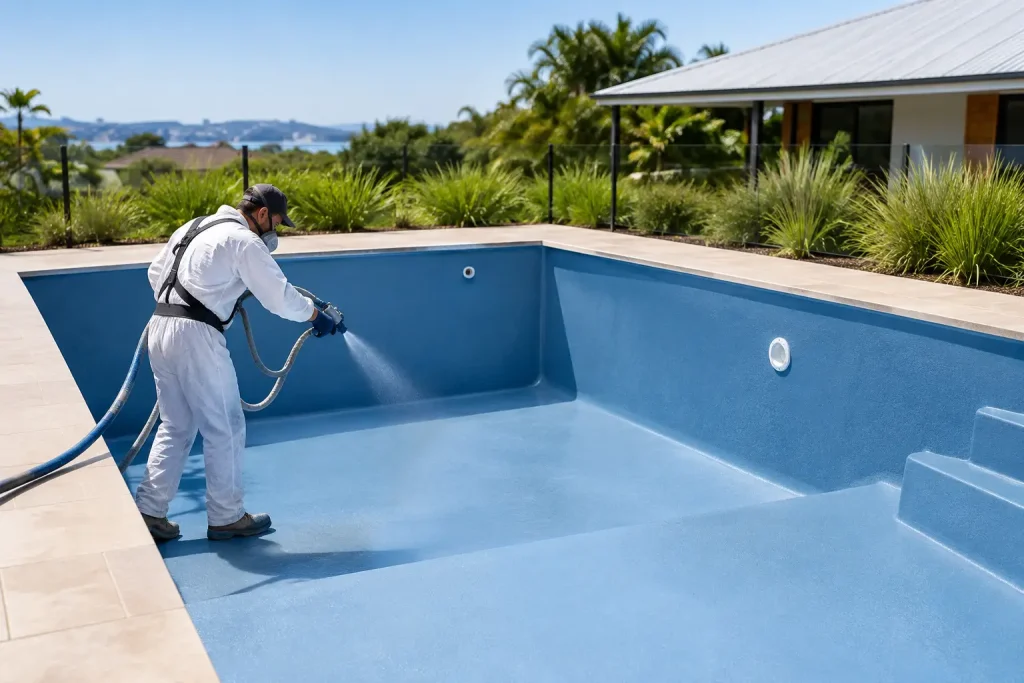
Pool painting is often judged by the finished colour, but preparation does most of the work. A coating needs a clean, stable and properly prepared surface to bond to. That means the pool must be emptied, cleaned and allowed to dry as required by the coating system before application begins.
Remove dirt, body oils, sunscreen residue, scale, algae and other contaminants thoroughly. Any loose or flaking paint must be dealt with rather than painted over. Existing sound coatings may require sanding or abrasion to create an appropriate surface profile, while bare concrete can require a different preparation process and primer selection.
Moisture deserves particular attention. Concrete can hold moisture even when it appears dry at the surface, and applying a coating before the substrate is ready can create problems later. Follow the coating manufacturer’s guidance for drying, preparation and environmental conditions. If there is any uncertainty about moisture, prior coating compatibility or surface soundness, stop and confirm the correct method before buying product.
A simple rule applies: do not use pool paint to hide a preparation issue. Coatings protect and refresh suitable surfaces, but they do not replace the work required to address a surface that is unstable, contaminated or unsuitable for coating.
Plan quantities before you order
Running short midway through a pool coating project can create unnecessary delays, while ordering far too much adds cost and storage issues. Coverage varies according to the pool’s dimensions, surface texture, product type, number of coats and whether a primer is needed.
Before purchasing, use the BG Pool Paint Calculator to estimate the amount of pool paint and primer your project may require. It allows you to plan using pool dimensions or water volume and helps reduce uncertainty around quantities. It is also a useful prompt to consider the existing surface, as this can influence the recommended coating system.
Treat the calculator as a planning tool alongside the product information, rather than a substitute for assessing the surface. Rough, porous or heavily prepared areas can use more material than smooth, previously coated surfaces. Professional painters managing larger or unusual pool shapes should allow for practical site conditions when finalising quantities.
Application conditions matter in Australian conditions
Warm weather can make pool painting feel like a straightforward weekend job, but temperature, humidity and direct sun can all affect application. A coating applied outside its stated conditions may not flow, cure or adhere as intended.
Read the relevant technical data sheet before starting and organise the work around the recommended temperature range, recoat window and cure period. Avoid trying to paint when rain, heavy dew, windblown contamination or extreme heat may interfere with the coating. Direct sun on a hot pool shell can create a very different surface temperature from the surrounding air.
For two-pack epoxy products, organise the job before mixing. Have application tools ready, measure components accurately and only mix an amount that can be used within the stated pot life. For all pool coatings, maintain a wet edge where practical and apply coats evenly at the recommended spread rate. Applying paint too heavily to save time can be as problematic as applying too little.
Colour selection is also worth considering carefully. Light pool colours can make the water appear brighter and may show less heat absorption, while darker colours can create a stronger visual effect but may highlight some surface marks or variations. The condition of the pool and the surrounding paving, fencing and landscape should guide the decision as much as personal preference.
Common mistakes to avoid
The most expensive pool-paint mistakes usually happen before the first coat goes on. Choosing a coating because it is familiar, rather than because it is compatible, is a common example. So is assuming a clean-looking surface is ready to paint without checking for chalking, loose paint or contaminants.
Another issue is skipping primer where the selected system requires one. Primers are not an optional extra when they form part of the specified coating system. They are designed to support adhesion and help prepare particular substrates for the topcoat.
It is also unwise to guess at cure times before refilling the pool. The coating needs the full curing period specified for that product and those conditions. Refilling too early can compromise a finish that otherwise appeared satisfactory at first.
Finally, keep records of the coating system used. Note the product name, colour, batch details where available, dates of application and number of coats. This makes future maintenance and repainting decisions much easier, particularly for property managers, pool contractors and homeowners who may not be the next person to work on the pool.
Get the coating system right from the start
A successful pool repaint begins with a clear view of the surface in front of you, not just the finish you want at the end. Identify the substrate and old coating, prepare it thoroughly, select compatible products and follow the relevant technical documentation at every stage.
BG Coatings manufactures pool coating systems in Australia and can provide practical guidance to help customers select products suited to their pool surface and project requirements. Before ordering, use the BG Pool Paint Calculator, check the applicable technical data, and take the time to resolve any compatibility or preparation questions. That planning is what gives a fresh pool finish its best chance to perform well.