A masonry wall can look sound from the street yet still defeat a new paint job. Powdery surfaces, fine cracking, old coatings, salts and trapped moisture all affect adhesion. The best coating for masonry walls is therefore not simply the toughest product on the shelf. It is the coating system that suits the substrate, its condition and the exposure it faces.
For a painted brick, rendered block or cement wall, a quality exterior masonry coating is often the right starting point. For natural limestone or sandstone where the character of the material should remain visible, a suitable penetrating sealer may be the better choice. The difference matters because paint forms a coloured film, while a sealer is designed to protect without creating the same opaque finish.
Start with the wall, not the coating
Masonry is a broad term. Bricks, concrete block, cement render, fibre cement and natural stone can all be described as masonry surfaces, but they do not behave identically. A coating that suits a dry, previously painted rendered wall may be a poor choice for porous limestone or a wall affected by rising damp.
Begin by identifying whether the surface is bare or already coated. A previously painted wall needs a compatibility check as well as an adhesion check. Rub the surface with your hand and apply painter’s tape to a small area. If the coating comes away easily, is heavily chalked or has widespread peeling, it needs more preparation before recoating.
Then look for the reason behind any defects. Fine, stable hairline cracks can sometimes be managed within an appropriate coating system. Larger cracks, hollow render, failed mortar joints and movement cracks need to be addressed before painting. Coating over a structural or substrate issue only hides it briefly.
Moisture deserves particular attention. Dark patches, white crystalline deposits, bubbling paint and persistent dampness are warning signs. Efflorescence is caused when moisture carries salts through masonry and leaves them at the surface. Do not rely on a new coating to solve this. Find and correct the moisture source first, allow the wall to dry properly, remove loose salts and assess the surface again.
The best coating for masonry walls depends on the finish
For most exterior painted masonry, a premium exterior acrylic coating designed for masonry is a practical, versatile option. It provides colour, weather protection and a finish that is easier to maintain than bare render or blockwork. A quality coating system should be selected with the wall’s porosity, existing paint and required appearance in mind.
Acrylic masonry coatings are commonly suited to rendered walls, concrete block and previously painted brickwork, provided the substrate is clean, dry, sound and correctly primed where required. They are a sensible choice for homeowners refreshing exterior walls and for trade painters who need consistent application and colour results.
Where a wall is highly textured, allow for additional product. Render, split-face block and rough brickwork have more surface area than a smooth wall, so coverage will be lower than the figure achieved on a flat, sealed test surface. Measure the wall height and length, deduct large openings where appropriate, then check the product data sheet for stated coverage guidance. Buying on wall area alone can leave a project short.
Natural stone needs a different approach. Limestone and sandstone are porous materials that can absorb water, dirt and staining. If retaining their natural appearance is the priority, a penetrating stone sealer is generally more suitable than an opaque wall paint. The correct sealer helps reduce absorption while allowing the texture and colour variation of the stone to remain visible.
A clear sealer will not conceal patchiness, mortar staining, previous repairs or weathering. It is protection, not a cosmetic cover-up. Always test in an inconspicuous area first, as sealers can change the appearance of some stones.
For enclosed industrial areas, retaining walls or specialised maintenance environments, a more specific coating may be required. Two-pack systems can be useful in certain applications where chemical resistance or a harder film is needed, but they are not an automatic upgrade for every exterior masonry wall. Surface preparation, compatibility and UV exposure all need to be considered. Refer to the relevant technical data sheet before selecting a specialised system.
Breathability and water resistance are not the same thing
Customers often ask for a fully waterproof coating for an exterior wall. The right answer depends on where the water is coming from. Rain striking the outside of a wall is different from moisture travelling through it from the ground, a leaking pipe or a failed flashing detail.
A suitable exterior coating can protect the face of sound masonry from weather exposure. It cannot safely compensate for ongoing damp behind the wall. If moisture is trapped beneath a dense film, the pressure can lead to blistering, peeling or salt damage. This is why a compatible, vapour-permeable masonry coating may be preferable on some substrates, particularly older walls that need to release residual moisture.
Waterproofing products also have their place, but they should be chosen for the specific situation and applied as a complete system. A below-ground wall, a planter, a parapet or a wall with active water ingress may need assessment beyond a decorative topcoat. Preparation and detailing are just as important as the coating itself.
Preparation decides how well the coating performs
The best masonry paint cannot bond properly to dust, mould, chalk, loose render or unstable old paint. Preparation takes time, but it is the part of the job most likely to determine whether the finish remains sound.
Start by removing loose and flaking material. Clean the wall to remove dirt, airborne grime, grease and biological growth, using a method suitable for the substrate and product system. Rinse thoroughly where washing is used, then allow adequate drying time. Do not paint onto a surface that is still visibly damp.
Scrape and sand back unstable edges so the transition is as smooth as practical. Treat mould or mildew properly rather than painting over it. Remove efflorescence by dry brushing once the moisture issue has been resolved, taking care not to simply wash salts deeper into the wall.
Bare, porous or repaired sections may need a masonry-compatible primer or sealer before the finish coats. Primer improves consistency by binding friable surfaces and moderating uneven absorption. It is especially useful where patches of bare render sit beside older painted areas, as these surfaces can otherwise dry at different rates and show uneven sheen.
New render and cement-based repairs should be allowed to cure and dry in line with the relevant product instructions before coating. Rushing this stage can lead to problems that no additional topcoat will fix.
Choose colour and sheen for the wall’s exposure
Colour is not only an aesthetic decision on external masonry. Dark colours can absorb more heat, which may place additional stress on walls exposed to strong Perth sun. Light and mid-tone colours are often more forgiving on broad elevations, particularly where the surface has minor undulations or repaired areas.
A low-sheen finish is a popular choice for masonry because it gives a neat, contemporary appearance without reflecting every small imperfection. Higher-sheen finishes can be easier to wipe in some settings, but they draw more attention to surface texture. For rough render or older brickwork, a lower sheen often provides the more even visual result.
If colour matching is required for an extension, repair area or maintenance program, provide a clean sample where possible. Matching should be checked in the actual location because sunlight, shadow and surrounding materials can alter how a colour appears on the wall.
Apply a complete and consistent system
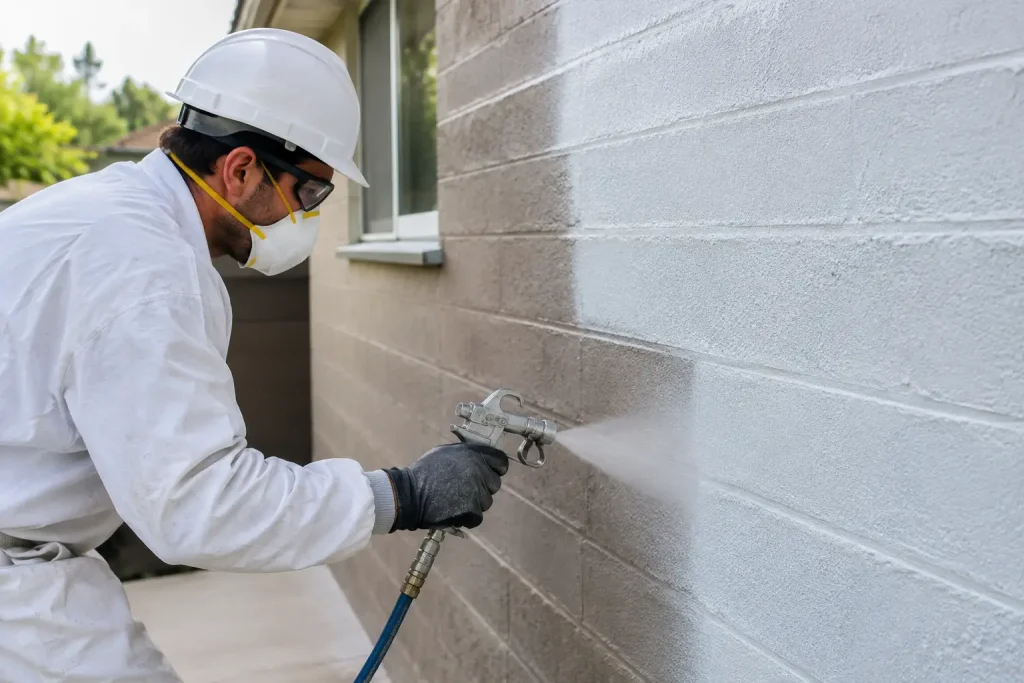
Once the wall is prepared and primed where required, apply the chosen coating at the recommended spread rate and number of coats. Do not stretch product too far to make it cover more area. An under-applied coating can have reduced opacity and may not deliver the film build intended by the manufacturer.
Use a brush to cut in around edges, a roller suited to the wall texture for larger areas, and maintain a wet edge to reduce lap marks. On highly textured masonry, work the coating into recesses rather than rolling lightly across the surface. Check weather conditions before starting and follow the product instructions on application temperature, drying and recoating intervals.
Keep the technical data sheet and safety data sheet on hand throughout the job. They provide the product-specific direction that general advice cannot replace, including substrate limits, thinning guidance where applicable and safety requirements.
For homeowners, the practical choice is usually a quality exterior masonry coating matched to a properly prepared painted, rendered or block wall. For limestone and sandstone, a suitable penetrating sealer is often the more natural answer. If there is damp, salt activity, major cracking or uncertainty about the existing coating, pause before purchasing and seek technical guidance. BG Coatings can help customers work through surface type, preparation and coating compatibility so the selected system suits the wall rather than simply covering it.