A tin of exterior paint left over from a fence, eaves or wall project can look like an easy way to save money when a bedroom or hallway needs refreshing. But can exterior paint be used indoors? In most cases, it is better not to. Exterior and interior paints are formulated for different environments, and using the right coating system usually delivers a better finish, more comfortable application and fewer compatibility issues later.
Exterior paint may physically stick to an internal wall, particularly if both products are water-based acrylic coatings. That does not make it the best choice for a full indoor repaint. The label, technical data sheet and safety data sheet should always guide the decision, especially where the product contains solvents, strong biocides or specialised additives.
Why exterior and interior paints are different
Exterior paint is designed to withstand a tough combination of sun, rain, temperature movement, moisture and airborne dirt. To do that, it may contain additives that help the coating resist weathering, mould or algae growth, and it is often formulated to remain flexible as exterior surfaces expand and contract.
Interior paint has a different job. It needs to provide an even decorative finish in an enclosed space, dry with manageable odour, and stand up to everyday scuffs, cleaning and marks. Washability, sheen level and the appearance of the finished wall matter more indoors than resistance to ultraviolet exposure.
That distinction affects more than marketing language. A coating that performs well on a rendered external wall or timber fascia may not give the low-odour application, smooth appearance or practical cleanability wanted in a living room.
Can exterior paint be used indoors in any situation?
There are limited situations where an exterior coating may be suitable indoors, but suitability needs to be confirmed by the manufacturer rather than assumed. For example, an internal garage, workshop, storeroom or covered utility area can have different demands from a bedroom, nursery or lounge room. Even then, the substrate, existing paint, ventilation and intended use of the room still matter.
A water-based exterior acrylic is generally a less concerning option than a solvent-based exterior coating, but “water-based” is not a blanket approval for indoor use. Formulations vary. Check the product documentation for recommended applications, ventilation requirements, safety advice and any restrictions on enclosed areas.
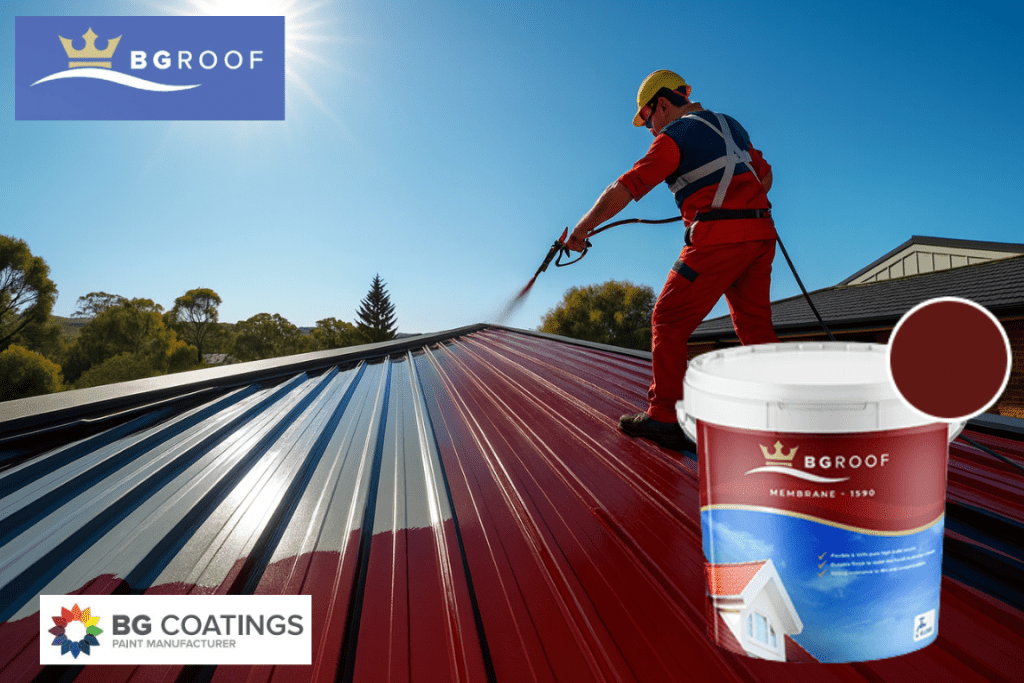
Specialist exterior coatings should not be repurposed without clear product guidance. Roof coatings, industrial finishes, chlorinated rubber products and two-pack epoxies are designed for specific surfaces and conditions. Their preparation requirements, primers, solvents and curing processes can be very different from those of a standard interior wall paint.
For occupied rooms, the practical answer is straightforward: choose an interior paint intended for the surface and level of wear. It is the more predictable system.
The main concerns with using exterior paint inside
Odour and indoor air quality
Exterior coatings can contain ingredients intended to protect a surface exposed to weather and biological growth. Depending on the product, these may create stronger odours or require more careful ventilation during application and drying than an interior coating.
Do not rely on smell alone to judge a paint’s suitability. Read the safety data sheet before opening the tin, follow the stated personal protective equipment requirements, and provide the ventilation specified by the manufacturer. If occupants are sensitive to paint odours, or the area is a bedroom, nursery or poorly ventilated room, an appropriate interior product is the sensible choice.
Finish and appearance
Interior walls are viewed closely and under artificial lighting, so roller marks, patchiness and sheen variation are more obvious. Exterior paints may be formulated around weather resistance rather than the refined finish expected across large internal plasterboard walls.
The same colour can also look different indoors. Natural outdoor light, room lighting and the paint’s sheen all affect the final appearance. Before committing to a whole room, test the selected interior colour and finish on a prepared sample area and assess it at different times of day.
Cleaning and day-to-day wear
A common assumption is that exterior paint must be tougher because it faces the weather. Indoor durability is different. Hallways, kitchens and family areas need a coating that handles finger marks, furniture scuffs and regular cleaning without an unsuitable sheen or surface feel.
An interior washable acrylic is generally formulated for this type of use. For kitchens, bathrooms and laundries, select a suitable interior system for the moisture level and make sure exhaust ventilation is working properly. Paint cannot compensate for ongoing condensation or water ingress.
Compatibility with the existing surface
The existing coating is as important as the new one. A sound acrylic-painted wall may accept another compatible water-based coating after cleaning and light sanding. A surface with unknown paint, chalking, stains, nicotine residue, powdery plaster, peeling layers or a glossy enamel finish may need a specific preparation method or primer first.
Applying exterior paint over an unsuitable surface can still lead to poor adhesion, even if the paint itself is good quality. Preparation is not the step to rush.
What to use instead for internal walls
For most plasterboard, previously painted masonry and internal rendered walls, use a quality interior acrylic selected for the room and desired sheen. Flat or low-sheen finishes are often chosen for ceilings and general wall areas because they help reduce the visibility of minor surface imperfections. Higher-sheen finishes are easier to wipe in some applications but can highlight uneven patching and roller technique.
If stains are present, identify their cause before painting. Water staining may point to a leak that needs attention. Smoke, tannin, grease or other stubborn marks may require cleaning and an appropriate stain-blocking primer. Painting straight over a problem can allow it to return through the new finish.
For timber, metal, masonry, limestone or sandstone, do not assume an interior wall paint will suit. These surfaces may require a dedicated primer, sealer or coating system. The correct product depends on whether the surface is bare, previously coated, porous, damp-prone, smooth or exposed to abrasion.
A practical checklist before painting indoors
Start by reading the paint label and technical documentation. Confirm that the product is recommended for interior use, then check its surface preparation, primer, coverage, recoat and ventilation instructions. Coverage figures are useful for estimating quantities, but rough, porous or heavily textured walls can use more paint than a smooth surface.
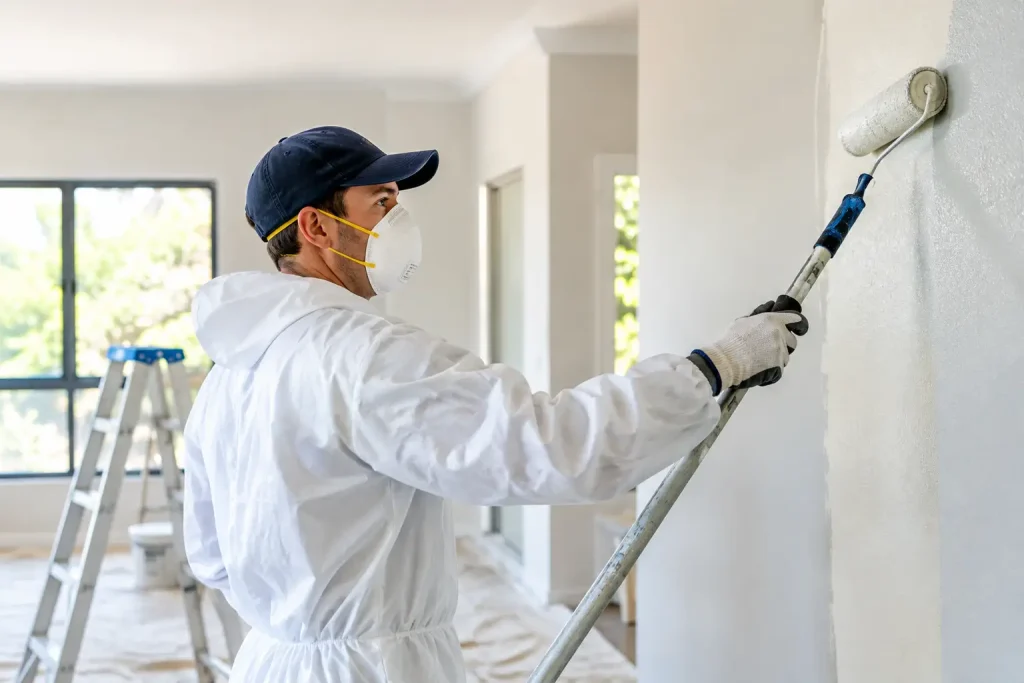
Next, inspect the wall in good light. Remove dust, grease, cobwebs and loose material. Wash areas affected by cooking residue, hand marks or contaminants, then allow the surface to dry fully. Scrape loose or flaking paint and feather the edges with sanding. Glossy surfaces usually need a light sand to create a key, followed by thorough dust removal.
Patch cracks and holes with a suitable filler, allow it to dry, then sand smooth. Spot-prime repairs where required so they do not flash through the topcoat. If the wall is powdery, stained or has an uncertain coating history, ask for product-specific advice before selecting a primer and topcoat.
For homes built before 1970, take extra care when disturbing old paint. Avoid creating dust unnecessarily and seek appropriate advice if lead-based paint may be present.
If exterior paint has already been applied indoors
There is no need to panic over a small painted area, but do not continue with the project until you have checked the product documentation. Keep the space well ventilated in line with the label directions, prevent unnecessary access while the coating dries and cures, and retain the product details for reference.
If the coating was applied to a large area, is solvent-based, has a strong persistent odour, or was used in a sensitive space, contact the manufacturer for guidance based on that exact product. Whether it can be overcoated with an interior paint depends on the existing coating, its condition and compatibility. Rushing into sanding or recoating can create more work than it solves.
Choose the coating system for the room, not the leftovers
Using leftover paint is worthwhile only when it is genuinely suited to the surface and environment. An exterior coating belongs on exterior work unless its technical documentation specifically confirms an indoor application. For internal walls, a purpose-made interior paint, correct preparation and compatible primer provide the clearest path to a finish that looks right and is easier to live with.
If you are unsure whether a coating is suitable, have the product name, surface type, existing paint condition and room use ready before seeking technical advice. That small amount of information makes it much easier to select the right system before the first roller load goes on the wall.