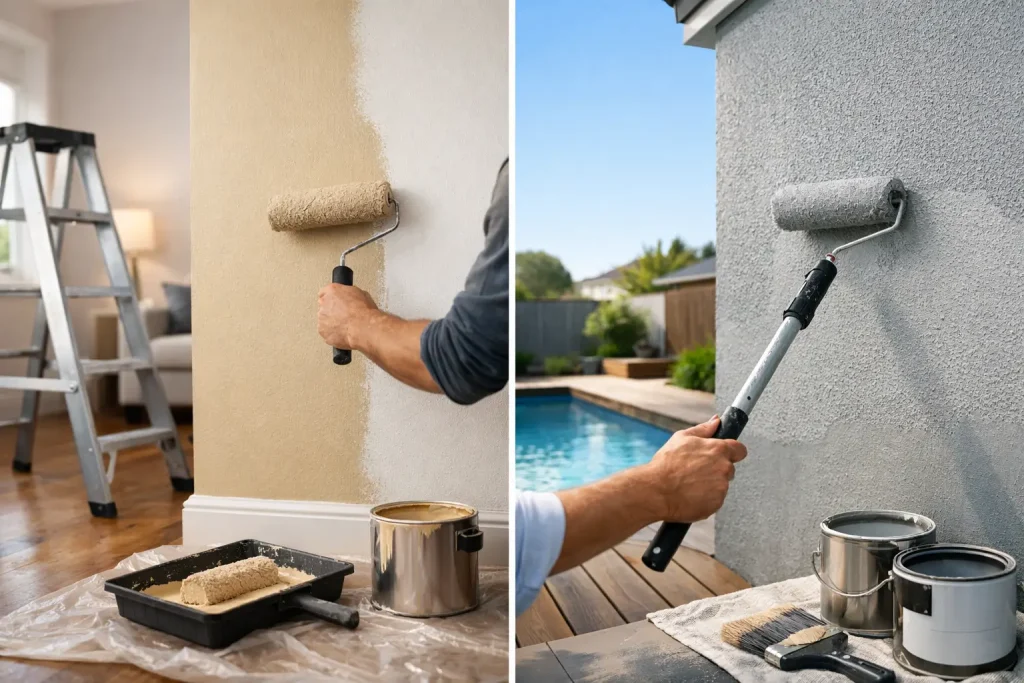
A freshly painted wall can look right on day one with almost any paint. The real test comes later: steam settling on a bathroom ceiling, kids’ fingerprints in a hallway, harsh afternoon sun on a western elevation, or winter rain driving against external masonry. Interior versus exterior wall paint is not simply a choice between two labels. Each coating is formulated for a different environment, and using the wrong one can lead to poor cleaning, premature fading, cracking, adhesion issues or moisture-related problems.
For homeowners, painters and maintenance teams, the best result starts by matching the coating system to the surface, exposure and condition of the wall. Good preparation matters just as much as the paint selected.
Why interior and exterior paints are different
Both interior and exterior wall paints contain pigments, binders, liquids and additives. The balance of those ingredients changes according to where the coating needs to perform.
Interior paint is designed around appearance, washability and low odour application in enclosed spaces. It needs to flow well, provide an even finish and stand up to ordinary household marks and cleaning. Depending on the product and sheen level, interior coatings can be suited to plasterboard, set plaster, previously painted walls and ceilings.
Exterior paint has a harder job. It must cope with ultraviolet exposure, temperature movement, wind-driven rain, moisture and airborne dirt. In Perth and across Western Australia, external surfaces can experience strong sunlight and significant temperature changes over a year. Exterior wall coatings are formulated with weather resistance and flexibility in mind, helping the film handle normal expansion and contraction of the substrate.
That does not mean exterior paint is automatically better paint. It is simply made for a different purpose. An exterior coating can have a stronger smell, a different finish profile or characteristics that are less suitable for occupied indoor rooms. Likewise, a quality interior coating may look excellent inside but is not intended to take prolonged weather exposure.
Interior versus exterior wall paint: the practical differences
Durability means different things indoors and out
Inside, durability generally means resistance to scuffs, stains, hand marks and routine cleaning. Entry halls, living areas, bedrooms and rental properties often benefit from a finish that can be maintained without damaging the paint film. Kitchens and bathrooms also need careful consideration because humidity, condensation and cleaning are part of normal use.
Outside, durability is mainly about retaining protection and appearance through weather exposure. Sun can gradually affect colour and the paint binder, while rain and moisture can find weaknesses in poorly prepared joints, cracks and edges. Exterior paint is built to face these conditions, but it still relies on a sound, dry and properly prepared surface.
Flexibility and movement
External walls move more than internal walls. Masonry can warm substantially in direct sun, then cool overnight. Fibre cement, timber trim and rendered surfaces each have their own movement characteristics. A suitable exterior coating needs enough flexibility to accommodate normal movement without becoming brittle too quickly.
Internal walls are generally in a more stable environment. Their coating can prioritise a smooth decorative finish and cleaning performance rather than high weather flexibility. This is why applying interior paint to an outside wall is a false economy, even if the colour and sheen appear suitable at first.
Finish and sheen selection
Sheen affects both appearance and maintenance. Lower-sheen interior finishes can soften the look of minor wall imperfections, while higher-sheen coatings are usually easier to wipe down but can highlight patching, uneven plasterwork and roller marks. Ceilings normally require a low-reflective finish to reduce glare and conceal surface variation.
For exterior walls, sheen selection should consider the architecture, substrate and exposure. A higher sheen may be easier to clean in some situations, but it can draw attention to texture or surface defects. On broad rendered walls, a lower-sheen exterior finish is often chosen for a more even appearance. The correct choice depends on the desired look and the coating manufacturer’s recommendations for that product.
Colour retention and sunlight
Interior colours are protected from direct weather, although rooms with large windows can still receive strong light. Exterior colours must deal with much more intense UV exposure. Colour selection is therefore not only a design decision. Dark colours can absorb more heat, which may place greater stress on certain substrates and coating films.
If you are colour matching an existing exterior surface or selecting a new colour for a large elevation, confirm the coating is intended for external use and discuss any substrate-specific limitations before application. Colour matching support can be useful where maintenance painting needs to blend with existing areas.
Can exterior paint be used inside?
It can be tempting to use leftover exterior paint indoors, particularly in a laundry, garage or utility area. Whether it is appropriate depends on the product’s technical information, ventilation requirements and intended use. Exterior coatings may contain additives designed for weather exposure and may not provide the finish, odour profile or indoor application characteristics you want in living spaces.
A garage or storage area can also have different requirements from a bedroom or lounge room. The substrate, ventilation, amount of traffic and cleaning needs should guide the selection. Check the technical data sheet and safety data sheet rather than assuming that a paint’s exterior durability makes it suitable everywhere.
Can interior paint be used outside?
Interior paint should not be used as an exterior wall coating. It is not formulated for ongoing UV exposure, rain and temperature movement. Even a protected alfresco wall can receive moisture, reflected sunlight and seasonal changes that an internal coating is not made to handle.
The same caution applies to exterior areas that feel almost indoors, such as enclosed patios, covered entries and breezeways. Assess what the wall is actually exposed to, not just whether it sits under a roofline. If it receives indirect weather, humidity or regular sunlight, choose a coating system rated for exterior use.
Preparation determines how well either paint performs
Paint cannot correct a failing substrate. Whether the wall is inside or outside, preparation should begin with inspection. Look for chalking, peeling paint, cracking, mould or mildew, powdery render, water staining, efflorescence, loose patching and damaged sealant. The cause needs attention before a new coating is applied.
Clean the surface thoroughly and allow it to dry. Remove loose or flaking material, then sand edges so the repaired area transitions smoothly into sound paint. Fill suitable cracks and holes with a compatible filler, remembering that larger or active cracks may require a more specific repair approach. For exterior masonry, make sure the substrate is sound and free from loose dust or surface contaminants.
Previously painted surfaces also need compatibility checks. A new water-based coating may be suitable over an existing finish when the old paint is clean, sound and well adhered, but assumptions can be costly. If the existing coating is unknown, aged, glossy or showing failure, seek product advice and carry out an adhesion test in an inconspicuous area where appropriate.
Primer is not optional in every project, but it is often essential on bare plasterboard, fresh render, repaired areas, porous masonry, stained surfaces or where the existing coating and substrate create a compatibility concern. The right primer helps create a more uniform surface for the topcoat. It is part of the coating system, not merely an extra tin.
Choosing the right coating for common wall areas
For bedrooms, living areas and hallways, focus on the desired sheen, washability and the condition of plasterboard or previously painted surfaces. A busy hallway may justify a more cleanable finish than a low-traffic bedroom.
For bathrooms, laundries and kitchens, consider steam, condensation and cleaning. Address ventilation and any existing mould or moisture source before painting. Paint will not solve ongoing water ingress or poor ventilation.
For exterior rendered, masonry or fibre-cement walls, select an exterior wall coating suited to the substrate and local exposure. Pay close attention to areas around windows, parapets, downpipes and ground level, where water management or surface contamination can affect coating performance.
For timber trims and other mixed-material elevations, do not assume one product is right for every component. Timber, metal, masonry and previously painted surfaces may each need a compatible preparation and coating approach.
Apply to the product instructions, not the clock
Coverage rates, drying times, recoating windows and application conditions vary between products. Heat, humidity, surface temperature and wind can all affect application. Avoid painting an exterior wall that is hot from direct sun, damp from rain or likely to be exposed to moisture before the coating has had suitable time to dry.
Stir paint thoroughly, use clean application equipment and maintain a wet edge to reduce visible lap marks. Apply the recommended number of coats at the stated spread rate. Spreading paint too far to stretch a tin can reduce film build and compromise the finished result.
Before purchasing, measure the wall area carefully, subtract large openings where relevant and allow for the number of coats. Product coverage information provides a starting point, but rough or porous surfaces can use more paint than smooth, sealed walls. If you are uncertain about a substrate, previous coating or primer requirement, ask for practical product guidance and review the relevant technical documentation.
Choosing between interior and exterior wall paint is straightforward once you start with the wall’s real environment. Select for the exposure, prepare the surface properly and follow the product system. That approach gives the coating its best chance to look right and perform as intended long after the rollers are washed out.