A pool can look tired long before its structure is at the end of its useful life. Fading, chalking, staining and a worn surface often point to a coating decision – but choosing two pack epoxy pool paint is not simply a matter of selecting a colour. The existing surface, previous coating, water chemistry history and preparation standard all affect whether an epoxy system is the right choice.
For homeowners and trade customers, the value of a two-pack system is in its hard-wearing, chemically resistant finish when it is used on a suitable surface and applied as a complete system. The preparation work is substantial compared with a quick cosmetic repaint, so it pays to identify the substrate and coating compatibility before product is purchased.
What is two pack epoxy pool paint?
Two pack epoxy pool paint is supplied as separate components that are mixed together in the specified ratio before application. Once mixed, the coating begins a chemical curing process. This differs from single-pack paints that dry mainly as solvents evaporate.
The result is a specialist coating designed for demanding immersed service. It is commonly considered for concrete, cement-rendered and fibreglass pools, subject to the condition of the surface and the product technical documentation. It can be a strong option where a pool needs a durable coating system rather than a short-term visual refresh.
That does not mean epoxy is automatically suitable for every pool. A coating can only perform as well as the surface beneath it. Moisture pressure in concrete, loose or unsound previous paint, contaminants, structural movement and unknown coatings can all cause problems that no new topcoat can solve.
When an epoxy system makes sense
Two-pack epoxy is often selected when the pool is being properly prepared and there is a sound, compatible surface to coat. It suits projects where the owner or contractor is prepared to drain the pool, allow adequate time for cleaning and drying, and follow the required mixing, recoating and curing instructions.
It is particularly worth considering when the existing coating is already an epoxy system and has been assessed as sound, or when a bare compatible substrate is being prepared to the correct standard. In these circumstances, using a coating system with clear technical information and a planned application process gives the project a far better starting point.
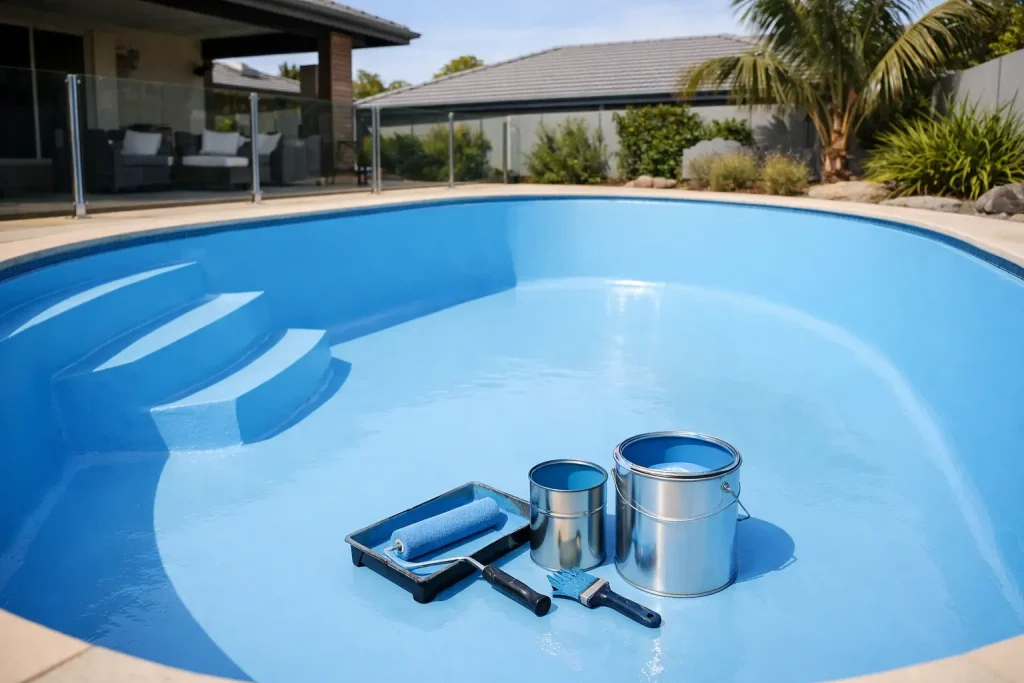
Colour is also part of the decision. Pool colour changes the appearance of the water, can make debris more or less noticeable, and affects how the pool sits against paving and landscaping. A lighter finish may show marks differently from a deeper blue, while a custom colour requires careful confirmation before coating a large area. It is sensible to settle the colour choice before preparation begins, not when the pool is empty and ready to paint.
Check the existing surface before choosing two pack epoxy pool paint
The most useful question is not, “What paint do I want to use?” It is, “What is currently on this pool, and is it sound?” This is where many avoidable coating failures begin.
A painted pool may have chlorinated rubber, epoxy, acrylic or another system beneath the visible surface. Compatibility matters. Applying epoxy over an incompatible or poorly bonded coating can lead to lifting, wrinkling or early loss of adhesion. If the coating type cannot be reliably identified, do not guess. Seek practical technical guidance and use the relevant product documentation to determine whether the existing coating must be removed or whether a compatible system is available.
Inspect the empty pool closely. Look for peeling paint, hollow or drummy render, cracks, blistering, chalky residue, algae staining, mineral deposits and areas that remain damp. These observations help establish whether the issue is mainly cosmetic or whether further surface work is required before coating.
Concrete and rendered pools need special attention because moisture can move through the substrate. The pool must be dry enough for the specified coating system, and any cause of ongoing moisture or substrate failure should be addressed before painting. Fibreglass pools also need a sound, clean surface with the correct profile for adhesion. The exact preparation method depends on the substrate and coating history, so the technical data sheet should guide the job rather than a generic online shortcut.
Preparation determines the finish
The paint stage is highly visible, but preparation is where the result is won or lost. Start by draining the pool completely and removing all loose material. The surface then needs to be cleaned thoroughly to remove oils, body fats, sunscreen residue, dirt, algae, salts and other contaminants that can interfere with adhesion.
After cleaning, the surface generally needs mechanical preparation to produce the profile required by the epoxy system. This may involve sanding, grinding or another suitable preparation method, depending on the substrate and old coating. All dust and debris must then be removed. Corners, steps, fittings and floor-to-wall transitions deserve extra attention because they are easy to miss and often show poor preparation first.
Do not paint over a surface simply because it looks dry at a glance. Allow for proper drying after washing and assess the pool in accordance with the product instructions. Likewise, do not treat a primer as optional where the system specifies one. Primers are selected to suit particular substrates and conditions, not as an unnecessary extra coat.
For trade work, documenting the substrate condition and preparation process is good practice. For DIY work, take photographs before and after cleaning and preparation. They can be useful if you need technical support while planning the coating system.
Mixing and applying epoxy paint
A two-pack coating gives you a limited working period after the components are mixed. Mix only the amount that can be applied within the stated pot life. Use clean equipment, measure accurately if the pack format requires it, and mix the components thoroughly according to the technical data sheet.
Application conditions matter. Avoid working in unsuitable weather, on a hot surface, when rain or contamination may affect the fresh coating, or outside the temperature and humidity conditions stated for the product. Plan the work so each coat can be applied within the specified recoat window. Missing that window may require additional surface preparation before the next coat.
Maintain a wet edge where practical and apply evenly rather than trying to make one heavy coat do the work of a full system. Heavy application can create uneven film build, slow drying or runs, particularly on vertical walls and steps. Use the recommended application tools and follow the stated spreading rate. Coverage is influenced by surface texture, porosity, wastage and the number of coats, so a simple square-metre estimate is not always enough.
Once coating is complete, the pool must remain empty until the system has cured for the period set out in the technical documentation. Filling too early can compromise a coating that otherwise appeared dry. Keep leaves, dust, water and foot traffic away from the fresh finish during this period.
Plan quantities before the pool is empty
Running short midway through a coat is frustrating, especially when colour consistency and recoat timing matter. Before ordering, use the BG Pool Paint Calculator to estimate the amount of pool paint and primer required from pool dimensions or water volume and the existing surface. It is a practical planning tool that helps reduce uncertainty before the pool is drained.
The calculator is a starting point, not a replacement for checking the product coverage information. Allow for the pool’s actual shape, stairs, ledges, textured surfaces and any primer required by the coating system. If the substrate is unusually rough or repairs have been made, allow for the likelihood of additional product and confirm the plan before starting.
BG Coatings manufactures specialist pool coating systems in Western Australia and can provide product and technical documentation to help customers select the appropriate system. This is particularly useful where the existing coating is unknown, the pool has a mixed surface condition, or the project involves a significant colour change.
A properly prepared pool gives two pack epoxy paint the conditions it needs to do its job. Take the time to identify the surface, plan the quantities and follow the specified system from preparation through to cure – that is the practical path to a finish worth keeping.