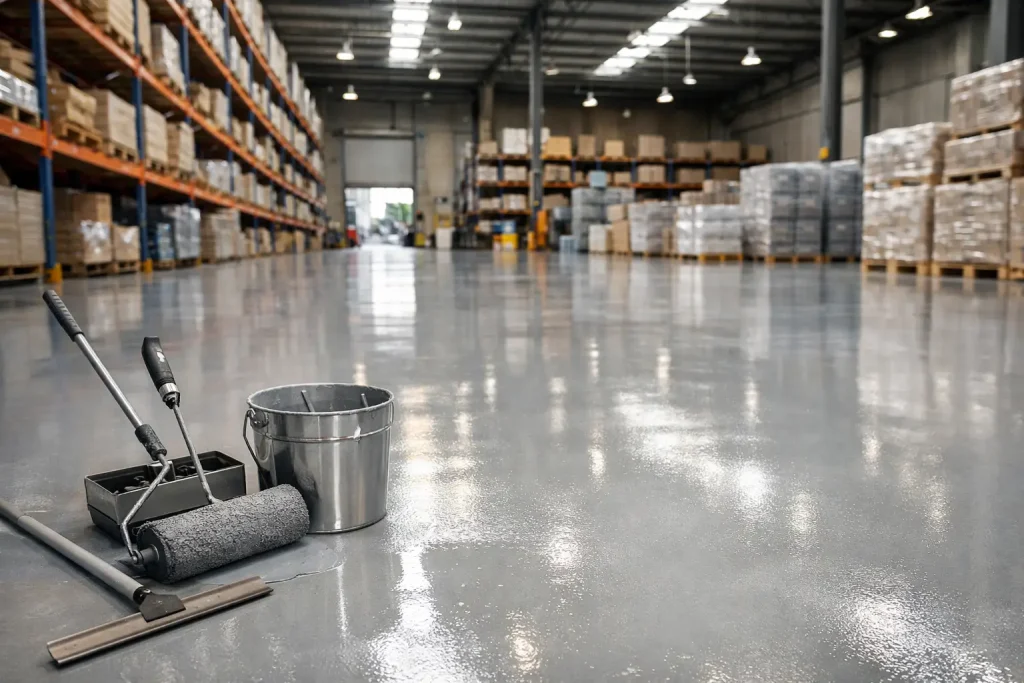
A warehouse floor is not a showroom surface. It carries forklifts, pallet jacks, loaded trolleys, foot traffic, dropped stock and regular cleaning. An industrial floor coating warehouse project needs to start with those daily demands, not simply the colour or gloss level you want at handover.
The right coating system can make a concrete floor easier to clean, easier to inspect and better suited to the work taking place on it. However, coating selection is only one part of the job. Concrete condition, moisture, existing finishes, surface preparation and application conditions all affect the result.
What an industrial floor coating warehouse system must handle
Warehouses vary widely. A light-storage facility with pedestrian traffic places different demands on a coating than a busy dispatch area where forklifts turn repeatedly under load. The areas around roller doors, racking aisles, loading zones and work benches often receive the greatest wear, so treating the whole building as one uniform surface can lead to the wrong specification.
Start by considering the type and frequency of traffic. Solid-tyred forklifts, pallet jacks and hard caster wheels create concentrated point loads and abrasion, particularly where vehicles brake or turn. If the floor is exposed to oils, lubricants, cleaning chemicals or occasional chemical spills, chemical resistance also becomes part of the system choice.
A two-pack epoxy coating is commonly considered for industrial concrete because it can provide a hard-wearing, protective finish when applied over properly prepared, compatible concrete. Yet epoxy is not automatically the answer for every warehouse. The condition of the slab, expected service environment and the required safety finish should guide the system.
For example, a smooth high-gloss finish may suit a clean packing space, but it may not be appropriate in a wet wash-down area or near an entry exposed to rain. In those locations, a slip-resistant aggregate system may be needed. More texture can improve grip, but it also makes cleaning more demanding. That is a practical trade-off worth deciding before work begins.
Assess the concrete before choosing a coating
Concrete can look sound while still presenting problems for a new coating. Dusting, laitance, oil contamination, moisture movement, previous sealers and weak repairs can all reduce adhesion. Coating over these issues may produce an uneven finish or premature failure, regardless of the quality of the topcoat.
New concrete requires adequate curing and must be assessed before coating. Old concrete needs close inspection for cracks, spalling, soft areas and surface contamination. Cracks and joints are not the same thing: movement joints need to remain capable of moving, while static cracks may require appropriate treatment as part of the preparation plan.
Existing coatings need equally careful attention. Ask what product is currently on the floor, whether it is well bonded, and whether the new coating is compatible with it. A patch test in an inconspicuous area can help confirm adhesion and compatibility, but it does not replace proper surface assessment.
Moisture is one of the most common reasons a concrete floor coating system needs extra investigation. Concrete slabs on ground can retain or transmit moisture, especially where there is no effective moisture barrier or where the building has a history of dampness. Do not assume a dry-looking surface is dry enough to coat. Follow the moisture assessment requirements in the relevant technical data sheet and resolve moisture concerns before proceeding.
Preparation does most of the hard work
The finish coat is what people see. Surface preparation is what allows it to perform. A clean, sound and suitably profiled concrete surface gives a coating the mechanical bond it needs.
Preparation methods depend on the floor condition and system selected. Mechanical grinding or shot blasting may be suitable for removing weak surface material, opening the concrete profile and dealing with old coatings. Detergent cleaning may be needed for general grime, while oil-contaminated areas often require more targeted treatment. Simply painting over tyre marks, grease or dusty concrete is not a reliable preparation method.
Before coating, the surface should be free from loose material, dust, contaminants and any residue that could interfere with adhesion. Vacuum thoroughly after mechanical preparation, including corners and joints. If repairs are required, use materials suited to the intended coating system and allow them to cure as specified.
Do not overlook the edges of the job. The perimeter, columns, drains, floor penetrations and loading-door thresholds are often the places where preparation is rushed. They are also areas likely to receive impacts, moisture or repeated cleaning.
Plan the work around warehouse operations
Floor coatings need a clean work zone and enough time for preparation, application and curing before traffic returns. That can be difficult in a working warehouse, so planning is as important as product selection.
Where practical, divide the area into stages so stock and access can be managed safely. Mark exclusion zones clearly, protect nearby equipment from dust, and avoid allowing foot or vehicle traffic onto the coating before the product documentation permits it. Returning forklifts too early can mark or damage a coating that appears dry but has not reached its required service condition.
Check ambient temperature, slab temperature and humidity against the technical data sheet. These conditions can affect pot life, application behaviour and cure. In Perth and across Western Australia, conditions can change quickly between cool mornings and warm afternoons, particularly in large open buildings.
Selecting the right industrial floor coating for the area
A practical floor specification usually starts by separating the warehouse into use zones. This avoids paying for a heavy-duty system where it is unnecessary while giving high-wear areas the attention they require.
A storage aisle may need a durable, easily cleaned coating. A workshop bay may need additional resistance to oils and workshop contaminants. An amenities entry, wash area or external threshold may call for a slip-resistant finish. Line marking, pedestrian walkways and safety zones should also be considered early, as they need compatible products and a clear application sequence.
Colour has a functional role as well. Lighter colours can improve visibility and make spills or debris easier to spot. Mid-tone colours may better disguise tyre marks in busy traffic lanes. Colour-coded zones can assist with traffic management, provided the markings are maintained and clearly understood by staff.
For industrial buyers, technical documentation should be part of the decision process, not an afterthought. Review the product technical data sheet for surface suitability, mixing ratios, thinning advice where applicable, coverage guidance, recoat windows, application conditions and curing information. The safety data sheet should guide storage, handling, personal protective equipment and ventilation requirements.
BG Coatings can provide practical product guidance and technical documentation to help identify a suitable coating system for your concrete floor and operating conditions. For larger or complex sites, having clear information about the slab, its current coating and expected traffic will make that discussion more useful.
Common warehouse floor coating mistakes
Most costly issues can be traced back to a small number of avoidable decisions. The following points are worth checking before product is ordered:
- Choosing a coating based only on appearance rather than traffic, chemical exposure and cleaning needs.
- Applying over dusty, contaminated, weak or poorly prepared concrete.
- Ignoring moisture concerns or assuming old concrete is automatically ready to coat.
- Using an incompatible coating over an existing finish without testing or confirming the system.
- Underestimating preparation time, product quantities, edge work and the period the floor must stay out of service.
Coverage figures are useful for planning, but actual quantities depend on the floor profile, porosity, repairs, texture and the number of coats specified. Measure each zone accurately, allow for waste on rough or uneven concrete, and confirm the system requirements before buying.
A better way to specify your warehouse floor
A reliable approach is to document the floor area, current condition, traffic type, chemical exposure, wet areas, desired safety texture and available shutdown time. Photos of damaged sections, old coatings and problem zones can also help when seeking product advice.
From there, select a complete system rather than treating primer, preparation and topcoat as unrelated purchases. The correct primer, where required, can help address substrate conditions and support adhesion. The topcoat provides the required finish and service properties. Any aggregate, line marking or repair materials must be compatible with that system.
The best industrial floor coating warehouse result is rarely the one with the quickest path to application. It is the one that matches the concrete, the traffic and the way the building actually operates – with preparation and timing given the same attention as the final coat.