A faded roof can make any coating look like a simple colour decision. In practice, choosing between epoxy versus acrylic roof coatings affects how the system handles sunlight, surface movement, moisture and future maintenance. The right answer depends less on which coating sounds tougher and more on the roof substrate, its condition and the environment it faces.
For most exposed residential roofs in Western Australia, an exterior-grade acrylic roof coating is often the practical choice. Epoxy still has a place in coating systems, particularly where chemical resistance, hard-wearing protection or a controlled environment is required. But direct, long-term UV exposure changes the equation.
Epoxy versus acrylic roof coatings: the key difference
Epoxy coatings are generally two-pack products. A base component is mixed with a hardener, creating a cured film with strong adhesion and a hard finish when correctly applied. They are commonly selected for demanding industrial, masonry and floor applications where resistance to abrasion, water or chemicals matters.
Acrylic roof coatings are typically formulated to remain more flexible and weatherable in exterior conditions. A roof expands in heat, contracts as it cools and may move around laps, fasteners, joints and sheet edges. A coating needs to accommodate reasonable movement without becoming brittle or losing adhesion.
That difference explains why a coating that performs well on a workshop floor, plant room wall or concrete surface is not automatically the best topcoat for an exposed roof. A roof coating must deal with UV, rainfall, wind-driven dirt, temperature changes and, in coastal areas, salt-laden air.
When acrylic is usually the better roof choice
Acrylic roof coatings are commonly suited to metal roofs, concrete tiles and other exterior roof surfaces where weather exposure and flexibility are priorities. Their finish is designed for outdoor use, and quality roof systems are available in practical colours that help refresh a weathered roof appearance.
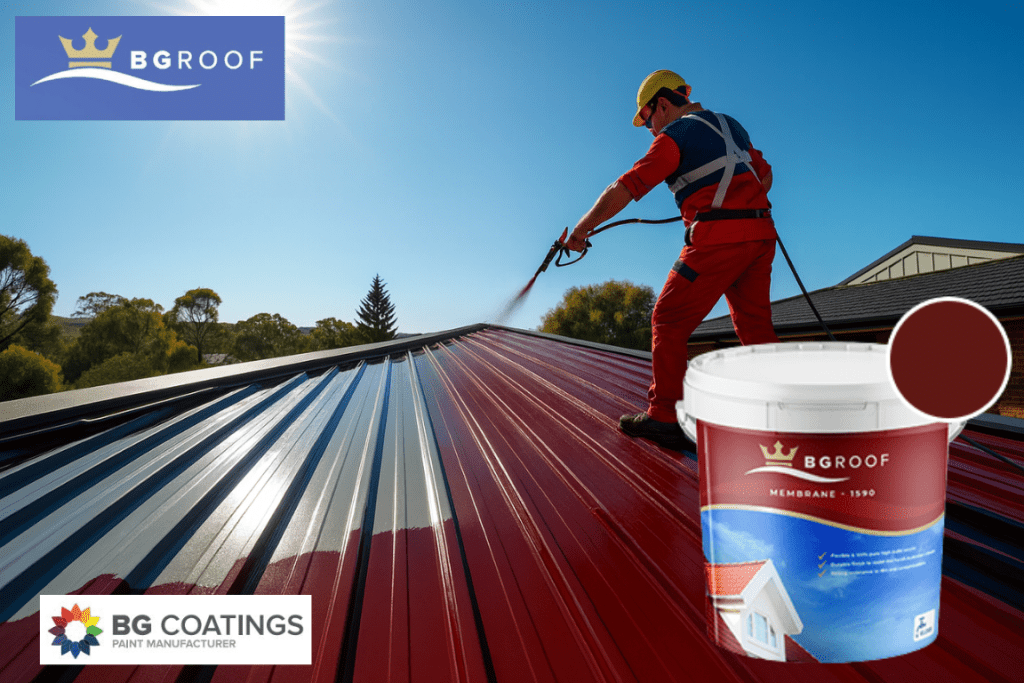
For a homeowner repainting a faded metal roof, acrylic is often easier to plan and apply than a two-pack system. There is no mixing ratio to manage, no limited mixed pot life, and clean-up requirements are generally more straightforward. That does not mean preparation can be skipped. Acrylic coatings still need a clean, dry and sound surface to perform as intended.
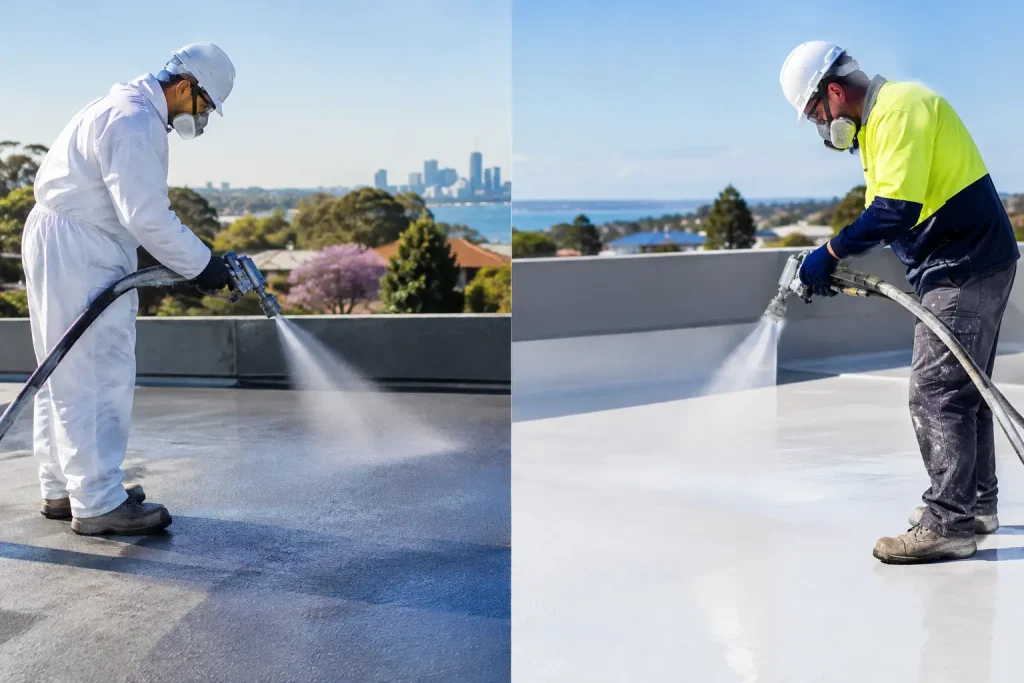
Professional painters and roof maintenance teams also value acrylic systems for efficient application across broad roof areas. Consistent film build, suitable application conditions and allowing each coat to dry properly remain essential. Applying a heavy coat to save time can lead to uneven drying, reduced appearance or other avoidable issues.
Acrylic is not automatically suitable over every old coating. Some existing finishes may be chalky, poorly bonded, excessively weathered or incompatible with the proposed topcoat. A small adhesion test area and the relevant technical data sheet can prevent a larger problem later.
Acrylic roof coatings suit roofs that need to move
Metal roofing can become extremely hot in the Australian sun. As sheets expand and contract, the coating needs to move with them to a reasonable degree. An appropriately specified acrylic roof coating is generally better suited to this task than a hard epoxy finish exposed directly to weather.
The same principle applies to tile roofs, although tile preparation has its own requirements. Porous tiles, residual dirt, moss, loose pointing and unstable older coatings all need to be assessed before coating begins. Coating over contamination or loose material only hides the problem temporarily.
Where epoxy can be useful – and where it needs care
Epoxy has valuable properties, but an exposed roof is not always the right place to use it as the final finish. Standard epoxies can chalk, fade or degrade in appearance with prolonged sunlight unless they are protected by a compatible UV-stable topcoat. That is a system decision, not a shortcut.
On some roof-related details, an epoxy primer or intermediate coating may be specified where the substrate and the full coating system call for it. This can include particular metal, concrete or masonry situations. The correct primer depends on the surface, previous coating, preparation standard and the intended topcoat.
For example, bare or rust-affected metal may need more than a general roof paint applied over the top. Loose corrosion must be removed, the surface cleaned and any suitable primer applied according to its directions. If corrosion is extensive, perforated metal or failed fixings are present, coating alone will not solve the underlying condition.
Epoxy can also be useful away from direct exposure, such as protected structural areas or industrial environments where a hard, resistant coating is required. The key point is to select it for the job it is designed to do, rather than assuming two-pack chemistry always means a better exterior roof result.
Preparation decides more than the label on the tin
Whether you choose an acrylic roof coating or an epoxy-based system, preparation is where coating performance is won or lost. A premium product cannot bond properly to chalk, grease, dust, oxidation, loose paint or trapped moisture.
Start by identifying the roof material and the existing finish. Common substrates include pre-painted steel, galvanised steel, cement tiles, concrete and previously coated surfaces. Each may need a different preparation and priming approach.
The roof should be cleaned thoroughly to remove dirt, mould, salt deposits and loose material. High-pressure cleaning may be suitable for many roofs, but it should be done carefully so damaged tiles, flashing, pointing and vulnerable areas are not made worse. Allow the roof to dry fully before applying coatings. Moisture beneath a coating can lead to adhesion problems and blistering.
Next, check the condition of the existing coating. Sound, well-bonded paint may only need cleaning and preparation before recoating. Flaking or peeling areas need to be removed back to a firm edge. Glossy or contaminated surfaces may need additional preparation to provide a suitable surface profile. Always follow the technical data sheet for the selected coating system.
Do not treat primers as optional
A primer is not required on every repaint, but it is often essential on bare substrates, repaired areas, porous surfaces or surfaces with specific adhesion concerns. It can improve bonding and help create a more even base for the topcoat.
Using the wrong primer can be as problematic as skipping one. Some primers are intended for metal, others for masonry, and others are designed for use only within a particular system. Check compatibility between the existing coating, primer and topcoat before purchasing material for the whole roof.
How to choose for your roof
The most useful question is not, “Which coating is best?” It is, “Which coating system is suitable for this roof?” Consider the substrate, exposure, condition of the old coating, movement in the roof structure and the practical demands of application.
Choose an exterior roof acrylic when the roof is exposed to Australian weather and needs a flexible, weatherable finish. This is commonly the direction for metal and tile roof recoating, provided the surface is sound and prepared correctly.
Consider an epoxy component only where it is specifically appropriate to the substrate and complete coating system. It may be part of the solution for certain priming or industrial protection requirements, but should not be selected as an exposed roof topcoat without checking its UV suitability and any required topcoat.
Colour also deserves practical thought. Dark roof colours can absorb more heat, while lighter shades may help reduce heat absorption. The final choice should suit the property, local planning requirements where relevant, and the available colour range for the specified coating system. Colour matching support can be useful when blending new coating into existing painted elements.
Plan the job before ordering
Measure the roof area carefully, allowing for roof pitch, overlaps, ridges and sections that are not obvious from ground level. Product coverage figures are a guide only and depend on surface profile, porosity, application method and film thickness. A rough area estimate can leave you short halfway through a coat or result in unnecessary leftover material.
Read the product technical data sheet and safety data sheet before starting. Confirm the recommended preparation, primer, thinning requirements if permitted, application method, recoat window and suitable weather conditions. Avoid coating in rain, on a damp roof, or when conditions are likely to prevent the coating from drying as specified.
BG Coatings can provide practical product guidance, technical documentation and colour support to help customers select a suitable coating system. For Perth and Western Australian roof projects, confirm product availability and the best system for your specific roof before beginning work.
A roof coating lasts better when the decision starts with the substrate rather than the product name. Assess the surface honestly, prepare it thoroughly and choose the coating system that suits the roof’s exposure and movement.